
One of artificial intelligence’s most closely watched research labs is preparing for a major expansion in computing capacity. Safe Superintelligence Inc., the company led by Ilya Sutskever, has entered a long-term partnership with NVIDIA that combines an investment, access to Vera Rubin systems, and technical collaboration between the two organizations.
The companies announced the agreement on July 27. They say the investment and new hardware access will increase SSI’s available compute by an order of magnitude. They did not disclose the size of NVIDIA’s investment, a delivery timetable, the number of systems involved, or the exact configuration SSI will use.
A large commitment to a deliberately private lab
SSI was founded in 2024 with a narrow objective: developing what it calls safe superintelligence. Its public description of the company says safety and capability research are being pursued together, without a conventional product cycle competing for attention. The lab has shared little about its technical approach, models, training runs, or evaluation results.
That limited public record makes the partnership notable, but it also sets a boundary on what can be concluded. NVIDIA says it received unusual access to SSI’s closely held research before agreeing to support the lab’s next phase. The announcement does not publish benchmarks, a model card, safety evidence, or enough technical detail for outsiders to evaluate the work. The deal shows that NVIDIA is willing to commit capital and infrastructure; it does not by itself validate SSI’s scientific claims.
The arrangement also runs in both directions. SSI will use NVIDIA infrastructure, while the two companies plan to collaborate on the technical development of current and future NVIDIA computing platforms. A frontier lab can expose hardware bottlenecks that are difficult to reproduce with smaller workloads, giving a chip designer feedback on memory, networking, reliability, and software behavior at scale.
What Vera Rubin brings
Vera Rubin is NVIDIA’s next-generation rack-scale architecture for training and running large AI systems. The company’s Vera Rubin NVL72 documentation describes a rack containing 72 Rubin GPUs and 36 Vera CPUs, connected by sixth-generation NVLink and paired with high-speed networking and data-processing hardware. NVIDIA says the platform is designed for pretraining, post-training, long-context reasoning, and sustained agentic inference.
Those specifications describe the commercial platform, not a confirmed SSI installation. The partnership announcement identifies Vera Rubin but does not say that SSI will receive a particular NVL72 rack count or every component shown in NVIDIA’s reference design. It is therefore more accurate to view the product documentation as context for the class of infrastructure involved, rather than as a bill of materials for the lab.
The promised compute increase matters because frontier AI research can require large clusters not only for training, but also for running repeated experiments, ablations, evaluations, and safety tests. More capacity can allow a team to test ideas at a scale where new behavior appears. It can also make failed approaches far more expensive. Compute is an enabling resource, not a guarantee of a useful or well-aligned system.
Why the partnership matters
For SSI, the agreement addresses one of the largest practical constraints facing a model lab: reliable access to leading hardware. For NVIDIA, the partnership creates a close relationship with a research organization led by a scientist whose earlier work contributed to several major advances in deep learning. NVIDIA is both a supplier and an investor here, so the commercial and technical interests are intertwined.
The tenfold expansion claim should also be read carefully. It describes SSI’s expected compute capacity relative to its current base, not a tenfold improvement in model intelligence, safety, training speed, or energy efficiency. No such outcome was reported. The companies’ announcement includes forward-looking statements, and the real impact will depend on deployment, software, research quality, and the evaluations used to judge any future system.
What to watch next
The most informative next steps would be concrete ones: a deployment schedule, details about the scale and purpose of the systems, research results that can be examined, and evidence showing how SSI measures both capability and safety. Independent scrutiny will be especially important if the lab remains private while its compute footprint grows.
This partnership gives SSI substantially more room to test its research direction and gives NVIDIA a demanding collaborator for Vera Rubin. What it does not provide yet is proof that the lab’s approach works. The consequential story will be whether expanded infrastructure produces findings that can be evaluated rather than simply a larger training program.
Sources: NVIDIA and SSI joint announcement; NVIDIA Vera Rubin NVL72 platform documentation; Safe Superintelligence Inc. company overview.
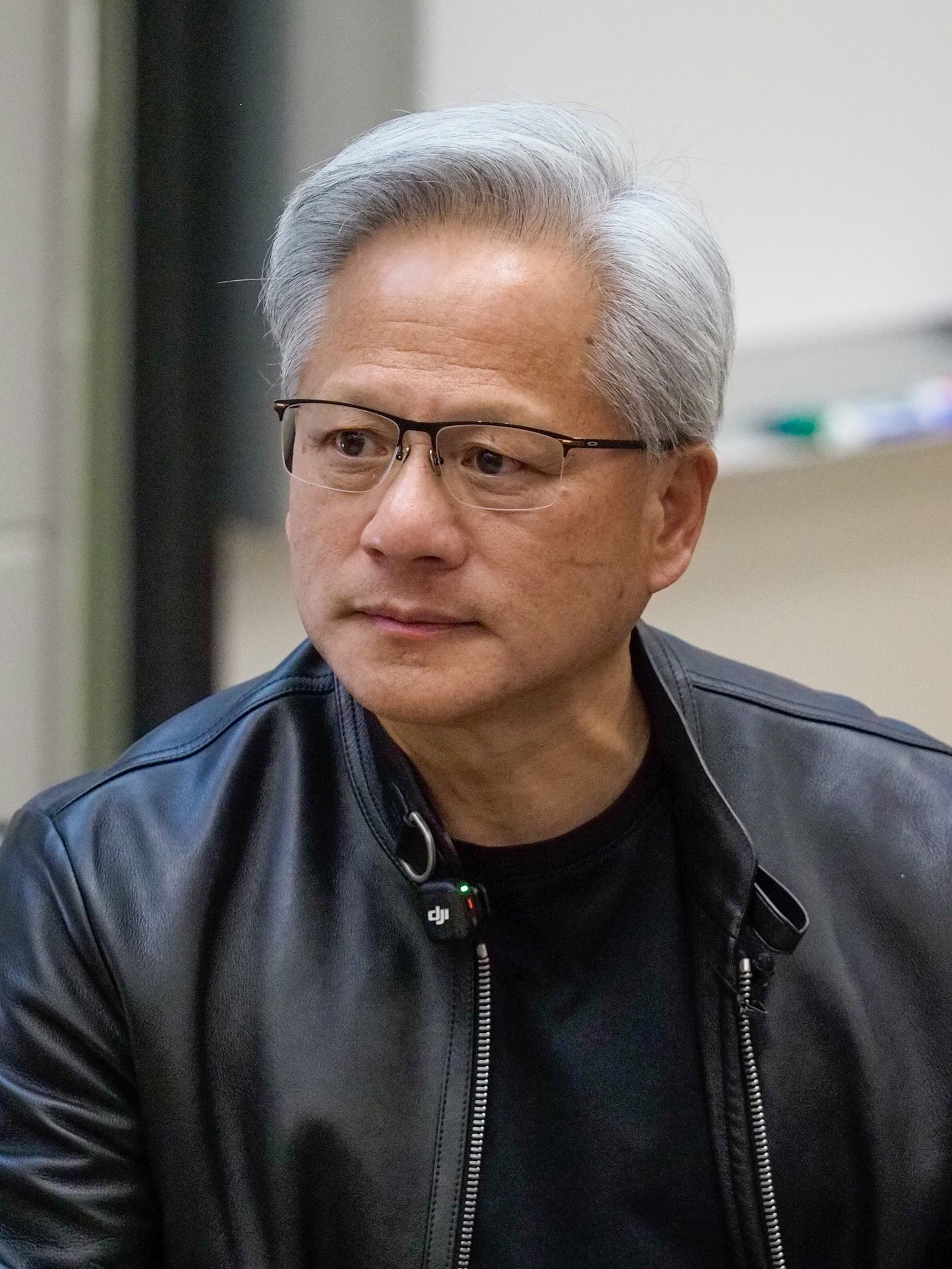
Featured image: NVIDIA founder and CEO Jensen Huang during a fireside chat at Stanford University on April 30, 2026. Photograph by Anderseidesvik via Wikimedia Commons, licensed under CC BY-SA 4.0. No modifications were made.

