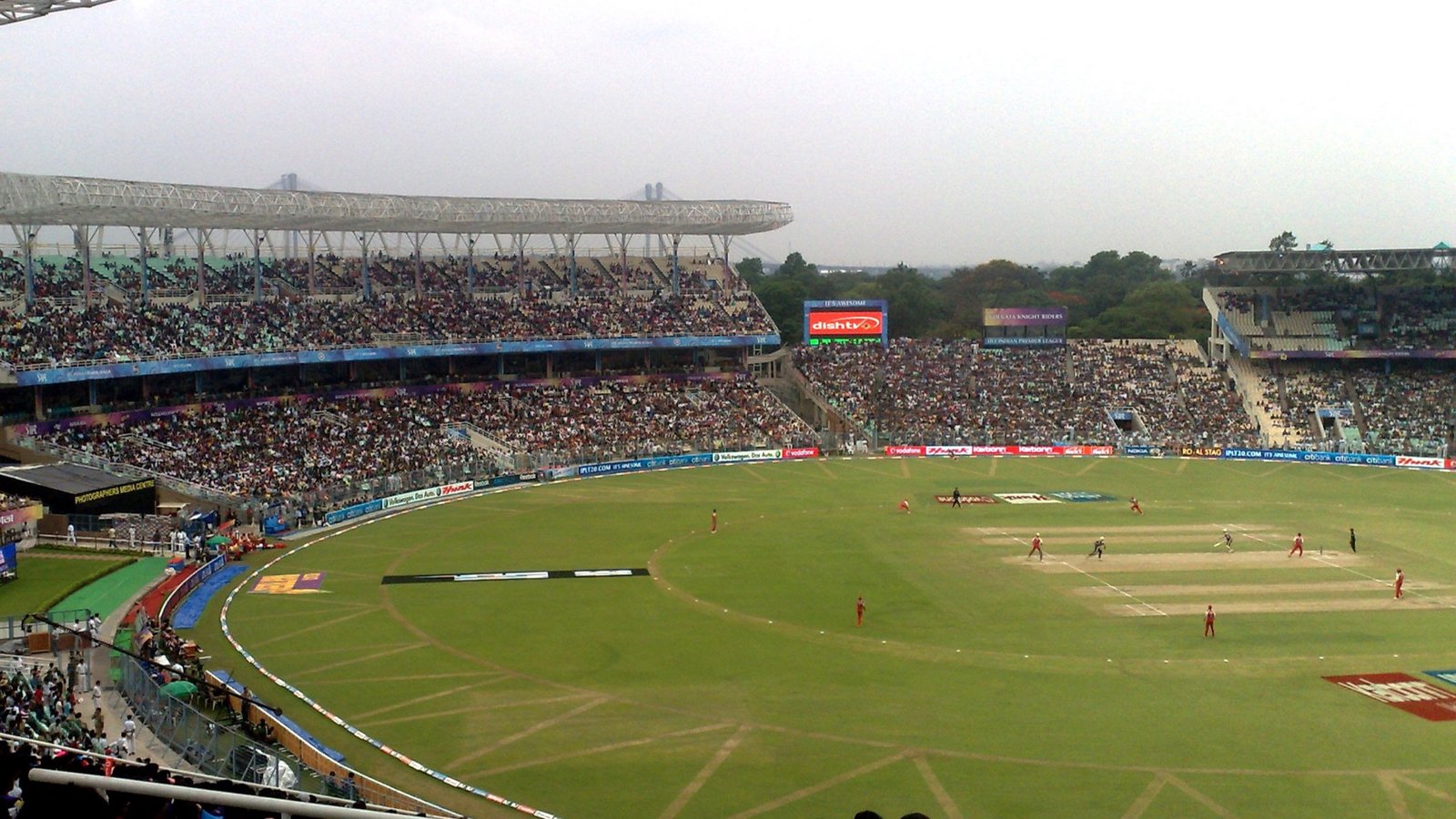
Sunil Gavaskar has reopened a useful Indian Premier League argument at exactly the right time. In a column reported by The Indian Express on July 27, the former India captain urged the BCCI to push boundary ropes farther back at Indian grounds, including in the IPL, so that mishits are less likely to become sixes and batters are better prepared for larger overseas fields. The suggestion sounds like a request for a new rule. The official 2026 IPL match playing conditions show that it is more accurately an enforcement test. Clause 19 already says the aim is to maximize the playing area at every venue. It sets the shorter square boundary at a minimum of 65 yards from the pitch center, both straight boundaries at a minimum of 70 yards, and a maximum of 85 yards in any direction. When a ground cannot meet the minimums, the BCCI determines the dimensions.
What the rules already permit
That framework gives the league room to act without inventing an entirely new geometry for cricket. The question is whether “maximize” consistently means the largest safe field a venue and pitch position can support, or whether operational preferences sometimes leave playable grass outside the rope. The comparison with one-day international cricket matters because Gavaskar tied his proposal to India’s preparation for the 2027 World Cup in southern Africa. The ICC’s published boundary clause uses 65 yards as the minimum and 90 yards as the maximum, while also instructing organizers to maximize the playing area. The IPL ceiling is five yards shorter, but the underlying principle is similar: minimum dimensions are a floor, not a target. TENS analysis: Gavaskar’s proposal is therefore strongest as a transparency standard. Publishing the actual square and straight dimensions for each pitch before a match would show whether the available field has truly been maximized. It would also let analysts separate the effects of pitch quality, altitude, dew, bat speed and boundary geometry instead of treating every high total as the same phenomenon.
Five yards changes more than it sounds
A simple calculation illustrates why rope position matters. Treat a boundary as a circle only for comparison: increasing its radius from 65 to 70 yards expands the field area by about 16 percent. Moving from 65 to 75 yards expands it by roughly 33 percent. Real grounds are irregular and pitches are not always central, so those figures are not match forecasts. They show how a modest radial change can create substantially more catching and running space. TENS analysis: That extra space changes decision-making before it changes a scorecard. Batters must distinguish clean contact from merely adequate contact. Spinners can use more flight when a miscued lofted shot has a realistic chance of staying in play. Fast bowlers can attack a longer side with slower balls and cross-seam deliveries. Captains gain more meaningful choices about protecting one boundary while inviting a shot toward another. The trade-off is not that bigger fields automatically produce better cricket. A slow surface paired with distant ropes can suppress stroke play without rewarding skill. Some grounds cannot safely move every section of rope. Camera positions, sight screens, drainage zones and perimeter advertising all constrain the usable footprint. The IPL conditions acknowledge those realities by giving the BCCI authority over venues that cannot conform.
A better test for the 2027 season
The practical reform would have three parts. First, measure every boundary from the center of the match pitch, as the playing conditions require. Second, publish a pitch-specific boundary map with the match information rather than relying on occasional broadcast estimates. Third, record any exception and its safety or venue rationale. That would turn an imprecise debate about “small grounds” into an auditable competition standard. TENS analysis: A disclosed boundary map would also improve player development. Domestic batters and bowlers could compare outcomes across venues with more context, while selectors could judge whether a player’s power or defensive method travels beyond a favorable geometry. The IPL would still reward innovation and range, but the evidence would better distinguish repeatable skill from venue assistance. Gavaskar’s intervention does not prove that boundary size caused any particular Indian batting failure abroad, and the BCCI has not announced a rule change. Those are important limits. What his argument exposes is a gap between a written instruction to maximize the field and the public’s ability to verify that it happened.
The IPL does not need to make every venue identical; that would erase part of cricket’s character. It can make the differences visible and intentional. If the league consistently uses the largest safe playing area and publishes the measurements, bigger boundaries become more than a slogan. They become a controlled competitive variable.