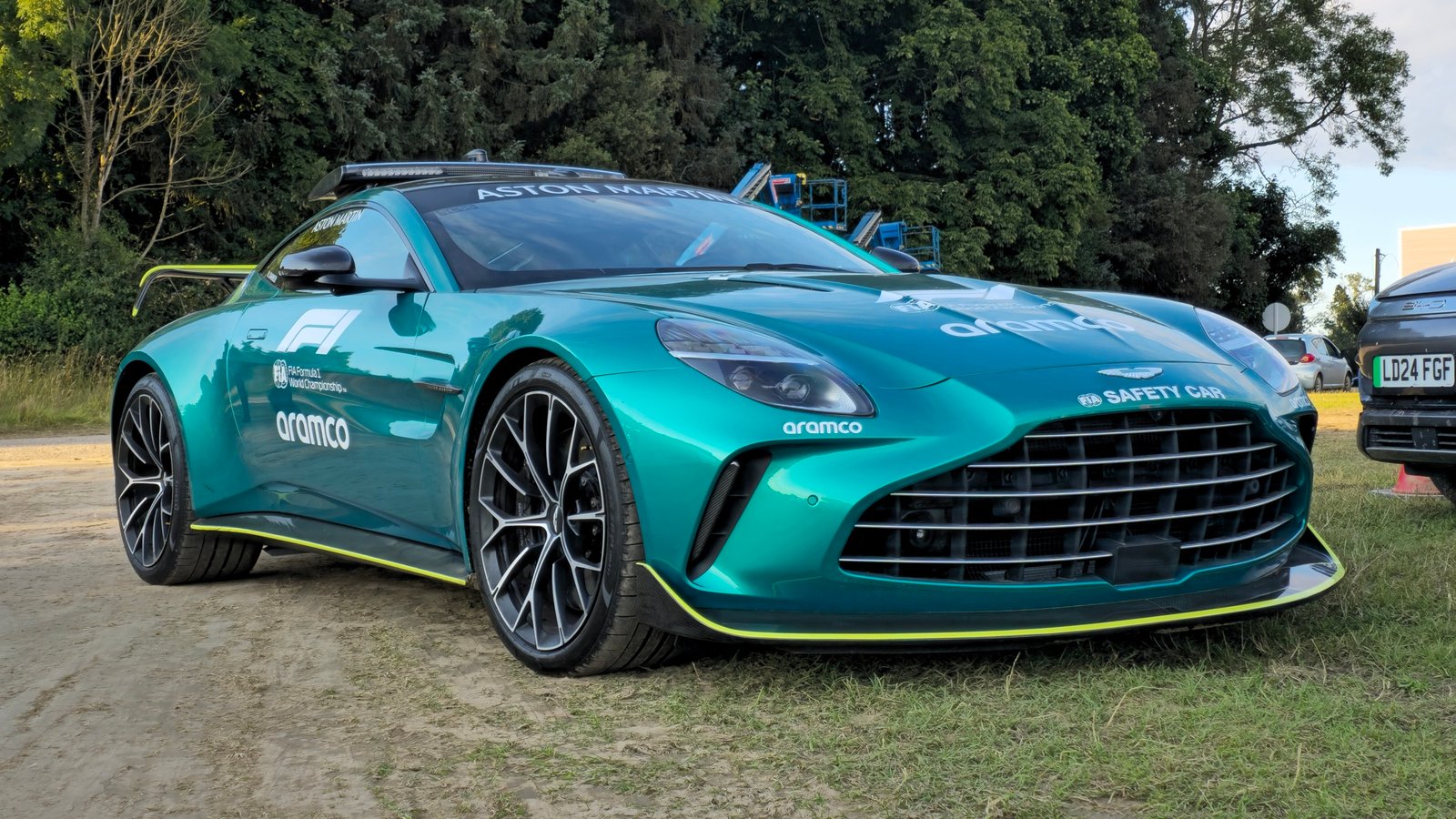
Tom McCullough is set to leave Aston Martin at the end of the 2026 season, closing a run of more than a decade with the Silverstone organisation. The departure, reported by Formula 1’s official website on August 4, is not yet a story about where one engineer goes next. It is a test of whether an ambitious Formula 1 team can modernise without misplacing the knowledge that helped it survive, overachieve and reinvent itself. McCullough’s exit should not be mistaken for an immediate hole on the pit wall. Aston Martin had already moved him away from its Formula 1 programme during a January 2025 restructure, when Mike Krack took charge of the trackside operation and Enrico Cardile led the factory-based technical group. McCullough shifted into a broader racing-categories role. The coming departure therefore removes a bridge to the team’s past more than a current race-weekend decision-maker.
Aston Martin is losing an institutional translator
That distinction matters. McCullough joined the team in its Force India era in 2014, after spells with Williams and Sauber. He worked through three identities, changing ownership, repeated budget constraints and the rapid expansion into Aston Martin’s new technology campus. Formula 1’s report notes that his tenure included Force India’s consecutive fourth-place championship finishes in 2016 and 2017 and Racing Point’s first victory in 2020. Those results were produced by very different organisations. Force India’s competitive advantage was extracting unusually high performance from limited resources. Aston Martin’s project is built around scale: a works Honda partnership, a modern campus, heavyweight recruitment and the expectation of fighting at the front. McCullough’s unusual value was not merely technical experience. He understood both operating languages. Aston Martin’s own announcements show how often that language has changed. In 2021, McCullough became Performance Director in a structure that joined trackside engineering to factory performance functions. In January 2025, the team separated trackside and campus responsibilities, assigning Krack and Cardile to the two sides. In November, it changed leadership again for 2026, placing Adrian Newey over the technical organisation and trackside operations while moving Andy Cowell toward power-unit integration and strategy. Read together, those changes form a chronology of specialisation. Each move has a logic: give experts clearer authority, reduce overlapping responsibilities and focus Newey where he can have the greatest technical influence. The risk is cumulative. Every new boundary also creates another handoff, and handoffs are where context disappears.
Analysis: the real test is knowledge transfer
The TENS view is that McCullough’s departure will be judged less by the vacancy it creates than by the knowledge Aston Martin retains. He was already outside the core F1 structure, so the team should not suddenly lose setup direction or race engineering capacity. But an organisation can lose valuable memory quietly: why a correlation method failed, which compromise once rescued a difficult car, how the trackside group challenges factory assumptions, and which processes worked before growth made them formal. That is especially important because Aston Martin’s 2026 recovery is not complete. The B-spec introduced in Hungary moved the car toward the midfield after a difficult first half, while further chassis developments are scheduled for Monza and Baku and Honda’s first upgraded power unit is expected at Zandvoort. One promising weekend does not establish a repeatable development system.
The next three upgrade checkpoints therefore offer a practical audit of the new organisation. The assumptions are straightforward: the Hungary step is real, the announced parts arrive broadly as planned, and no unrelated reliability crisis overwhelms the comparison. If Aston Martin can reproduce the gain across Zandvoort, Monza and Baku—three circuits with very different demands—it would suggest that its newer specialists are exchanging information effectively. If performance swings wildly again, the question will not be whether McCullough alone could have fixed it. The question will be whether the team’s many redesigned reporting lines are translating evidence into decisions. This is analysis, not a forecast of guaranteed decline. Senior departures are normal in Formula 1, and McCullough’s duties had already changed. Aston Martin may have completed the handover deliberately and retained the processes he helped build. Its expanding technical group may also benefit from sharper ownership and fewer legacy compromises.
But Formula 1 history is crowded with teams that recruited famous names faster than they built a shared method. Aston Martin’s challenge is now the inverse of Force India’s: not finding performance despite scarcity, but making abundant resources behave like one team. McCullough’s exit brings that problem into focus. The expensive hardware is visible. The institutional memory is not. Over the second half of 2026, the stopwatch will reveal whether enough of it stayed behind.