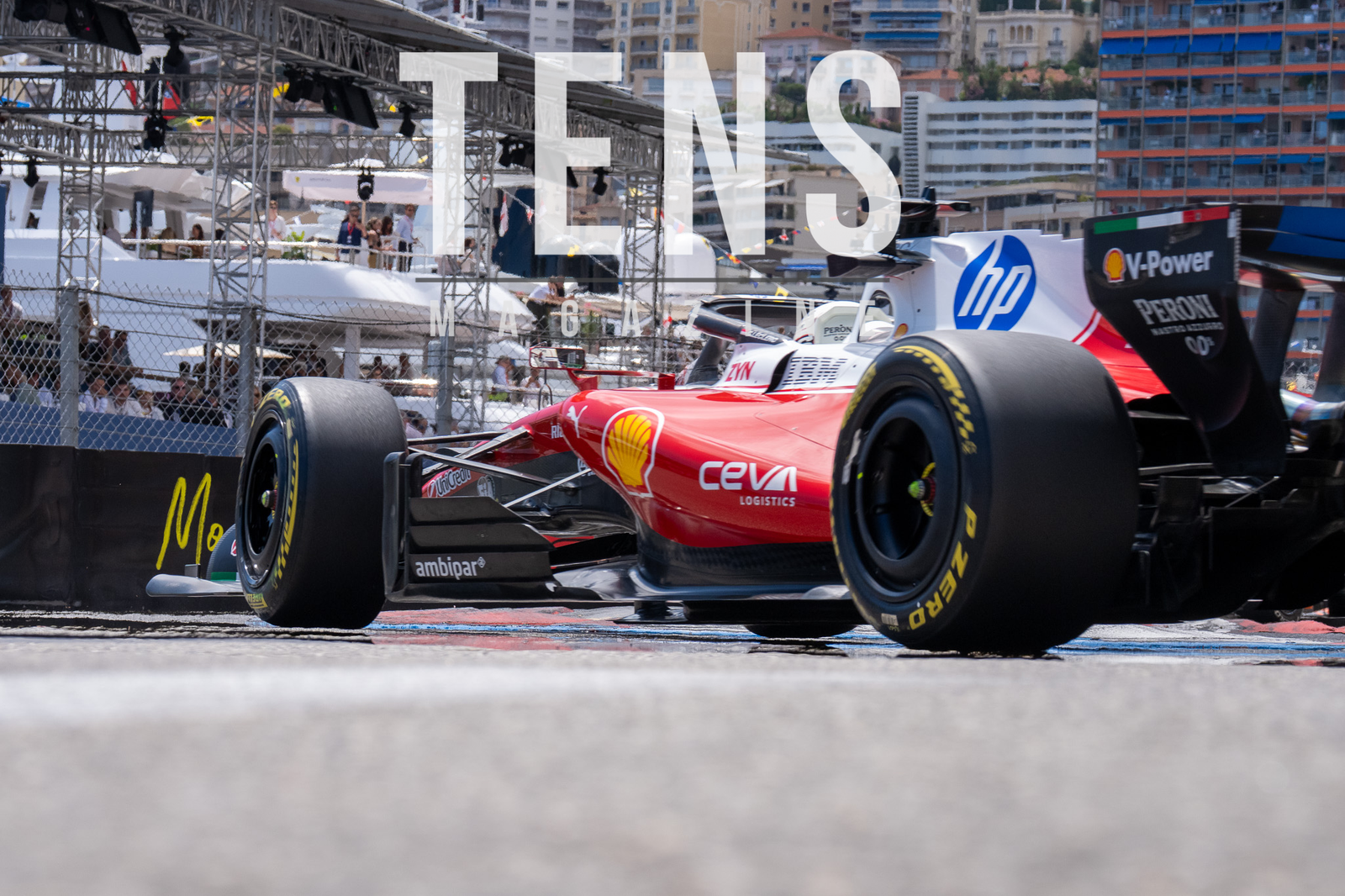
Isack Hadjar has reached Formula 1’s summer break with a distinction that has eluded nearly every recent occupant of Red Bull’s second car: his comparison with Max Verstappen is no longer framed as damage control. Formula 1’s official data team reported Tuesday that Hadjar’s average qualifying deficit, normalized to a 90-second lap, sits just above one tenth of a second through 11 rounds. That is Red Bull’s closest internal qualifying margin since Daniel Ricciardo. Hadjar is also 41 points behind Verstappen, 109 to 68, and Red Bull’s own Hungarian Grand Prix report credited him with a seventh consecutive top-six finish. Those numbers make a persuasive case that the familiar “second-seat curse” has weakened. They do not prove it has disappeared. The more useful conclusion is that Hadjar has changed what Red Bull can demand from the seat.
The tenth that changes the garage
A tenth of a second on a normalized 90-second lap is roughly 0.11 percent. That is small enough for Hadjar’s feedback to belong in the same engineering conversation as Verstappen’s, rather than being dismissed as the product of a driver operating in another performance range. For a team trying to understand an uneven RB22, that matters beyond qualifying order. Two drivers who reach similar limits can give engineers a stronger basis for separating a car characteristic from an individual preference.
The points comparison adds a second layer. Hadjar has retained about 62 percent of Verstappen’s total so far. That is not an equal contest, and the nonlinear Formula 1 scoring system magnifies every position near the front. Yet it is enough to keep both Red Bulls tactically relevant. In Hungary, Verstappen finished second while Hadjar took sixth. Red Bull’s race account described Hadjar’s result as his seventh straight top-six finish. A second car that reliably occupies that range can cover an undercut, complicate a rival’s pit window and collect heavily when faster cars stumble. The seat is producing strategic range, not merely avoiding embarrassment.
TENS analysis: the job has changed
Hadjar’s most important achievement is not that he has solved the impossible assignment of matching Verstappen. It is that he has made Red Bull’s second car useful on more than one competitive layer. On Saturdays, the qualifying gap is narrow enough to preserve setup relevance. On Sundays, his finishing floor supplies points and tactical leverage. Across a difficult first half for the RB22, that combination has reduced the organizational temptation to treat one side of the garage as a permanent exception.
The strongest evidence that Hadjar has altered the job is the gap between peak and repeatability. He has not beaten Verstappen to a victory, and Formula 1’s comparison notes that Ricciardo remains the only Red Bull team mate to outscore Verstappen across a season, doing so in 2017. Hadjar’s record instead rests on a chain of top-six finishes. That is less spectacular, but arguably more valuable for the current Red Bull: a team whose car has not offered a reliable path to wins needs the second driver to stabilize its weekend before it needs him to steal headlines.
This is where the “curse” label becomes too blunt. It treats every deficit as a driver failure and every close weekend as an escape. Hadjar’s first half suggests a better test with three parts: qualifying proximity, points retention and repeatable operational value. He is passing all three at the break. None guarantees that the trend will survive different circuits, upgrades or a change in the RB22’s balance. Together, however, they show that Red Bull is extracting information and championship value from both cars at the same time.
Why the second half is harder
The forecast must remain conditional. Formula 1’s figures cover 11 rounds, not a completed season, and the second half can expose weaknesses hidden by a friendly sequence of tracks or a stable upgrade package. Hadjar’s qualifying average could move sharply with one poor run, while a 41-point gap can expand quickly when podium places create large scoring steps. The assumption behind any optimistic reading is that Red Bull preserves equal access to useful development parts and that Hadjar continues converting ordinary weekends into top-six finishes.
Three checkpoints will tell the story. First, whether the qualifying margin remains near a tenth once racing resumes at Zandvoort. Second, whether Hadjar can turn his consistent floor into an occasional podium when attrition or strategy opens the door. Third, whether his feedback helps Red Bull widen the RB22’s usable setup window rather than simply finding a personal compromise. If those conditions hold, the second seat will cease to look like a test of survival and start functioning as a competitive asset.
Hadjar has not ended Red Bull’s second-seat problem by defeating Verstappen. He has done something more realistic and, for this version of Red Bull, more urgent: he has made the car beside Verstappen matter again.