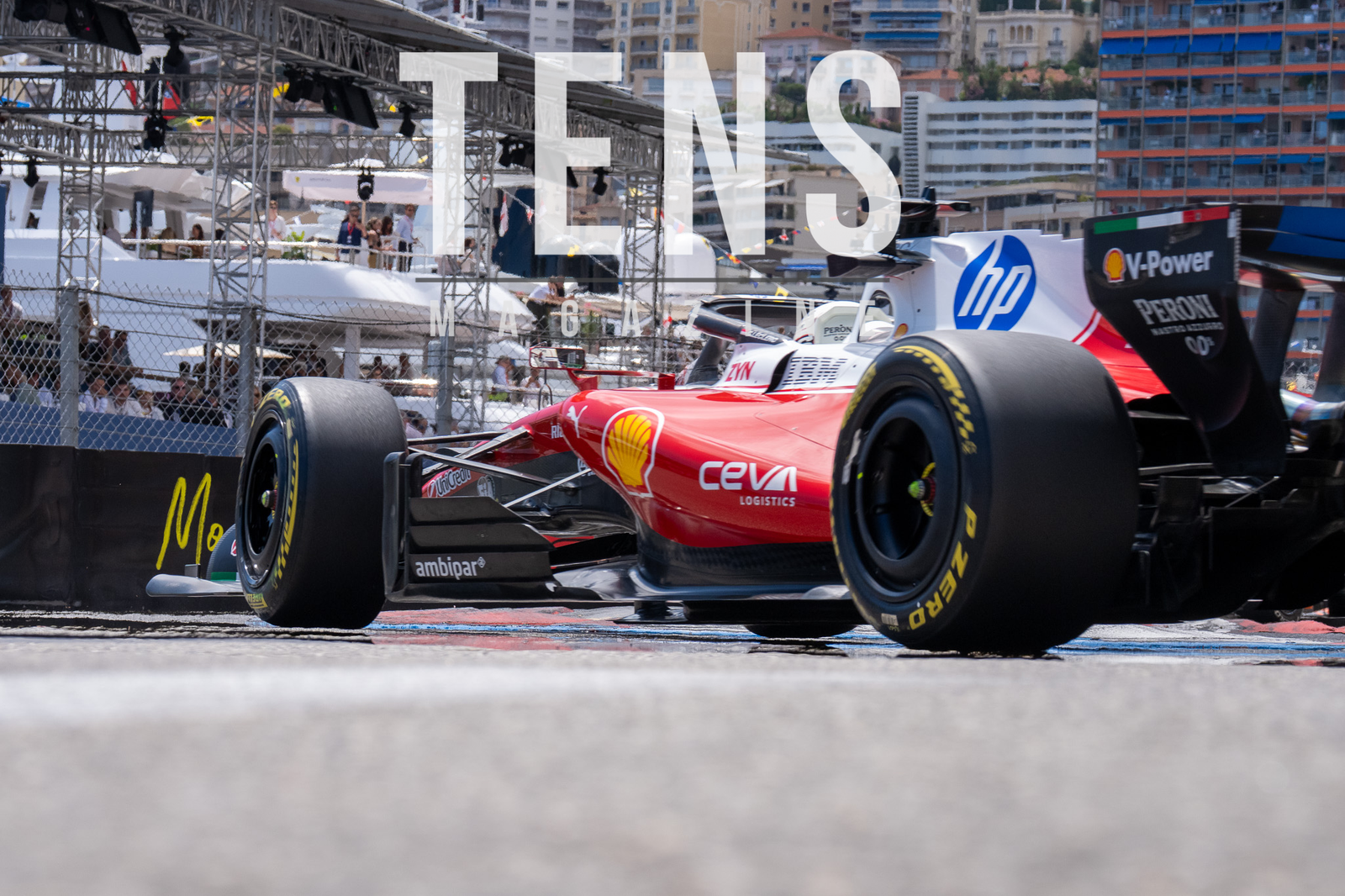
George Russell returned from Formula 1’s summer break with the smallest kind of statement that can still reshape a weekend: 0.041 seconds. His 1:11.567 lap secured pole for Saturday’s Dutch Grand Prix Sprint, putting the Mercedes ahead of Lando Norris’s McLaren and Charles Leclerc’s Ferrari after three different teams had shown front-running pace through the session. The result is timely, but the headline alone is too neat. Russell did not lead SQ1 or SQ2. Oscar Piastri topped the second segment, while Leclerc had set the earlier benchmark. By the end of SQ3, Russell, Norris, Leclerc and Piastri were separated by only 0.099 seconds. Championship leader Kimi Antonelli was fifth, 0.227 seconds away, after an SQ1 gravel trip damaged the floor of his Mercedes. The useful way to read Russell’s pole is not as a declaration that Mercedes now owns Zandvoort. It is as a measurement of how little error the front four can afford.
What 0.041 seconds really means
Formula 1’s official report recorded Russell’s pole margin at 0.041 seconds. Relative to a 71.567-second lap, that advantage was about 0.057 percent. The entire top-four spread of 0.099 seconds was about 0.138 percent. Those numbers are not a forecast of identical race pace, because qualifying laps, fuel loads, tyre preparation and traffic are different variables. They are evidence that the decisive advantage on Friday was execution measured in fractions, not a dominant technical separation. That distinction matters at Zandvoort. The circuit’s narrow rhythm makes overtaking difficult, and the Sprint offers only 24 laps to recover from a weak start or a compromised opening stint. Track position can magnify a tiny qualifying edge into a much larger strategic advantage. It can also disguise a car that is less comfortable over a run than it appeared over one lap. Mercedes’ own Friday report supplies the caution. Trackside engineering director Andrew Shovlin said the W17 did not appear especially strong in the faster corners and that the team’s practice long run looked weaker than Ferrari’s. Those are preliminary observations, not settled rankings. Practice began in low-grip conditions before the circuit dried, and teams had only one hour before Sprint Qualifying. Still, they prevent a lazy conclusion that pole automatically makes Russell the Sprint favourite by a meaningful margin.
TENS analysis: an error-budget race
Saturday’s Sprint is therefore less a pace verdict than an error-budget test. Russell must convert the clean side of the grid into control at Turn 1, then manage a group in which three rivals qualified within one tenth. Norris must decide how much tyre and battery to spend attacking immediately. Leclerc and Piastri start close enough to punish either front-row driver for defending too aggressively. Antonelli’s fifth place adds another useful control. His damaged floor makes the 0.227-second deficit a poor measure of his underlying speed, but his progress in the Sprint can show how much position is recoverable when outright pace meets Zandvoort’s passing limits. Formula 1 and Mercedes both reported that the floor was repaired only as far as the session allowed. Treating his qualifying result as a clean team-mate comparison would ignore the most important condition behind it. Russell’s pole also sharpens Mercedes’ internal title question without resolving it. TENS recently argued that the team was right to delay formal team orders. Friday supports the logic of keeping both drivers operationally alive: one delivered pole while the championship leader absorbed the consequence of a small mistake. But a Sprint is not enough evidence to reopen that policy. The appropriate test remains whether repeated free competition costs Mercedes more championship value than it preserves.
What the Sprint can actually prove
The forecast is conditional. If Russell holds the lead at the start, avoids excessive early tyre use and controls the final laps, the result would strengthen the case that Mercedes can translate peak grip into a complete short-run package. If Norris or Leclerc can pressure him through sustained pace, Friday’s pole will look more like a superbly timed lap than a durable advantage. Piastri’s starting position makes McLaren’s two-car options another variable. The top four were covered by 0.138 percent of pole time, yet their Saturday outcomes could be separated by track position, tyre temperature, battery deployment and one missed braking point. That is the real story of Zandvoort’s first day back: Formula 1 has not returned with a clear hierarchy. It has returned with almost no margin for error.