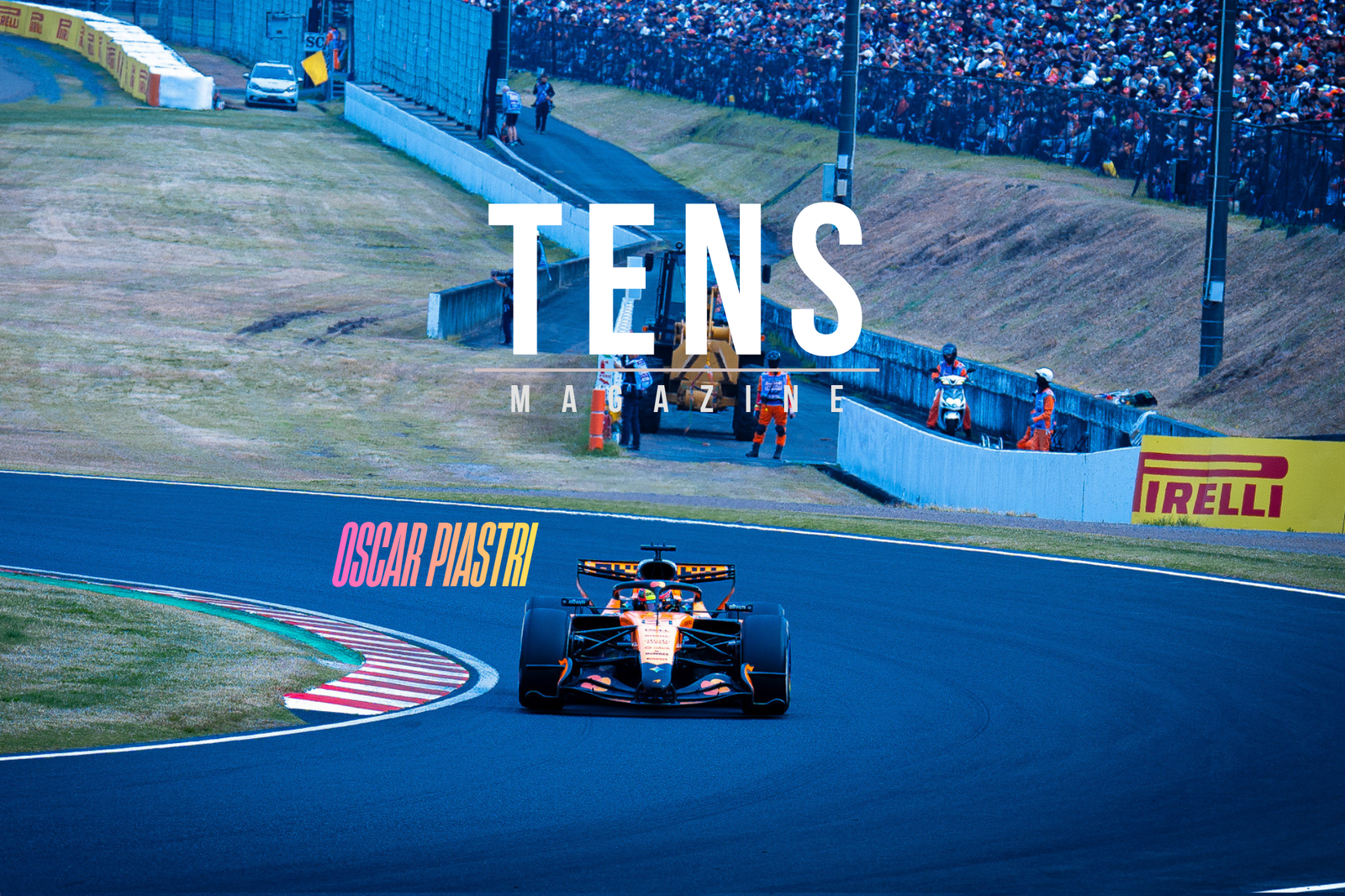
Oscar Piastri’s sixth place at Zandvoort looked, from a distance, like a bad pit stop followed by an anonymous afternoon. The official numbers make that explanation too comfortable. McLaren did lose time in the lane, but the more important failure was that a car capable of one of the race’s quickest laps could not sustain competitive performance when the result was being decided.
That distinction matters. A slow stop can be drilled, measured and corrected. A pace loss that appears after one acceptable stint is a diagnostic problem involving tires, balance, traffic, setup or how the driver accessed the car’s operating window. McLaren cannot responsibly choose among those explanations from the public evidence, and neither can anyone else. What the evidence can do is define the size and shape of the investigation.
The pit stop was costly, not decisive
Piastri ran third after passing George Russell at the standing restart. His first recorded racing stop, on lap 18, took 20.267 seconds in the official pit-stop summary. Pierre Gasly stopped on the same lap in 18.003 seconds, while Russell’s lap-17 stop took 18.010. Against either comparison, McLaren’s delay was roughly 2.26 seconds.
The numbers separate the visible error from the deeper problem. Piastri finished 15.074 seconds behind fifth-placed Charles Leclerc and 20.796 seconds behind second-placed Kimi Antonelli. Recovering the pit-lane loss alone would not have changed his finishing position. It damaged track position and may have exposed him to dirtier air, but it cannot account for the entire gap.
Piastri’s own description supports that reading. He said the first stint felt reasonable, then reported that the pace disappeared from the second stint onward. McLaren team principal Andrea Stella argued that sixth understated how competitive Piastri had been across the weekend. Those statements are not a diagnosis. They are useful boundaries: the car-driver package worked at points, then stopped producing repeatable performance.
Peak speed and usable speed are different
The fastest-lap table adds a revealing complication. Piastri’s 1:14.303 was the second-fastest lap of the race, only 0.073 seconds slower than Leclerc’s benchmark and 0.018 faster than winner Lando Norris’s best. One lap never proves race pace; fuel load, tire age, traffic and energy deployment all matter. But it does show that Piastri was not simply operating a permanently slow car.
That creates a useful diagnostic contradiction: the peak existed, while the repeatability did not. McLaren’s task is therefore not merely to “find pace.” It is to explain why the pace appeared only in conditions that could not be sustained. Was the car moving through a narrow balance window as the tires aged? Did the hard compound respond differently after the restart than expected? Did traffic amplify a front- or rear-limitation? Or did setup changes that helped Norris leave Piastri with a less stable platform?
Those are hypotheses, not established facts. The public timing does not isolate tire temperatures, aerodynamic balance or driver inputs. Treating any one of them as the answer would turn analysis into invention. The responsible forecast is narrower: if the problem was circuit-specific or setup-specific, Piastri should rebound quickly; if it reflects difficulty reproducing McLaren’s upgraded performance across compounds and stints, Monza may expose it again in a different form.
Monza should be an A/B test
McLaren should treat the Italian Grand Prix as an A/B test rather than a referendum on Piastri. Three comparisons matter. First, does his long-run degradation stay aligned with Norris on the same compound? Second, does the gap change sharply after stops or traffic transitions? Third, can Piastri reproduce his best-lap performance across a sequence rather than in one isolated burst?
That framework also protects against a familiar Formula 1 overreaction. Norris won from pole and Piastri finished sixth, so the temptation is to turn one weekend into a verdict about confidence, upgrades or team hierarchy. Zandvoort does not support that certainty. Piastri made a forceful restart, produced elite single-lap speed late in the race and still lacked the sustained pace to defend a podium position. The mixed evidence is precisely why the result deserves investigation rather than mythology.
The most important McLaren story after Zandvoort is not that one driver won while the other struggled. It is that the same car produced two very different kinds of performance. Norris converted speed into a complete race. Piastri showed flashes without control of the full stint. Solving that gap is less dramatic than assigning blame, but it is the work that will determine whether sixth place was an outlier or the first sign of a repeatability problem.
Sources: Official Formula 1 Dutch Grand Prix race result, pit-stop summary and fastest-lap classification; Formula 1’s post-race interview with Oscar Piastri; McLaren’s Dutch Grand Prix team statements.