A new study of language models that read raw bytes sharpens a practical question for AI builders: when does a more capable model actually become a more efficient system? The answer depends on whether the comparison holds model size, computing work, or delivery time constant.
Jie Wang and colleagues posted their study to arXiv on October 5. Their byte models improve on subword models at comparable parameter scale, but the subword models retain an advantage under the same training computation budgets in their scaling experiment. The distinction makes this an investigation of resource allocation, rather than a general demonstration that removing tokenizers saves computation.
Three budgets, three different decisions
TENS analysis: a useful evaluation should begin with the constraint a team actually faces. A model that fits a memory limit answers one question. A model trained within a fixed computing allowance answers another. A service that returns a useful answer before a deadline answers a third. Calling all three outcomes efficiency hides the decision that the evidence supports.
Consider a hypothetical developer choosing an AI component for a document-processing system. A smaller model could be attractive if memory is scarce. Yet that advantage would not settle whether the system finishes each document quickly enough. The acceptance test should specify both the available hardware and the amount of useful work completed, before the developer looks at a headline score.
This is an evaluation proposal, not a claim that the new researchers tested that deployment. It also prevents a common comparison mistake: treating equal parameter counts as proof that two systems consumed equal resources. Parameters describe stored model capacity; they do not, by themselves, describe everything required to process an input.
What earlier byte research establishes
ByT5, introduced by Linting Xue and colleagues in 2021, already examined the tradeoffs among model size, training computation and inference speed. Its byte-level models were competitive with token-based counterparts and performed particularly well on noisy text and tasks sensitive to spelling or pronunciation. It also identified simpler text preprocessing as a benefit of removing a separate tokenizer.
That history changes the question to ask of the October paper. Reading bytes is an established research direction. The useful advance to assess is how a particular training recipe or architecture distributes the cost of doing so. A spelling-sensitive workload and a general question-answering workload should therefore have separate acceptance criteria, even when they use the same underlying model.
MEGABYTE, published as research in 2023 by Lili Yu and colleagues, took a different architectural route. It organized byte sequences into patches, with local processing inside each patch and global processing between them. Its experiments covered text, images and audio, making structured processing of long raw sequences central to the design.
TENS analysis: placing these studies together separates an input choice from an architecture choice. Choosing bytes does not prescribe one way of processing them. Teams comparing systems should record both decisions. Otherwise, a gain from a new architecture can be mistaken for a universal advantage of a particular text representation.
The stopwatch still matters
The October study also examines where byte models concentrate prediction difficulty. Its drafting experiment identifies opportunities for speculative decoding, but the authors describe that experiment as a diagnostic using reference text. They say practical speedups require testing generated histories and measuring drafting and verification costs. The preprint also leaves generalization to larger models and other architectures open.
TENS analysis: this suggests a concrete next test. Give candidate systems the same starting inputs, let them generate their own continuations, and measure elapsed time to outputs that meet a stated quality threshold. Include the work of any helper model and the work of checking its proposals. Report failures alongside successful runs.
Counting accepted internal units alone would leave readers unable to judge the service they would receive. A useful report would pair that diagnostic with completed text, elapsed time and quality. Different internal units need a common external workload before their counts become a fair basis for a product decision.
For now, the strongest reason to follow byte models is the possibility of choosing better tradeoffs for particular tasks. The three studies offer different evidence about those choices, rather than a single ranking that settles them. The next persuasive result will connect a clearly stated resource constraint to a clearly measured user outcome.
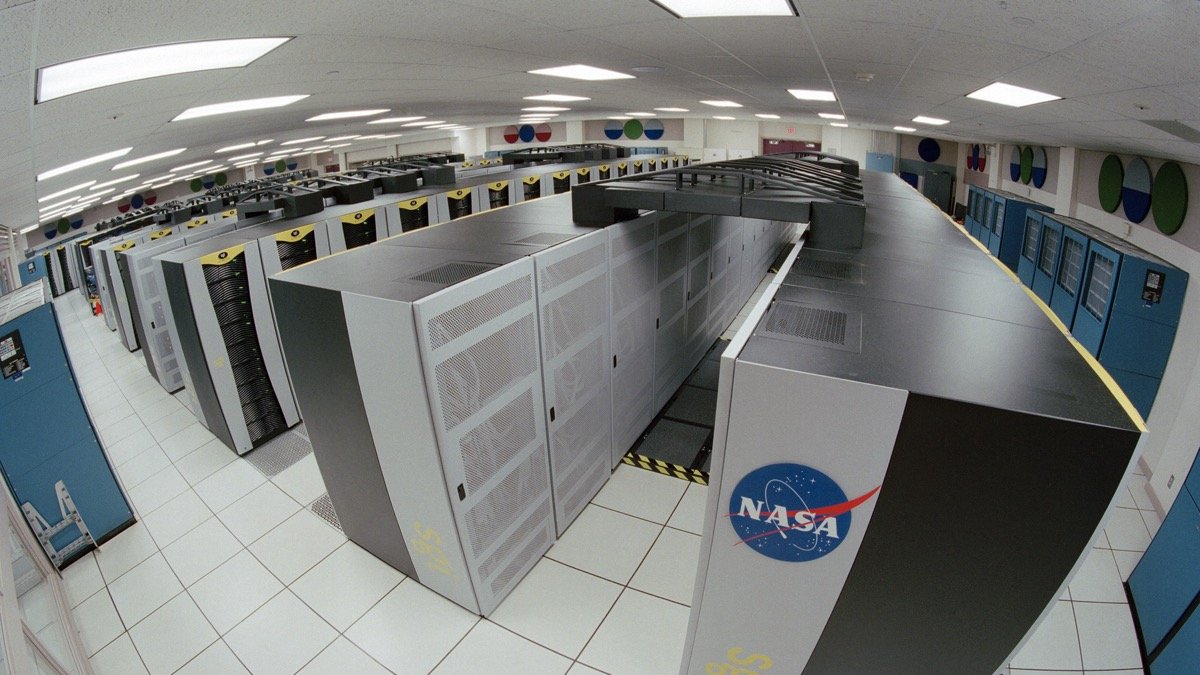
Image: Columbia supercomputer at NASA’s Advanced Supercomputing Facility, 2006. Illustrative archival computing infrastructure; not hardware used in the studies discussed. Credit: Trower, NASA via Wikimedia Commons. License: Public domain (PD-USGov-NASA). Modifications: center-cropped and resized to 1200 × 675 pixels; no generative edits.