Teaching an AI system to remember creates a second responsibility: deciding when that memory should stop governing its answers. Google Research’s October 27 explanation of its “sleep” framework brings that tension into focus. Its proposed cycle moves information from temporary context into longer-lived model parameters. TENS Magazine’s analysis is that successful continual learning must make corrections durable, too.
The immediate news is a research explanation, not a newly released consumer feature. The underlying paper, by Ali Behrouz, Farnoosh Hashemi, Adel Javanmard and Vahab Mirrokni, was submitted to arXiv in June and revised in July. Its record also notes an earlier public version. Keeping those dates separate matters: a new account of a technique does not make its experiments newly conducted.
Remembering and being current are different jobs
Google describes an active phase that receives information and an offline phase that consolidates it. The system updates numerical weights within a fixed architecture and human-defined training rules. Its “dreaming” stage uses generated practice material. These are computational procedures, not evidence of consciousness or biological sleep.
The researchers report improvements across several learning evaluations. Their paper frames consolidation as transferring knowledge into a larger network while preserving earlier knowledge. That addresses a recognizable problem: learning something new can damage an AI model’s performance on what it learned before. It does not follow that every previously learned answer deserves permanent protection.
Consider a hypothetical museum assistant. It learns that the museum closes at six, then receives an authorized notice changing Thursday closing time to eight. Remembering the original hours is useful for questions about last month. Repeating them as today’s schedule is an error. The desired behavior depends on the question’s date and scope, not simply on whether the old fact survived training.
TENS proposes testing these two questions together: “When does the museum close this Thursday?” and “When did it close on Thursdays before the change?” A model that answers only the first correctly may have overwritten useful history. One that answers only the second may have preserved an obsolete rule. An evaluation should reward the distinction rather than treating all retention as success.
A correction needs its own evidence trail
NIST’s AI Risk Management Framework 1.0 provides a separate institutional lens. It calls for risk management throughout a system’s lifecycle, documentation and continuing review as context and capabilities change. It also treats feedback and monitoring as ongoing responsibilities. This is general guidance, not a NIST evaluation or endorsement of Google’s research.
Applied to the museum example, that guidance suggests a practical question for deployment: what evidence would let a reviewer reconstruct why the answer changed? The correction notice, its effective date and the system version that absorbed it would each explain something different. A timestamp saying the model was updated would not establish that it learned the right exception.
TENS proposes keeping a correction record outside the model: the old statement, the authorized replacement, the period each applies to and a small set of questions that distinguish them. The same questions should be asked before consolidation, immediately afterward and after unrelated learning. That sequence would reveal whether a correction merely worked in the current conversation or survived subsequent updates.
This proposal is an evaluation design, not a claim that the reported framework fails such tests. The cited research does not, by itself, establish how a particular deployed museum assistant would behave. Nor would passing this small example establish reliability across every domain. Its value is that it turns an ambiguous promise of better memory into observable behavior.
What counts as a trustworthy update?
A further complication is authority. Suppose a visitor casually tells the assistant that Thursday hours have changed, while the museum’s approved schedule still says otherwise. Persistent learning should not erase the difference between an unverified remark and an authorized correction. The issue arises before the system decides how to compress or rehearse the information.
TENS would therefore add a second version of the experiment with conflicting inputs. The test would hold the wording of the proposed change constant while varying its source and approval status. Reviewers could then see whether the model responds to evidence of authority or simply to repetition. A convincing answer should explain uncertainty when the conflict has not been resolved.
There is also a distinction between reversing a model update and repairing an answer. Returning to an earlier model version might restore the original hours but lose later legitimate changes. In this hypothetical setting, a rollback would need to be checked against both the disputed correction and subsequent approved updates. Otherwise, recovery could trade one known error for several quieter ones.
Google’s explanation makes continual learning easier to discuss as an operational process. The next useful comparison is between systems that retain facts and systems that preserve the conditions under which those facts remain valid. For people relying on an assistant, the meaningful question is whether yesterday’s knowledge and today’s correction can coexist without being confused.
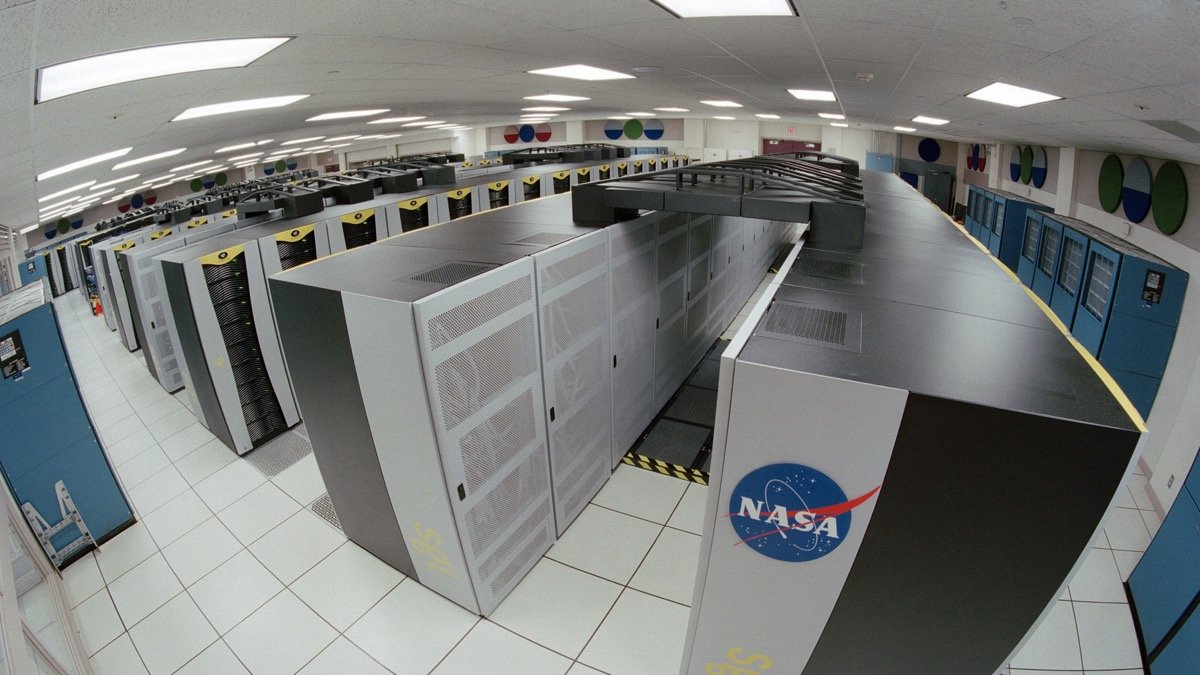
Image: Columbia supercomputer at NASA’s Advanced Supercomputing Facility, 2006. Illustrative archival computing infrastructure; not hardware used in the research discussed. Credit: Trower, NASA via Wikimedia Commons. License: Public domain (PD-USGov-NASA). Modifications: center-cropped and resized to 1200 × 675 pixels; no generative edits.