

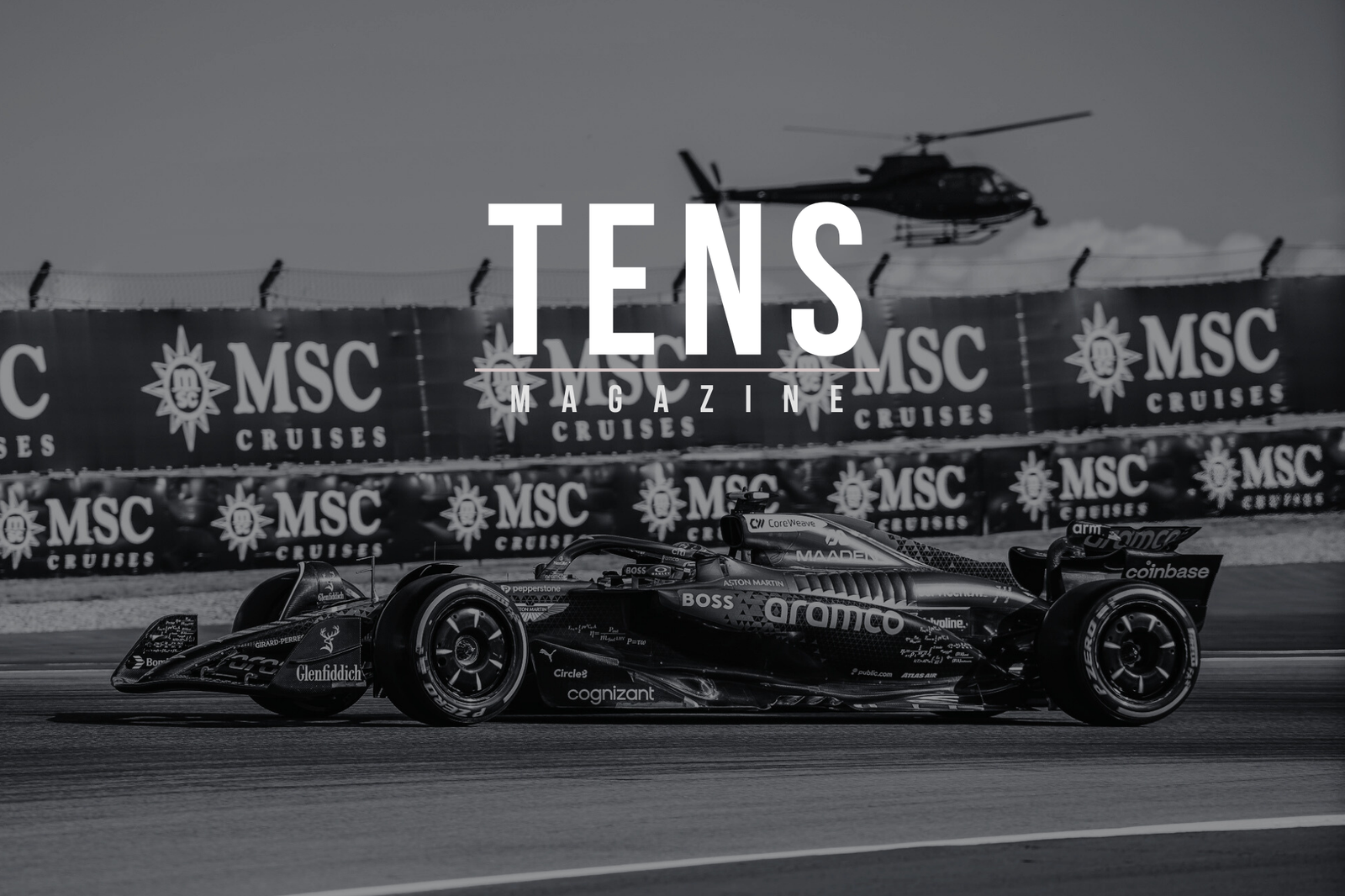
By The TENS Magazine Editorial Staff
1. Nature of the Technical Issue The specific problem identified by Aston Martin involves high-frequency vibrations manifesting within the chassis during high-speed loads. These oscillations are not merely a comfort issue for the drivers but represent a critical mechanical anomaly that can lead to catastrophic component failure. In Formula 1 engineering, resonance frequencies can cause rapid fatigue in metallic and carbon fiber parts, potentially leading to suspension collapse or power unit mounting failures. The team has isolated this data from recent telemetry, indicating that the harmonic disturbances are severe enough to threaten the structural integrity of the car over a full race distance.
2. Risk of Retirement The primary concern stemming from these vibrations is the high probability of a Did Not Finish (DNF) result for one or both cars. Formula 1 vehicles are designed with tight tolerances, and excessive shaking can loosen hydraulic fittings, disrupt electrical connections, or fracture gearbox casings. If the vibration levels exceed the tested limits of the car’s sub-components, the team faces a scenario where the cars may be forced to retire purely for safety reasons or due to terminal mechanical failure before the checkered flag drops at Albert Park.
3. Albert Park Circuit Characteristics The layout and surface of the Australian Grand Prix circuit exacerbate these specific reliability concerns. Albert Park is a semi-street circuit that, despite recent resurfacing efforts, retains a degree of bumpiness and undulation distinct from permanent tracks. These surface irregularities induce vertical loads into the suspension systems, which can amplify existing vibration issues. The high-speed nature of the track, combined with these bumps, creates a worst-case scenario for a car already suffering from stability or resonance issues, placing maximum stress on the affected components.
4. Compromises in Car Setup To mitigate the risk of failure, Aston Martin engineers may be forced to compromise the optimal performance setup of the AMR challenger. Standard remedial actions for vibration and bottoming out involve raising the ride height of the car or stiffening the suspension settings to prevent the floor from striking the track surface. However, in the current era of ground-effect aerodynamics, raising the ride height significantly reduces downforce levels, leading to a direct loss of lap time and overall competitiveness against rival teams.
5. Impact on Driver Performance Severe vibrations have a tangible physical impact on the drivers, affecting their ability to operate the vehicle at the limit. Excessive oscillation can cause blurred vision, making it difficult to spot braking markers and apexes with precision, a phenomenon famously observed during the early stages of the current regulation era. Furthermore, the physical toll of enduring violent shaking for 58 laps can lead to increased driver fatigue and a loss of concentration, increasing the likelihood of unforced errors during the Grand Prix.
6. Reliability vs. Performance Dilemma The team faces a strategic dilemma between prioritizing reliability to ensure a finish and pursuing maximum performance to score points. In Formula 1, the old adage “to finish first, first you must finish” dictates that reliability must take precedence. Consequently, the team may have to run the power units in more conservative modes or instruct drivers to avoid aggressive kerb usage, strategies that inevitably hamper their ability to attack or defend position during the race, potentially relegating them to the lower midfield.
7. Limited Troubleshooting Time The timeline for resolving such complex mechanical issues during a race weekend is incredibly tight. With strict parc fermé regulations coming into effect after qualifying, the team has limited opportunities to swap out components or make significant structural changes to the car without incurring pit lane start penalties. This places immense pressure on the mechanics and data engineers to find a “band-aid” solution that ensures the car survives the race without breaching technical regulations or requiring a complete suspension redesign overnight.
8. Potential for Component Damage Beyond the immediate risk of retiring from the Australian Grand Prix, running a car with severe vibration issues risks damaging limited-allocation components. Formula 1 teams operate under a strict cost cap and component quota for engines and gearboxes. If the vibrations cause a gearbox to crack or damage the internal combustion engine’s ancillaries, it could force the team to dip into their pool of spare parts earlier in the season than planned, leading to grid penalties later in the championship year.
9. Correlation with Simulation Tools The emergence of these vibration issues at the track highlights a potential disconnect between the team’s simulation tools and on-track reality. Wind tunnels and Computational Fluid Dynamics (CFD) models are excellent for aerodynamic mapping but can sometimes struggle to perfectly replicate the dynamic mechanical loads caused by specific track surfaces. Identifying why these vibrations were not predicted in the factory is crucial for the team’s long-term development program, as it suggests a gap in their validation processes.
10. Championship Implications Failing to finish the Australian Grand Prix would result in a zero-point haul for the affected cars, a damaging blow in the highly competitive Constructors’ Championship. In a midfield battle where every point is vital for end-of-year prize money and standing, a double DNF or a compromised race due to reliability fears allows direct rivals to capitalize and build a points gap. Ensuring the cars cross the finish line, even in a diminished performance state, is critical for maintaining momentum in the season standings.

All Photo Credits: Sir Daniel David (@SirDanJets)
“Shot by @SirDanJets”

