

By The TENS Magazine Editorial Staff
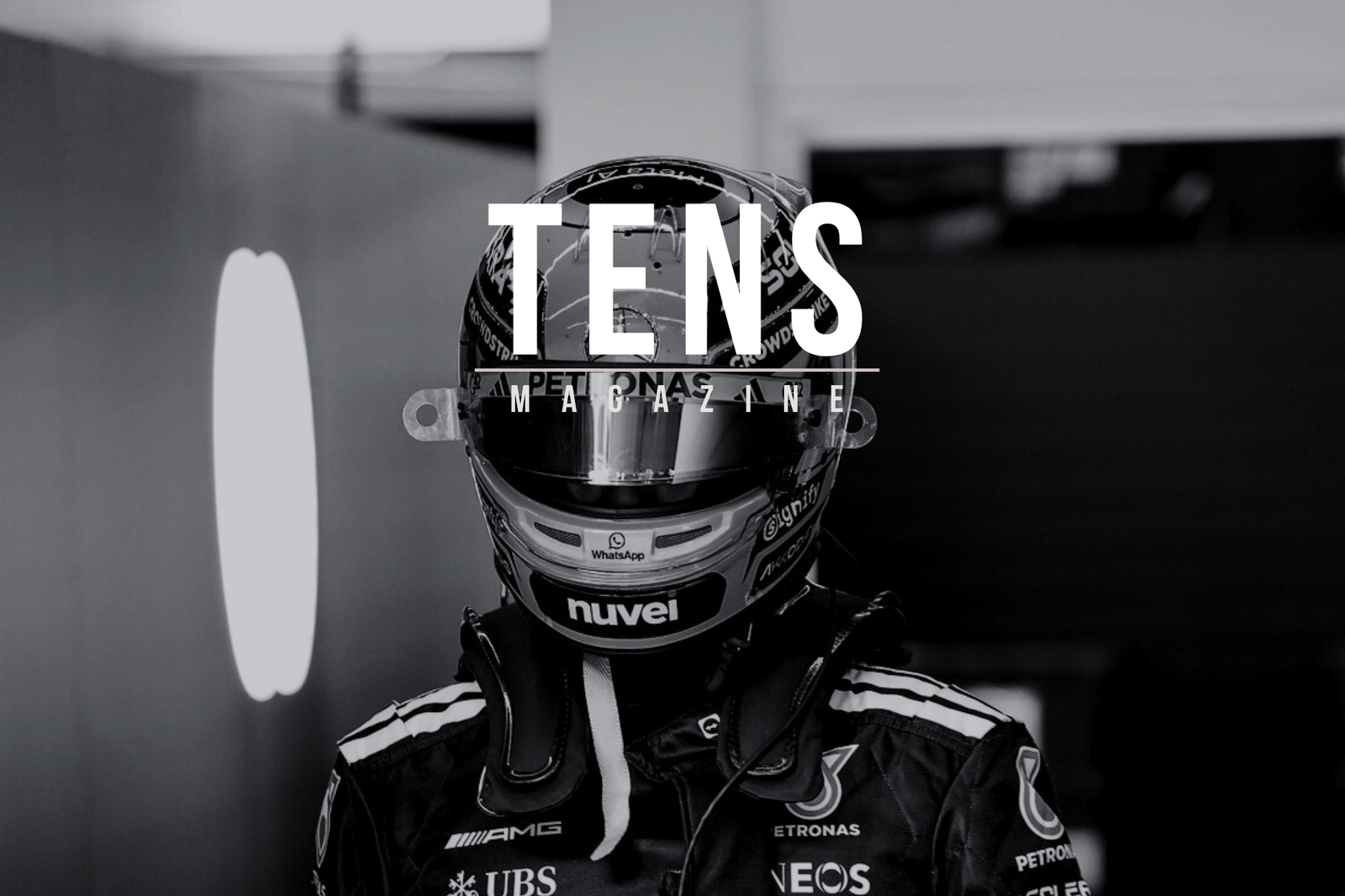
MELBOURNE, Australia — The dawn of Formula 1’s new era arrived at Albert Park on Sunday, and it did so with a silver-and-black streak that left the rest of the grid searching for answers. George Russell secured a commanding victory at the 2026 Australian Grand Prix, leading teammate Kimi Antonelli home in a flawless Mercedes 1-2 that confirmed the preseason whispers: the Silver Arrows are back to their dominant best.
Mercedes didn’t just start the race in Melbourne; they dictated its entire tempo from the opening lap. The 2026 technical regulations clearly favor the Silver Arrows’ new architecture. After securing a dominant front-row lockout on Saturday featuring Russell on pole and the teenage sensation Antonelli in P2 the duo maintained a vice-like grip on the lead, effortlessly neutralizing a persistent Ferrari attack.
A Battle of Strategy and Power
Despite the final result, the victory wasn’t without its tensions. Charles Leclerc, starting fourth, made a lightning-quick getaway to leapfrog Antonelli and pressure Russell into Turn 1. For much of the opening stint, it was a high-stakes game of energy management as Leclerc and his new teammate, Lewis Hamilton, stayed within striking distance.
However, the sheer pace of the Mercedes W17 proved too much to contain. As the race progressed, the superior efficiency of the Mercedes power unit—designed under the sport’s new 50-50 electrical-to-petrol split—allowed Russell to pull away in the clean air.
Ferrari’s hopes for a strategic upset were further dampened during a mid-race Virtual Safety Car period. While Mercedes executed a precise stop-and-drop strategy, the Ferrari pit wall hesitated, leaving Leclerc and Hamilton to settle for third and fourth, respectively. For Hamilton, finishing behind his former team in his first race for the Scuderia was a bittersweet introduction to life in red.
The “Chasm” in Performance
The narrative circulating through the paddock following the podium ceremony was singular: Mercedes has built a car that is fundamentally faster than anything else on the grid. While teams like McLaren and Red Bull struggled with the complexities of the new active aerodynamics and energy deployment, Mercedes appeared to be operating in a different category entirely.
“We knew we had a good car, but to see it perform like this under race conditions is a testament to the work done at Brackley and Brixworth,” Russell remarked after the race. “Kimi did an incredible job today as well. To start the season with a 1-2 is exactly what we needed.”
The performance gap was most evident in the closing laps. Russell and Antonelli were able to “massage” their tires and manage their batteries while still extending the lead over Leclerc to more than 15 seconds. It is a margin of victory that has sent shockwaves through the pit lane.
Looking Ahead
While it is only the first of 24 races, the hierarchy for 2026 seems established. Red Bull’s Max Verstappen could only manage a recovery to sixth after a disastrous qualifying session, and reigning champions McLaren found themselves nearly a minute off the lead pace.
As the circus moves to Shanghai for the Chinese Grand Prix next weekend, the question is no longer who has the fastest car, but how long it will take the rest of Formula 1 to close the gap. For now, George Russell and Kimi Antonelli have set the gold standard, and the rest of the world is simply playing catch-up.

