Buffalo’s first victory in its new Highmark Stadium supplied an opening-night spectacle and a more useful football lesson: building a lead and protecting it are separate offensive jobs. Josh Allen and the Bills did both in Thursday’s 41–31 win over Detroit, pairing an early scoring surge with answers that kept the Lions from turning productive possessions into a close finish.
Allen contributed three passing touchdowns and two rushing scores, according to the official Bills report. Buffalo moved to 2–0; Detroit fell to 1–1. Those are the confirmed outcomes. TENS Magazine’s analysis is that the order of the scoring explains this game better than the final margin alone, while also leaving a clear distinction between Buffalo’s offensive command and its unfinished defensive work.
The lead created a different assignment
Detroit’s official recap records Buffalo touchdowns on its first three possessions and a 21–0 advantage early in the second quarter. The Lions eventually produced four touchdown passes from Jared Goff. Yet their later scoring occurred inside a problem created before their offense settled: they needed to gain on Buffalo, rather than simply keep scoring alongside it.
That distinction changes how a successful possession should be judged. For the trailing team, a touchdown can be necessary without being sufficient. Once the deficit spans several scores, the offense needs help from the next defensive series. Buffalo’s early lead made Detroit dependent on a sequence of events: score, get a stop, then score again. A productive attack could complete only part of that sequence.
This is why treating the final ten-point difference as a description of the entire contest would be misleading. It records where the teams finished, but conceals the extra work Detroit had to do merely to bring the game within reach. The opening possessions established that burden; later offensive totals cannot erase it.
Answers mattered as much as totals
The halftime score was 27–10. Detroit’s opening second-half touchdown reduced the gap to 27–17, but Buffalo responded with a 15-play touchdown possession. When the Lions subsequently cut the deficit to 34–24, the Bills added another touchdown before Detroit’s final score, as the Lions’ account details.
The arithmetic gives those exchanges their meaning. Detroit scored 21 second-half points and conceded 14, improving its position by seven points. Subtract that seven-point gain from its 17-point halftime deficit and the final ten-point margin follows. The comeback improved the scoreboard without producing a one-possession finish. This calculation measures the gap; it does not claim that every second-half play had equal importance.
Buffalo’s long response after the break was especially valuable because it combined possession with points. Merely holding the ball can leave a trailing opponent an opening if a drive ends empty. Scoring quickly preserves a lead but returns the next opportunity sooner. A sustained touchdown drive accomplishes both tasks: it makes the opponent wait and then restores the scoring burden. That is the specific form of control the Bills demonstrated.
Allen’s production had support
The official Buffalo account credits James Cook III with 101 rushing yards on 11 first-half carries and Dalton Kincaid with seven catches for 95 yards across the game. It also describes Allen gaining 39 yards on three opening-drive scrambles. These details broaden an assessment that could otherwise stop at the quarterback’s five touchdowns.
Allen’s contribution was central, but a touchdown ledger allocates credit differently from an explanation of how an offense advances. A quarterback receives the passing touchdown in his statistical line; the possession may also depend on a runner creating manageable situations or a receiver extending it. Buffalo’s performance is more informative when those functions remain visible. The supported conclusion is that several routes to yardage worked that night, not that any one combination is guaranteed to travel through the season.
Keep the defensive verdict separate
There is also a limit to what offensive control proves. Buffalo’s report identifies two early Greg Rousseau sacks, including one that ended Detroit’s opening possession. The Lions nevertheless generated substantial passing production. Those facts can coexist: early defensive stops helped establish the game’s shape, while later possessions exposed reasons for continued scrutiny.
The right follow-up is therefore more specific than asking whether Buffalo looked dominant. Can its defense force stops when the offense has not already built a cushion? Can its offense sustain scoring drives when the early possessions are less productive? Thursday’s result provides evidence of successful execution in one game state, not settled answers for every circumstance.
For Detroit, the useful separation is equally clear. Recovering offensive rhythm is different from recovering scoreboard position. For Buffalo, opening a stadium with a win is the milestone; making Detroit’s touchdowns insufficient was the mechanism. The Bills earned both, and the distinction explains why this was a stronger offensive performance than the closing margin can show on its own.
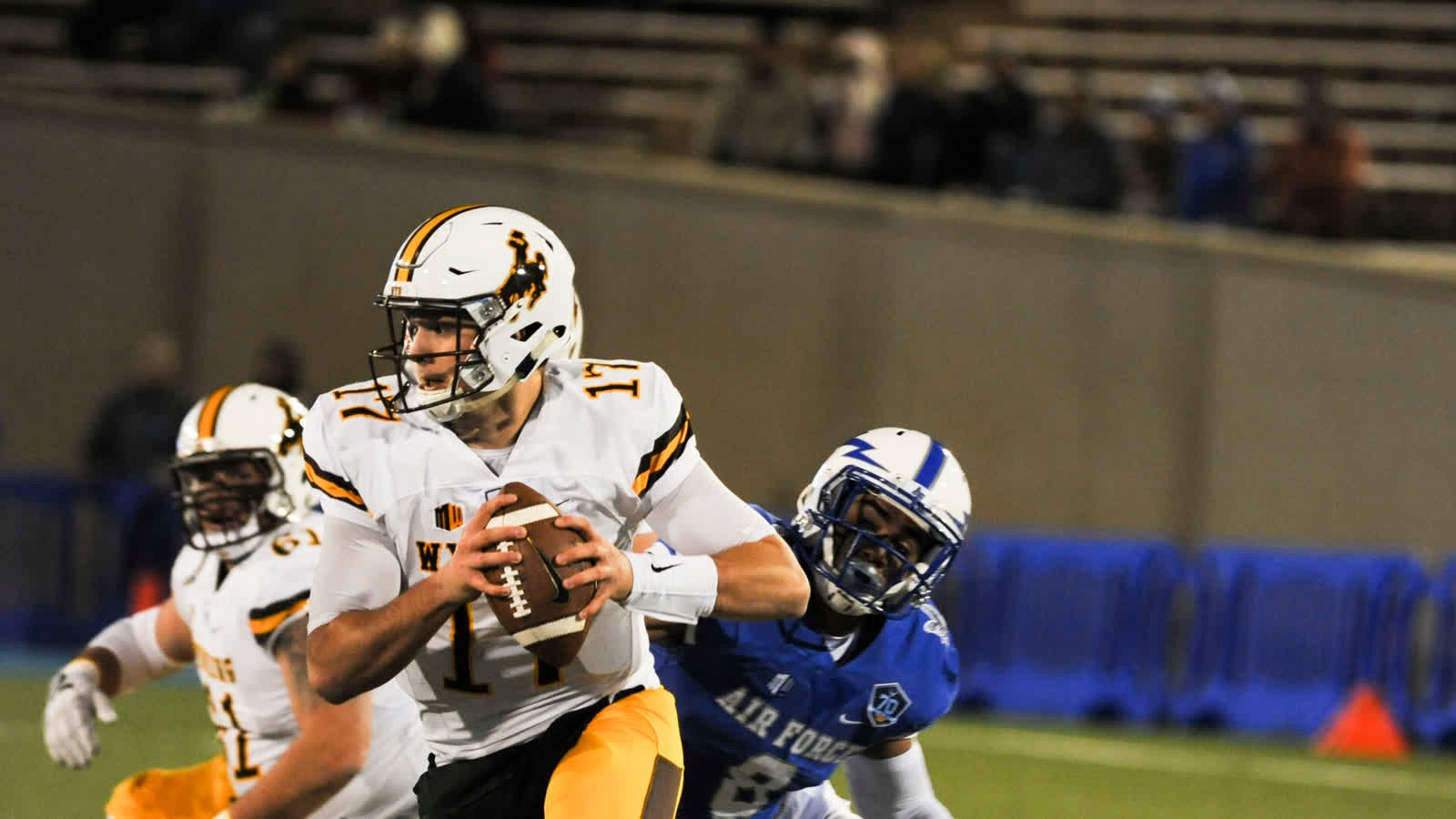
Archive cover: Josh Allen playing for Wyoming against Air Force in November 2017; this is not a photograph of Thursday’s game. Photo: United States Air Force Academy via Wikimedia Commons. Public domain. Cropped and resized for a landscape cover.