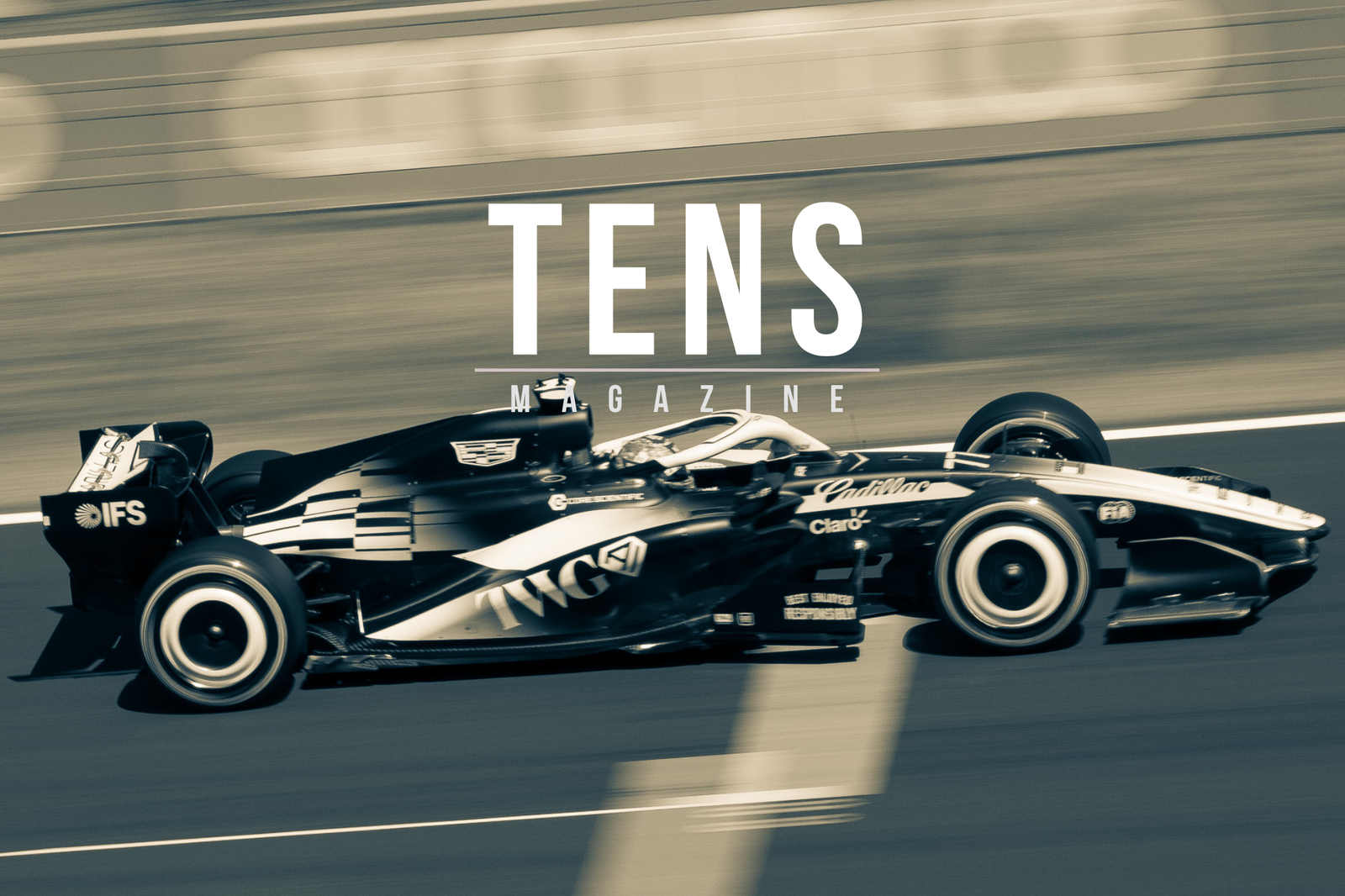
Cadillac has made the first genuinely ruthless decision of its Formula 1 life. On Wednesday, the team appointed Marcin Budkowski as team principal and removed Graeme Lowdon, the executive who helped turn an approved entry into an operating race team. The official announcement praised Lowdon for building the foundation and presented Budkowski as the leader for Cadillac’s next phase. Hours later, chief executive Dan Towriss made the separation much sharper. He told reporters that the decision was his, was not mutual, and followed a process that began months ago. Lowdon, however, learned the news only that morning. Cadillac is therefore asking the paddock to accept two ideas at once: that the succession was considered over time, and that the handoff itself had to be compressed into a few hours. That tension matters more than the familiar language about winning mindsets. The change is an early test of whether a new Formula 1 organization can accelerate accountability without discarding the knowledge accumulated while it was being built.
What Cadillac has confirmed
Budkowski will lead Cadillac’s on-track operation beginning at Zandvoort. His background crosses the technical and political boundaries of modern Formula 1: aerodynamic roles with Prost, Ferrari and McLaren, leadership of the FIA’s Formula 1 technical department, and an executive position with Renault and Alpine. Cadillac’s statement says his immediate focus will be aligning people, tools and information flow so decisions arrive faster and the car improves from race to race.
The timing is unmistakable. Cadillac sits last in the constructors’ championship and remains without a point after 11 rounds of its debut season. Autosport reported Towriss saying the change was a function of performance and how the team’s needs had evolved, while declining to detail where he and Lowdon no longer aligned. Towriss also rejected the idea that Lowdon had merely been an interim appointment. He described nearly four years of planning and building, then argued that secrecy was necessary because visible talks with a successor could have destabilized the existing leadership. Those are confirmed facts and attributable explanations. They do not establish that Lowdon alone caused Cadillac’s competitive position, or that Budkowski will produce an immediate result.
TENS analysis: from construction to conversion
The useful way to read this move is not as panic over a blank scorecard. A new team starting at the back was always plausible. The more revealing signal is that Cadillac believes the skills required to create the organization are no longer identical to those required to convert it into lap time. Lowdon’s phase was expansive: obtain approval, recruit across multiple sites, integrate a Ferrari customer power unit, establish trackside routines and get two cars to the grid. Budkowski’s stated phase is selective. He must decide which information reaches which desk, which development paths deserve cost-cap resources and which operational habits survive contact with competitive pressure. Cadillac is replacing a builder’s mandate with an operator’s mandate before the first one has fully disappeared.
That overlap creates the central risk. Formula 1 teams do not store institutional knowledge only in drawings or databases. They store it in the reasons behind compromises: why a component was late, why a simulation correlation was distrusted, why a supplier was retained, or why one race procedure was designed around a weakness somewhere else. An abrupt leadership exit can make a team feel decisive while removing the person who remembers how those compromises connect. The fact that Lowdon was informed on announcement day does not prove that knowledge will be lost. It does mean Cadillac must show that the transfer of authority is more complete than the transfer of the job title appeared to be.
Budkowski’s unusual résumé may be the answer Cadillac thinks it has found. His FIA experience gives him a regulator’s view of how technical intent becomes enforceable language. His manufacturer-team experience gives him a working view of how departments compete for time, money and influence. The potential advantage is not a magic upgrade; it is translation. Cadillac needs a leader who can turn symptoms seen at the circuit into priorities that its growing facilities and engineering groups can act on together. The limitation is equally important. No organizational chart can create aerodynamic load, mechanical confidence or execution quality by decree. Any improvement will still depend on development lead times and evidence from the car.
The first three tests
Zandvoort should not be treated as a referendum on Budkowski. The car arriving there was conceived and prepared before his appointment. The first meaningful test is decision clarity: whether Cadillac can explain what changed in responsibility without creating parallel chains of command. The second is continuity: whether race operations remain stable while the new principal starts challenging development priorities. The third is learning speed across the remaining events, visible not only in results but in cleaner weekends, better correlation and fewer repeated problems.
This is analysis, not a forecast of an immediate points finish. The assumption is that Cadillac’s greatest near-term opportunity lies in improving how quickly it learns, because a midseason leadership change cannot instantly redesign the car. If Budkowski shortens that loop while preserving the hard-won context of Lowdon’s build phase, the abruptness may look like controlled succession. If knowledge and authority fracture together, Cadillac will have changed the person at the top without improving the system beneath him. The first boss change in the team’s history is therefore not proof of ambition by itself. It is a demand that Cadillac show it can hand over speed without dropping memory.