Zach Charbonnet’s return to practice gives Seattle a chance to prepare a backfield option before a difficult stretch of its calendar. The consequential question is how much useful work the Seahawks can fit into that opportunity. A practice window has a fixed duration; the football preparation available inside it changes from week to week.
The Seahawks announced on October 1 that Charbonnet had been designated to practice after opening the season on the physically unable to perform list. Their announcement says he must still miss one more game before becoming eligible to return. Seattle’s official practice photographs subsequently showed him participating Thursday. Those are meaningful developments, without establishing an activation date or an eventual workload.
What Seattle can decide now
According to the team’s announcement, the designation starts a 21-day period in which Charbonnet can practice without occupying a place on the 53-man roster. Seattle must then add him to that roster or leave him on PUP for the rest of the season. The immediate gain is access to football work while the roster decision remains open.
TENS Magazine’s analysis is that this separation creates value only if Seattle uses the practice period to answer specific football questions. A coach can evaluate assignment execution, timing within a play and communication with teammates. Those questions differ from deciding how many touches a player should receive in a game. Participation supplies evidence for later decisions; it does not settle them all at once.
That also limits what spectators can conclude from a practice image. The team’s photographs establish that Charbonnet was on the field. They do not reveal the staff’s complete evaluation, quantify his workload or establish readiness for a particular assignment. Treating visible participation as a finished return would skip the part of the process the designation makes possible.
The schedule changes the value of a day
Seattle’s official schedule lists the Chargers at home on October 4, the 49ers at home on October 11 and a trip to Denver on Thursday, October 15. The interval between the San Francisco and Denver games is four calendar days. Seattle then has ten calendar days between Denver and its October 25 home game against Kansas City.
Those intervals are calculated from the published game dates, not from a disclosed practice plan. They nevertheless show why a return window cannot be understood simply as three interchangeable weeks. One part of the schedule compresses the space between games; another expands it. Neither interval tells us how many full practices Seattle will actually hold.
The practical implication is that preparation completed before the Denver week may be especially useful. It gives coaches information before the shortest turnaround in this stretch. Waiting for the longer break afterward could offer more calendar space, but it would also move the evaluation later within the already-running practice window. This is a scheduling tradeoff, not a forecast of when Charbonnet will play.
The distinction matters when judging the eventual decision. An activation would establish roster status. A game appearance would establish participation. Neither, by itself, would explain whether Seattle intends a narrow package of assignments or a broader role. Each conclusion needs its own evidence.
A returning back cannot answer every offensive question
The Seahawks’ published summary of offensive coordinator Brian Fleury’s October 1 press conference provides another important piece of context. It describes discussion of Seattle moving away from the run after falling behind, ball security involving rookie back Jadarian Price, and the rotation at right guard. Those topics reach beyond the availability of any one runner.
For that reason, Charbonnet’s progress and Seattle’s offensive improvement should be evaluated separately. Adding an available back can expand the staff’s choices. It cannot independently change the score situation that influences play selection, resolve every blocking assignment or eliminate possession-ending mistakes. Attributing a future change in rushing volume solely to his presence would ignore the other factors the coordinator addressed.
A more informative assessment would ask how the running game functions when Seattle still has a meaningful choice between run and pass. It would also examine whether possessions survive avoidable errors and whether the intended blocking creates usable opportunities. These are criteria for watching the offense, not claims that TENS has conducted a new film study or knows the coaches’ private grading.
Seattle therefore has two jobs underway: gather evidence about a returning player and improve the operation around whoever is carrying the ball. The practice designation advances the first. The schedule explains why the timing matters. Fleury’s discussion explains why the second job remains collective. Keeping those questions distinct offers a clearer account of this development than assigning Charbonnet a return date or treating his eventual availability as a complete solution.
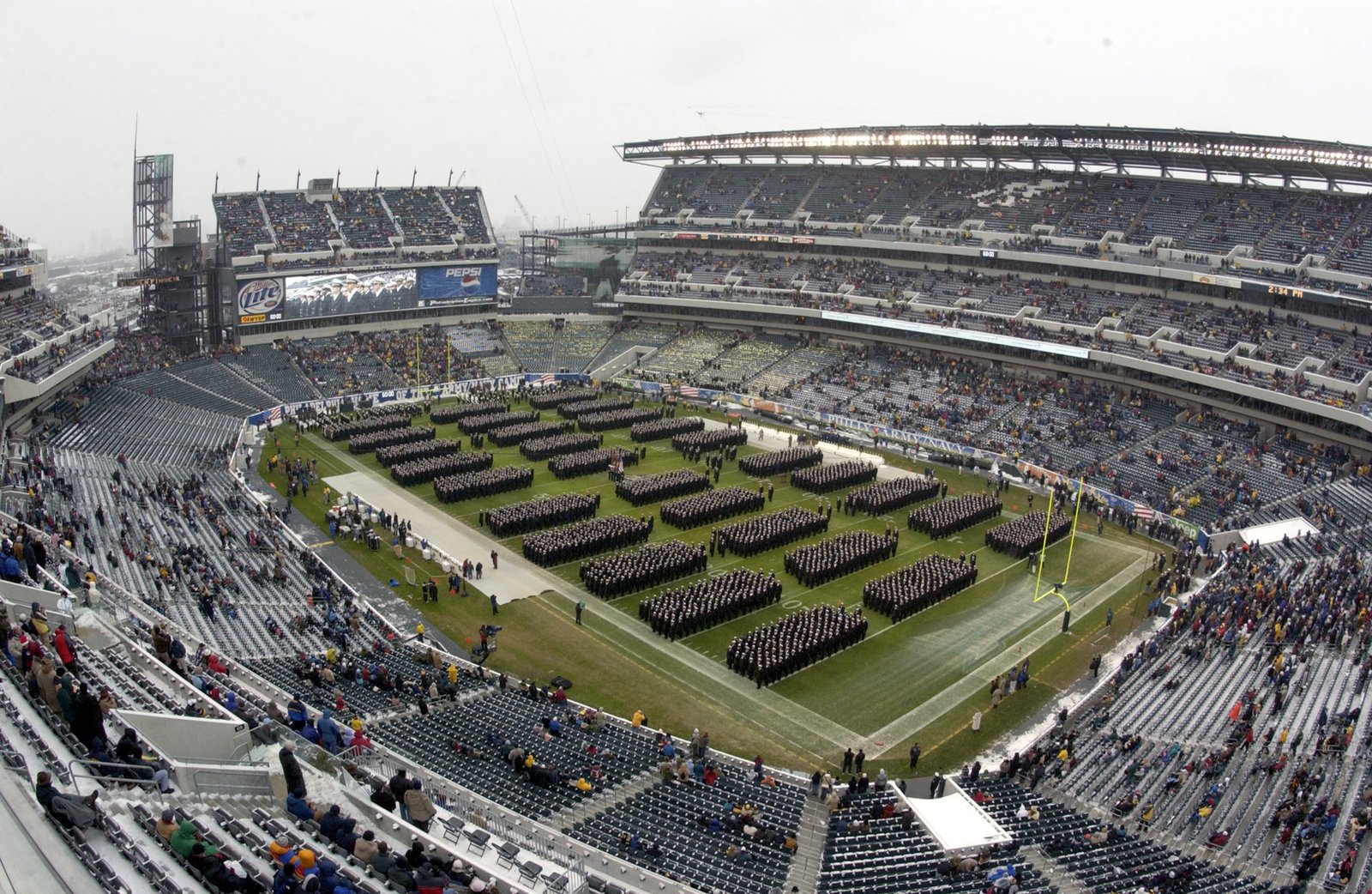
Image: Archive photograph of a U.S. Navy helicopter over Seattle’s Lumen Field, then named CenturyLink Field, before the 2015 NFC Championship Game. Photo by U.S. Navy Mass Communication Specialist 3rd Class Caleb Cooper via Wikimedia Commons. License: Public domain, U.S. Navy work. Modifications: cropped from 4,733 × 3,150 pixels to a 4,733 × 2,662-pixel landscape frame, then resized to 2,400 × 1,350 pixels.