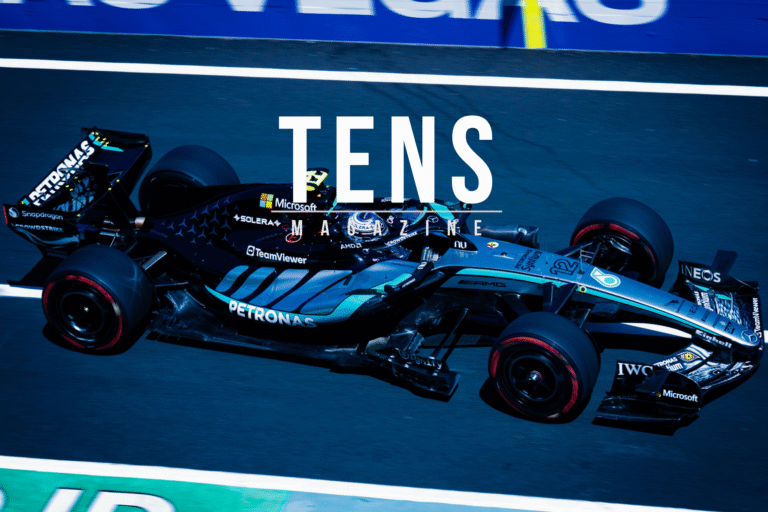
TENS Magazine analysis
Formula 1’s move to ten Sprints in 2027 changes more than the number of Saturday races. It makes preparation before arriving at a circuit a bigger part of the competitive bargain. The revealing number is eight: the additional one-hour practice sessions that would disappear when four more weekends adopt the current Sprint format.
The calendar announced by Formula 1 and the FIA on September 16 contains 24 Grands Prix and ten Sprints, up from six. Bahrain, Australia, Japan, Monaco and Abu Dhabi join the Sprint roster for the first time. Motorsport’s reporting independently confirms the expansion and the unusual prospect of the season’s final two rounds, Qatar and Abu Dhabi, both using the format.
Those are confirmed scheduling decisions. Their effect on the racing remains an open question. TENS Magazine’s view is that the expansion should be judged through three separate measures: how teams spend their reduced preparation time, how much additional competition viewers actually receive, and whether the extra scoring opportunities change decisions at the sharp end.
Eight hours change the choices
Formula 1’s current format explanation describes three one-hour practice sessions on a conventional weekend and one on a Sprint weekend. Applying that structure to a fixed 24-round calendar produces 60 scheduled practice hours with six Sprints: 18 multiplied by three, plus six. With ten Sprints, the same calculation becomes 14 multiplied by three, plus ten, or 52 hours.
That is an eight-hour reduction, about 13.3 percent, against the six-Sprint version of the same calendar. It is a controlled comparison, not a claim about how many hours teams actually completed in 2026. Weather, red flags and mechanical problems can reduce running, and any subsequent format revision would require the calculation to change.
Nor are eight practice hours equivalent to eight hours of all-purpose learning. Teams gather information during competitive sessions too. The difference is freedom: a practice run can be organized around a question, whereas qualifying and racing require the driver to pursue a result. A car circulating in competition is producing evidence, but often under conditions the engineers did not choose.
That distinction makes the first practice plan more consequential. Imagine a team choosing between checking a new component and measuring tyre behaviour over a longer run. With fewer sessions available, a problem in either programme leaves less room to repeat it before competitive action. The strongest response may be to simplify the plan and arrive with clearer priorities, rather than squeeze every possible experiment into one hour.
This is a forecast about incentives, not a prediction that the best simulator will win. Simulation can be wrong, track conditions can change and drivers can adapt exceptionally quickly. Reduced practice could expose a confident but mistaken preparation model just as readily as it rewards a good one. The useful measure is how often teams arrive with a workable baseline, and how effectively they recognize when it is wrong.
Count the sessions, then judge their value
Ten Sprints across 24 weekends means roughly 41.7 percent of the calendar uses the format. Relative to a six-Sprint schedule, that adds four short races and four Sprint qualifying sessions. Eight more competitive sessions is a tangible product change. It does not establish that every added session will be equally compelling.
Formula 1 cites audience and attendee research to support its decision, including total viewership 12 percent higher for Sprint weekends. That is the promoter’s reported comparison. Without the underlying methodology, it should not be treated as proof that the format alone caused the difference; venues, broadcast times and championship circumstances could also matter.
Monaco makes that distinction particularly useful. An additional qualifying contest can have value on its own, even if the short race offers a different kind of spectacle. The fair test is to assess the two additions separately. Did Friday qualifying deliver a meaningful contest? Did Saturday’s Sprint add uncertainty or merely repeat an order already established? Combining them into a single verdict hides what worked.
More points do not guarantee a closer title
Under the current eight-point reward for a Sprint win, ten victories would be worth 80 points, compared with 48 across six events. The difference is 32 possible points for one driver. This arithmetic assumes the existing scoring continues; it is neither a prediction of anyone’s results nor a measure of how far apart title rivals will finish.
Extra opportunities can help a pursuer, but they can also strengthen a leader who keeps executing better. The back-to-back Sprint finish therefore increases the number of consequential decisions without guaranteeing a dramatic finale. Treating additional points as automatic suspense confuses opportunity with competitive balance.
The calendar gives F1 more occasions to sell and teams more occasions to deliver. The sporting question is whether the added contests justify the preparation they replace. Watch the quality of Friday decisions, judge each extra session on its own merits, and follow the points actually gained between rivals. Those measures will tell us more than the headline count of ten.