By The TENS Magazine Editorial Staff
1. Strategic Partnership Renewal Google and Samsung have officially announced the integration of advanced artificial intelligence capabilities into the upcoming Galaxy S26 series. This collaboration deepens the existing technological partnership between the two entities, specifically leveraging Google’s Gemini models to enhance the hardware capabilities of Samsung’s flagship devices. The announcement confirms that the S26 series will serve as a primary launch vehicle for the latest iteration of Google’s mobile AI tools, continuing the trend of close cooperation between the Android operating system developer and the hardware manufacturer.
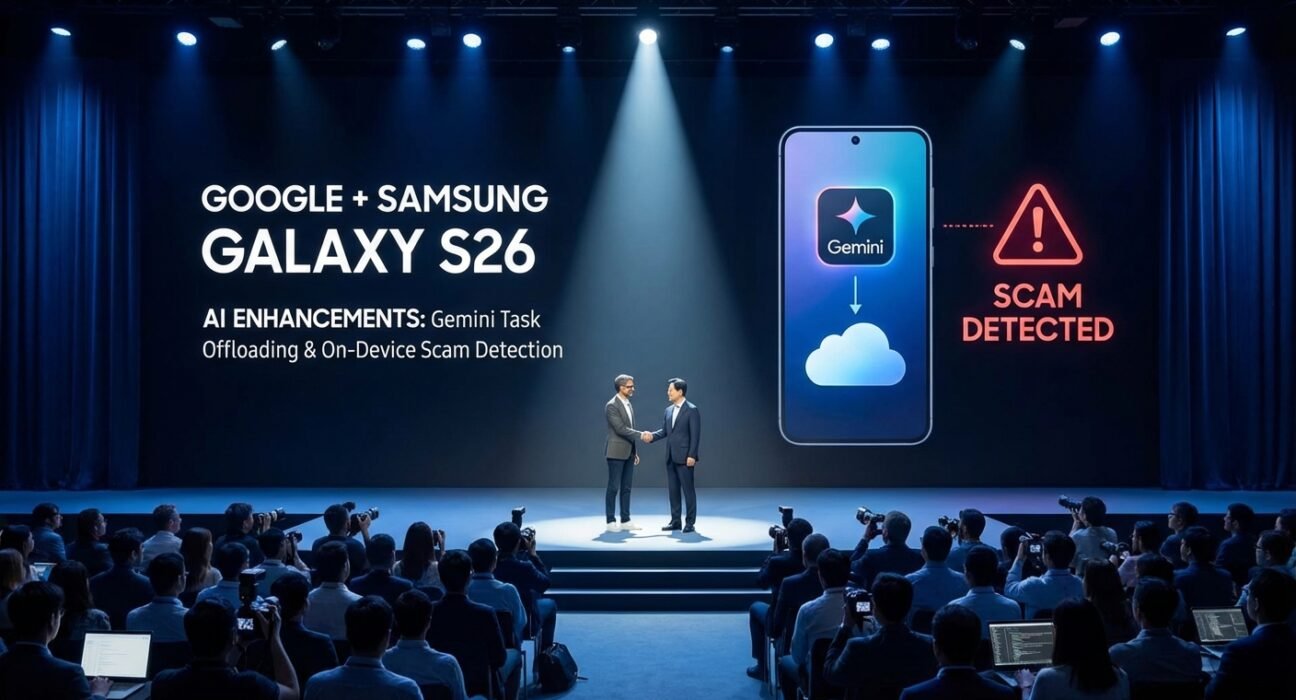
2. Gemini Task Offloading Architecture A central feature of this update is Gemini Task Offloading, a system designed to dynamically manage computational workloads. This technology determines whether a specific task requires the immediate processing power of the device’s Neural Processing Unit (NPU) or if it should be offloaded to Google’s cloud infrastructure. By automating this decision-making process, the system aims to optimize resource allocation based on network availability and the complexity of the user request, ensuring that the device maintains optimal performance levels during heavy AI utilization.
3. Real-Time On-Device Scam Detection The Galaxy S26 series will introduce a proprietary On-Device Scam Detection system powered by Google’s machine learning algorithms. Unlike previous iterations that relied on cloud-based databases to flag suspicious numbers, this new functionality analyzes call patterns and audio cues in real-time directly on the handset. This approach ensures that potential fraud warnings are generated immediately during a conversation without transmitting audio data to external servers, thereby addressing latency issues inherent in cloud-based security checks.
4. Privacy-Centric Data Processing The architecture supporting the scam detection and task offloading features prioritizes user privacy through a local-first processing protocol. Sensitive data, particularly regarding voice analysis and personal communications, remains confined to the device’s secure enclave unless the user explicitly authorizes cloud interaction. This methodology aligns with evolving industry standards for data protection, ensuring that the benefits of AI assistance do not compromise the confidentiality of user information or expose biometric data to potential external vulnerabilities.
5. Energy Efficiency Optimization The implementation of intelligent task offloading is projected to have a direct impact on the energy efficiency of the Galaxy S26 series. By routing complex, energy-intensive generative AI tasks to the cloud when appropriate, the device reduces the thermal load and power consumption of its internal processor. This management strategy is intended to extend battery life during periods of heavy usage involving large language models and image generation tools, addressing a common concern regarding the power demands of on-device artificial intelligence.
6. Multimodal Gemini Integration The integration involves multiple tiers of Google’s Gemini models, specifically tailored for the mobile environment. The device utilizes a lightweight version of the model for instant, low-latency responses to basic queries and system navigation. For more demanding operations, such as complex document summarization or advanced photo editing, the system seamlessly bridges to more powerful cloud-based iterations of the Gemini infrastructure, creating a hybrid AI experience that scales according to the specific requirements of the application in use.
7. Enhanced Communication Tools Enhancements to communication tools include upgraded real-time translation and transcription services powered by the new AI framework. The S26 series utilizes the updated algorithms to provide lower-latency translation during voice calls and face-to-face interactions. These improvements are designed to handle nuances in dialect and context with greater accuracy, reducing the processing delay that characterized earlier versions of live translation software and improving the fluidity of cross-language communication for enterprise and personal users.
8. System-Level Android Integration These AI enhancements are deeply integrated into the core Android operating system rather than functioning as a standalone application. This system-level integration allows third-party developers to access specific API endpoints related to Gemini’s offloading capabilities. Consequently, applications beyond the native Samsung ecosystem can leverage the specialized processing distribution, potentially standardizing AI performance across various software utilities installed on the device and ensuring a consistent user experience across the platform.
9. Contextual Awareness Capabilities The updated AI suite features improved contextual awareness, allowing the device to interpret user intent across different applications. By analyzing on-screen content and usage history locally, the system can proactively suggest relevant actions or retrieve information without manual input. This capability represents a shift toward multimodal AI interaction, where text, voice, and visual inputs are processed simultaneously to execute complex multi-step commands, streamlining workflow productivity for professional users.
10. Market Positioning and Standards This announcement marks a strategic move to solidify the Android platform’s position in the generative AI sector. By embedding Google’s most advanced offloading and security features directly into Samsung’s hardware, the companies aim to establish a benchmark for premium smartphone performance. The focus on hybrid processing—balancing edge computing with cloud resources—addresses the growing demand for mobile devices that can handle sophisticated AI workloads without sacrificing speed or security, positioning the S26 series as a pivotal device in the competitive landscape.