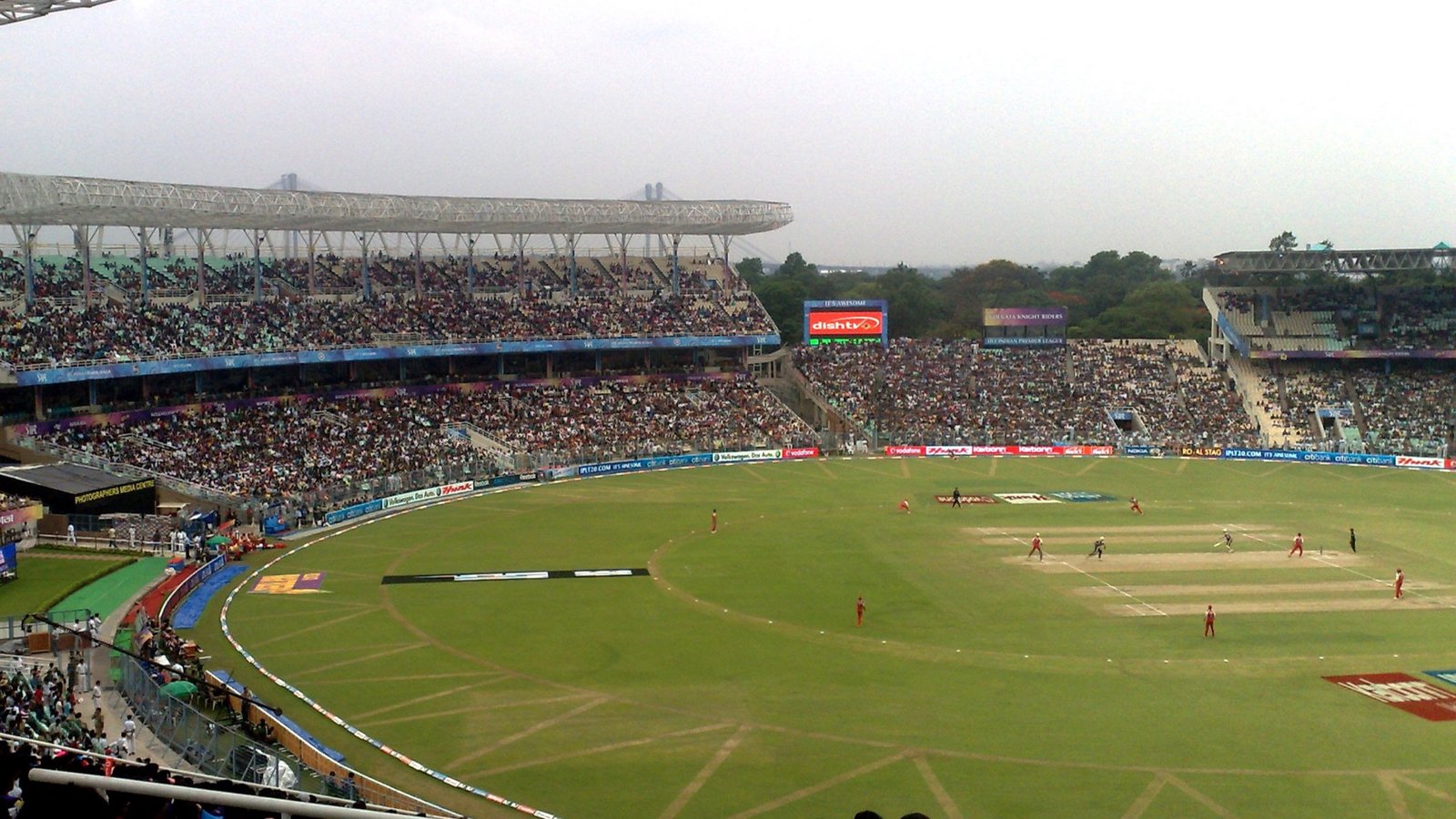
The Indian Premier League has crossed another financial threshold. Houlihan Lokey’s IPL Valuation Study 2026, released on July 29, estimates the competition’s business value at $20.6 billion and its stand-alone brand value at $4.3 billion. Those are not cash balances or annual revenue figures. They are valuation estimates built around expected future cash flows and the commercial power of the IPL name. The distinction matters because the league’s newest headline number is best understood as a bet on what its tightly controlled model can earn next. The report places business-value growth at 11.4 percent from $18.5 billion in 2025, while brand value rose 10.3 percent from $3.9 billion. It also points to two confirmed franchise sales as market evidence: Royal Challengers Bengaluru at $1.78 billion and Rajasthan Royals at $1.65 billion. The Guardian, reporting the study through Agence France-Presse, noted that RCB remained the most valuable franchise brand at $312 million.
What the new valuation measures
Houlihan Lokey says it valued the IPL business primarily with a discounted cash-flow model. That method estimates today’s value of projected future cash flows, including a terminal value beyond the explicit forecast period. The separate brand calculation uses a relief-from-royalty method, estimating what the league or a franchise would hypothetically pay to license a brand it did not own. Both results therefore depend on assumptions about future income, growth, risk and commercial durability. TENS analysis: The most useful comparison is not between the $20.6 billion valuation and a bank account. It is between the valuation and the revenue engine expected to support it. The study projects more than $1.8 billion in 2026 IPL revenue across broadcasting rights, sponsorship and ticket sales. Dividing the business valuation by that projection produces a multiple of roughly 11.4 times annual revenue. That is an analytical ratio, not a purchase price for the league, but it shows how much future growth is embedded in the headline figure.
The audited revenue engine
The BCCI’s audited financial statements for the year ended March 31, 2025 provide a firmer view of the underlying structure. In the accounts’ allocation for the 2025 IPL season, media-rights income was listed at ₹8,744.24 crore, franchise consideration at ₹2,212.66 crore and sponsorship income at ₹843 crore. Total season income was ₹11,834.90 crore, with projected expenditure of ₹6,736.41 crore and a surplus of ₹5,098.48 crore. TENS analysis: On those audited allocations, media rights supplied about 73.9 percent of season income. Franchise consideration contributed about 18.7 percent and sponsorship about 7.1 percent, leaving less than half of one percent from playoff gates, concessionaire income, penalties and other items. The league is commercially diversified by partner and platform, but not by revenue category: the central media contract still carries most of the weight. That concentration helps explain both the premium and the risk. Centralized rights sales give franchises visibility that many sports teams lack, while a salary cap limits the wage inflation that can consume revenue elsewhere. Houlihan Lokey describes the model as capital-light because teams generally do not carry stadium debt. Scarcity adds another layer: only 10 IPL franchises exist, and controlling stakes rarely become available.
Why two team sales changed the argument
The 2026 transactions turned an annual valuation exercise into a live market test. Houlihan Lokey notes that the RCB and Rajasthan prices imply revenue multiples above 20 times because individual franchise revenue remains below $80 million. Buyers are therefore paying for more than a current season’s receipts. They are acquiring access to the central pool, a protected place in a scarce league and potential growth from sponsorship, digital distribution, overseas extensions and the next rights cycle. TENS analysis: The premium also creates a clear performance test for owners. If entry prices assume continuing rights growth, the next media auction after 2027 must do more than preserve nominal value. It must offset any weakness in linear television, prove that digital audiences can be monetized at scale and avoid expanding inventory so quickly that scarcity erodes. A larger schedule may create more saleable matches, but it can also dilute attention and increase conflict with international cricket. Valuation growth does not settle that trade-off; it raises the cost of getting it wrong.
A business milestone with a measurable condition
From $15.4 billion in 2023 to $20.6 billion in 2026, the report’s series implies cumulative growth of roughly 33.8 percent. That is substantial, yet the audited income mix shows why the next phase cannot be judged by franchise sale prices alone. The league’s core commercial promise remains a centralized media product that distributes dependable cash while controlling team costs. The $20.6 billion estimate is therefore meaningful, but conditional. It reflects genuine transactions, powerful brands and an unusually scarce ownership market. It also discounts years of expected performance into a single present-day number. The next rights cycle will reveal whether the IPL’s digital reach and pricing power can convert that expectation into cash flow. Until then, the valuation is best read as a confident forecast backed by a strong model—not as revenue already earned.