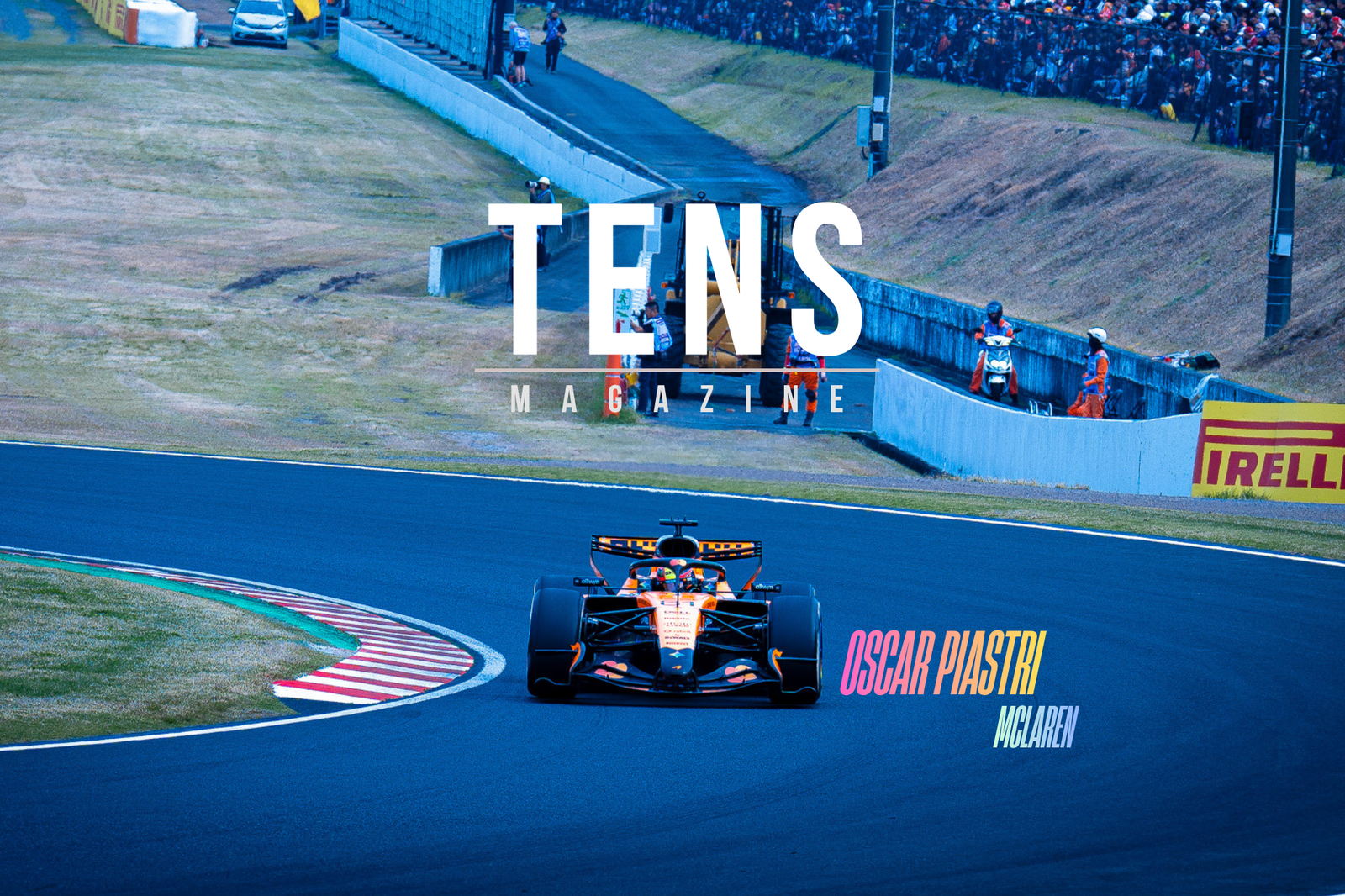
McLaren has reached the most revealing stage of Formula 1’s 2026 active-aerodynamics contest: the moment when recognizing a rival’s clever idea stops mattering and making it repeatable becomes everything. Technical director Neil Houldey told Motorsport Network that McLaren was disappointed it did not identify the potential of Ferrari’s rotating rear-wing concept as quickly as Ferrari and Red Bull. The admission is timely, but the more important detail is what happened next. McLaren studied the idea, built a version, declined to run it after pre-track checks in Austria, refined it at the factory and then trialled a revised mechanism in Hungary. The team now expects to introduce the concept within the next few races after Formula 1’s summer shutdown. That sequence is not a story about one team simply copying another. It is a compact case study in the hidden engineering contest created by the 2026 rules: how quickly a team can convert an observable aerodynamic opportunity into a component that behaves correctly every time the car changes state.
What the timeline actually measures
The FIA designed the 2026 cars around movable front and rear wings. In cornering configuration, known as Z-Mode, the wings provide greater load. On designated straights, X-Mode reduces drag. The FIA’s published framework includes a three-element active rear wing, while the technical regulations define how rear-wing profiles may rotate and how the system is tested and monitored.
Ferrari exposed the first major interpretation during Bahrain pre-season testing. Instead of merely flattening its rear element, the mechanism rotated it dramatically. Formula 1’s official site documented Ferrari and Red Bull racing their distinct versions in Miami. McLaren brought its own experimental design to Austria in June, but Formula 1’s official site reported that the part did not pass the team’s sign-off tests and stayed in the garage. It finally ran in Hungary in July as a test item. The calendar therefore supplies a useful three-step comparison: Ferrari established the concept, Red Bull demonstrated that a visually similar objective can carry a different risk profile, and McLaren chose delay over track deployment when its validation was incomplete. Motorsport Network reported that Red Bull’s early version was implicated when expected rear load returned too slowly during incidents involving Max Verstappen in Austria and at Silverstone. That history makes McLaren’s caution more than a footnote.
TENS analysis: the reliability race
The competitive gap is no longer between teams that have seen the idea and teams that have not. It is between teams that can make the transition predictable and teams that are still discovering what the mechanism does under load. A rotating element can reduce drag on a straight, but its value depends on the entire transition. The wing must move on command, reach the intended geometry, and restore aerodynamic load at a rate the driver and the rest of the car can tolerate. If that closing phase is late or inconsistent, a theoretical straight-line gain can become an entry-phase liability. The stopwatch rewards the open state; confidence depends on the return to the closed one. McLaren’s delay is therefore better read as a control-system audit than an aerodynamic surrender. The Austria rejection showed that the team’s internal gate could stop a heavily promoted part before track use. The Hungary run then produced evidence under real vibration, speed and load. Houldey’s latest assessment that McLaren now has a reliable concept is encouraging, but it remains a team judgment ahead of competitive deployment, not proof that the upgrade will deliver a meaningful lap-time gain. There is also an organizational lesson. Under a cost cap, a team cannot treat every attractive rival idea as an emergency. Houldey said McLaren continued larger performance work while developing the rotating wing in the background. That ordering matters: aerodynamic efficiency may improve, but only if the mechanism earns its place alongside other upgrades rather than consuming resources because it is visually dramatic.
What to watch after shutdown
The first post-shutdown appearance should be judged as a validation milestone, not a promised performance breakthrough. Three signs will matter. First, whether McLaren runs the wing through a full practice program instead of limiting it to installation work. Second, whether both drivers report a consistent return of rear load into braking and turn-in. Third, whether the team keeps the concept for qualifying and the race rather than treating it as a data-gathering exercise. If those gates are cleared, McLaren will have shortened the gap from recognizing Ferrari’s idea to fielding its own dependable interpretation. If they are not, the delay will continue—and the evidence will still support the same conclusion. In active-aero Formula 1, the boldest-looking solution is not automatically the most advanced. The mature one is the mechanism a driver can trust when the straight ends.