By The TENS Magazine Editorial Staff
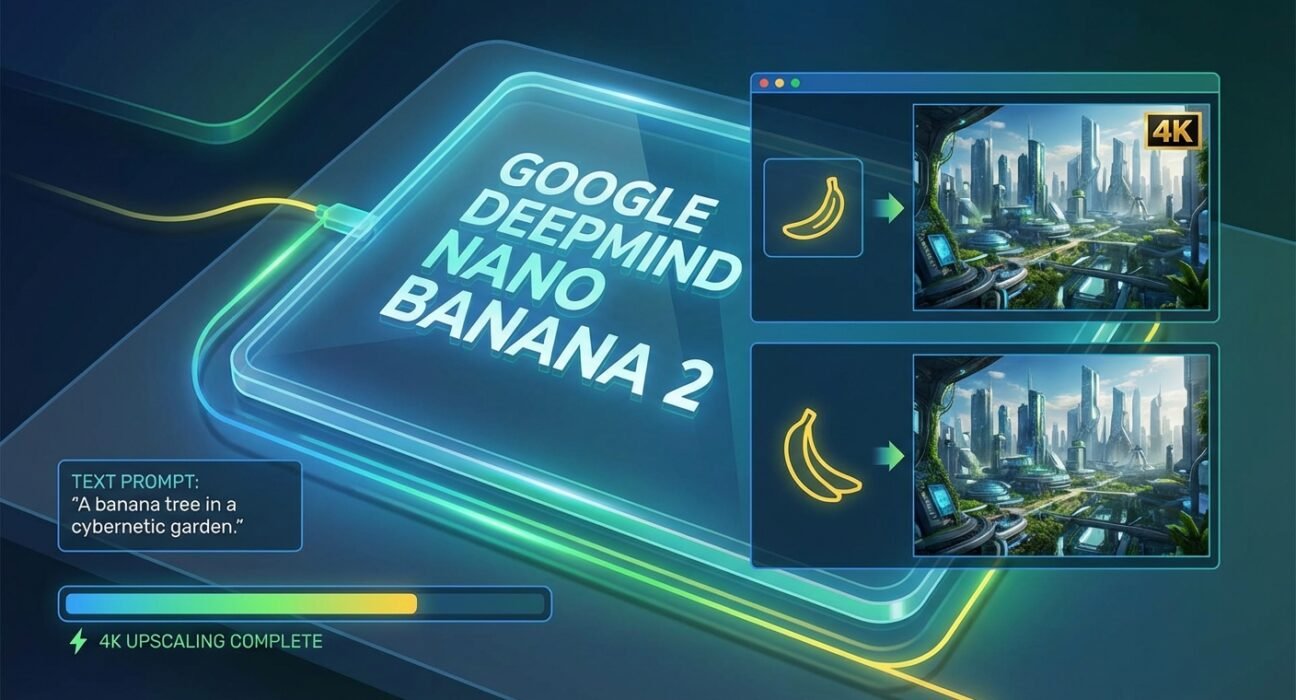
1. Launch of Nano Banana 2 Google DeepMind has officially released Nano Banana 2, marking a significant update in the landscape of generative artificial intelligence. This new model is introduced as a direct successor to previous iterations, specifically targeting the growing demand for high-quality visual synthesis tools. The release underscores Google DeepMind’s continued commitment to advancing the capabilities of machine learning systems, moving beyond experimental phases to deliver robust tools capable of handling complex creative tasks with greater reliability and precision than earlier generations.
2. Enhanced Processing Speed A defining characteristic of the Nano Banana 2 release is its focus on faster performance metrics. The architecture of the model has been optimized to reduce the latency between the user’s input and the final visual output. This increase in speed is designed to facilitate more efficient workflows, allowing users to iterate on designs and concepts rapidly. By minimizing the computational time required to generate complex images, the model addresses one of the primary bottlenecks in AI-assisted creation, making it more suitable for real-time applications.
3. Advanced Text Integration One of the most notable technical achievements of Nano Banana 2 is its ability to integrate text directly into generated images. Historically, AI image generators have struggled to render legible or coherent text, often producing garbled characters or “gibberish.” This new model utilizes improved language understanding to accurately render specific words and phrases within the visual composition, solving a major pain point for designers who require typography to be a seamless part of the artwork.
4. Native 4K Upscaling Capabilities To meet the standards of professional media production, Nano Banana 2 includes built-in 4K upscaling technology. This feature ensures that the images generated are not only conceptually accurate but also possess the high resolution necessary for large-format displays and print media. By integrating upscaling directly into the generation pipeline, Google DeepMind eliminates the need for external software to enhance image clarity, delivering sharp, detailed visuals straight from the source.
5. Focus on Accessibility The “Nano” designation and the accompanying release details emphasize a strategic focus on accessibility. Google DeepMind has engineered the model to be more approachable for a wider demographic of users, lowering the technical barriers that often restrict access to advanced AI tools. This democratization of technology aims to empower creators, educators, and business professionals who may not have extensive technical backgrounds to utilize high-end generative capabilities effectively.
6. Improved Visual Fidelity Beyond resolution, the core visual engine of Nano Banana 2 has been refined to produce higher fidelity images with better prompt adherence. The model demonstrates a sophisticated understanding of lighting, texture, and spatial relationships, resulting in outputs that are more photorealistic and aesthetically pleasing. This improvement ensures that the generated visuals align closely with the user’s descriptive prompts, reducing the trial-and-error often required to achieve a desired look.
7. Commercial and Professional Utility The combination of reliable text rendering and high-resolution output positions Nano Banana 2 as a strong contender for commercial applications. Marketing teams and graphic designers can leverage the tool to create complete visual assets, such as advertisements, social media graphics, and product mockups, that require both imagery and messaging. This utility suggests a shift from AI as a novelty to AI as a fundamental component of the professional creative stack.
8. Optimization of System Architecture The development of Nano Banana 2 likely involves significant optimization of the underlying neural network architecture. By achieving faster speeds and higher resolutions simultaneously, Google DeepMind has demonstrated advancements in algorithmic efficiency. This optimization ensures that the model can deliver superior performance without necessarily requiring exponentially more computational power, which is crucial for scalability and widespread deployment.
9. DeepMind’s Research Trajectory This release represents the latest milestone in Google DeepMind’s broader research trajectory regarding multimodal AI systems. The ability of Nano Banana 2 to process textual prompts and convert them into high-fidelity visual data with embedded text demonstrates a deep understanding of the relationship between language and imagery. It reflects years of accumulated research into how neural networks interpret and reconstruct complex data patterns.
10. Competitive Positioning in the AI Market The introduction of Nano Banana 2 places Google DeepMind firmly at the forefront of the competitive generative AI market. By addressing specific user complaints regarding speed, text accuracy, and resolution, the company is differentiating its product based on practical utility and user experience. This release signals a mature phase of competition where the focus is on delivering polished, versatile tools that solve real-world problems for creative professionals.