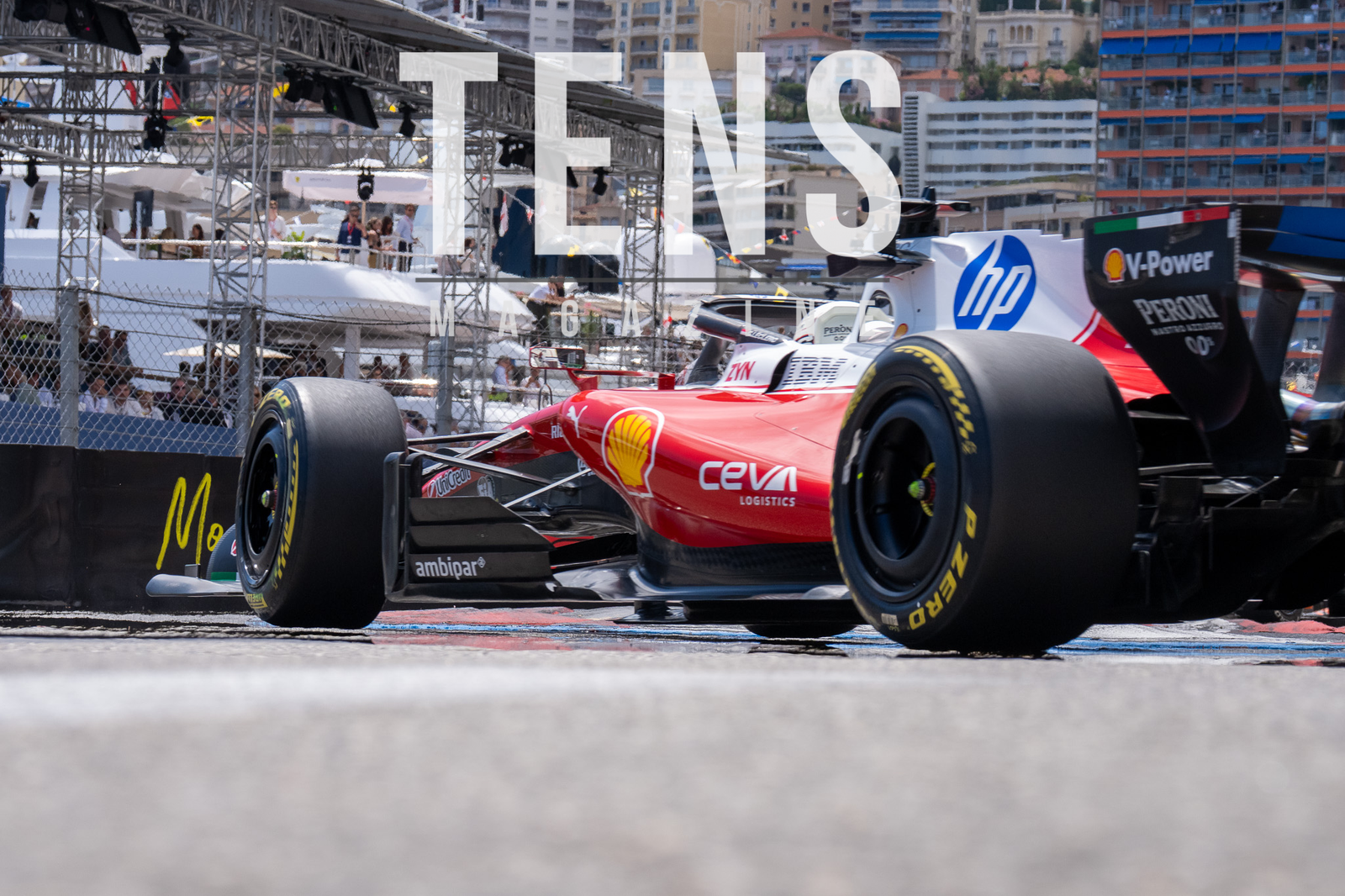
Ollie Bearman has spent much of his young career following a path that appears to point toward Ferrari. This week, however, the Haas driver placed an important limit on that journey: the destination remains his dream, but waiting cannot become the career itself.
Speaking on Formula 1’s Beyond The Grid podcast, Bearman reaffirmed his loyalty to the organization that backed him through the junior categories and gave him his Grand Prix debut. He also said he does not want to spend three, four or five years waiting for a vacancy with no guarantee that one will arrive. His ultimate objective is to fight for victories and World Championships, wherever that opportunity becomes real.
That is not a rejection of Ferrari. It is the first mature deadline in a relationship that has so far been defined by promise.
A Ferrari education without a Ferrari timetable
Bearman joined the Ferrari Driver Academy in 2022 and was thrust onto Formula 1’s largest stage two years later when Carlos Sainz required surgery during the Saudi Arabian Grand Prix weekend. With minimal preparation, Bearman qualified 11th and finished seventh for Ferrari. The performance immediately established him as more than a distant academy prospect.
His full-time apprenticeship has continued at Haas. Bearman ended his 2025 rookie season with a fourth-place finish in Mexico City, then opened 2026 by scoring in the first two rounds, including fifth place in China after reaching Q3. He added another points finish in Canada and remains ahead of experienced team-mate Esteban Ocon in the championship, even as Haas has slipped backward in a fiercely competitive midfield.
The difficulty is timing. Charles Leclerc remains central to Ferrari, while Lewis Hamilton’s renewed form has made the team’s immediate succession question less urgent. From Ferrari’s perspective, that is a welcome problem. From Bearman’s perspective, it creates the risk that a sensible apprenticeship becomes an indefinite holding pattern.
Why Haas still matters
Bearman has been careful not to treat Haas as a waiting room. He has said there is still much to learn and achieve with the American team, and he wants to help it recover the competitive highs it reached during his first full season.
That commitment matters because his Ferrari case will not be built on sentiment. It will be built on evidence: qualifying performance, race execution, technical feedback, consistency and the ability to lead a midfield team through difficult development cycles.
Haas is currently operating under a significant constraint. Team principal Ayao Komatsu acknowledged during the Belgian Grand Prix weekend that the organization remains below Formula 1’s cost-cap spending level while rivals are deploying larger development programs. Bearman’s results must therefore be read in context, but context cannot become a permanent excuse. Elite teams promote drivers who can elevate imperfect machinery without making a habit of avoidable errors.
Staying at Haas for another season could still be valuable if the project moves forward and Bearman continues to sharpen his craft. Several more years without a clearer competitive pathway would be different. At that point, loyalty could begin costing him opportunities rather than creating them.
The Red Bull question
Recent paddock discussion has also connected Bearman with Red Bull. The reported interest remains unconfirmed. During the Belgian Grand Prix weekend, Bearman described the association as flattering but emphasized that it was only rumor and that his focus remained with Haas.
Still, the speculation reveals how the market may begin to view him. Ferrari does not hold the only seat capable of changing his career, and a driver’s leverage grows when rival teams believe his potential could solve their own long-term problem.
Bearman’s comments should therefore be understood as a statement of ambition rather than a threat. He owes Ferrari gratitude, but no serious racing driver can promise unlimited patience. Formula 1 careers are short, competitive windows close quickly, and academy history does not score championship points.
A healthy warning for both sides
Ferrari does not need to force an early promotion. Bearman is only 21, and the standard for a seat at Maranello should remain extraordinarily high. But the team does need to provide a credible development route, honest communication and a timeline that does not leave its leading young driver parked while the rest of the grid evaluates him.
Bearman, meanwhile, must make the question harder with performance. His best argument will never be that he has waited long enough. It will be that Ferrari—or another front-running team—can no longer justify leaving him outside.
The dream is still red. For the first time, Bearman has also made clear that the clock beside it is running.
Reporting basis: Formula 1’s official Beyond The Grid interview report and specialist reporting from The Race on Bearman’s driver-market position and Haas’s development constraints.
Featured image: A historic Ferrari Formula 1 car in motion in Christchurch, New Zealand, in 2014. Photograph by Staffan Andersson via Wikimedia Commons. License: CC0 1.0 Universal public-domain dedication. Modifications: Center-cropped from 1300 × 910 to a 16:9 frame at 1280 × 720; no generative edits.