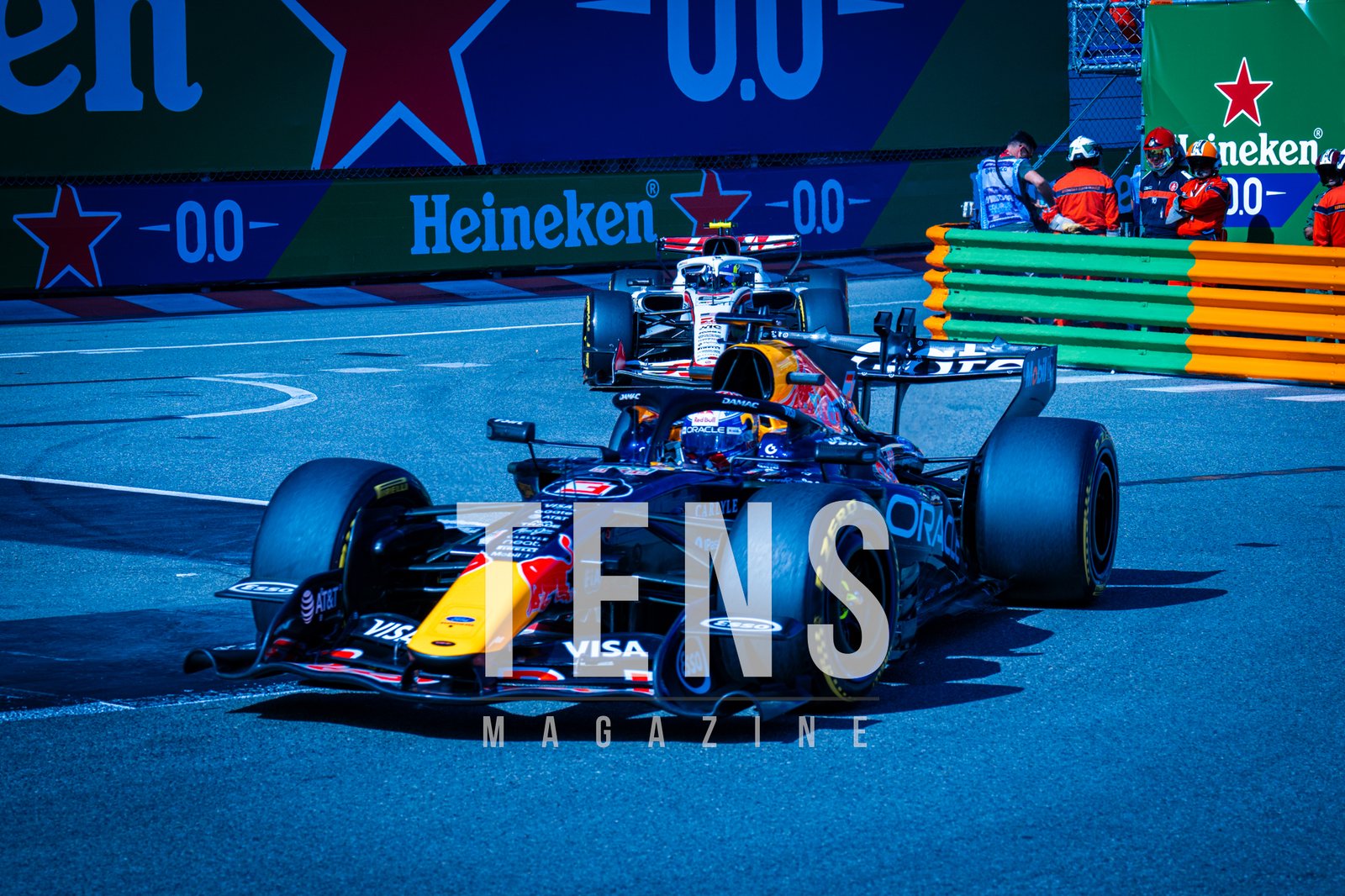
Red Bull left Budapest with Max Verstappen in second place, Isack Hadjar in sixth and the sort of points haul that can make a difficult weekend look healthy in the final classification. It was an excellent recovery. It was also a warning against reading the result too generously. The confirmed picture is straightforward. Verstappen finished 15.080 seconds behind Lando Norris after Red Bull protected track position during a late Virtual Safety Car. Hadjar completed a seventh consecutive top-six finish. Formula 1’s official post-race reporting also recorded Red Bull fourth in the teams’ championship, 43 points behind McLaren at the start of the summer break. The analysis is less comfortable. The podium was real, but it was not proof that Red Bull had cured the RB22.
A result built on decisions
Hungary rewarded Red Bull’s race operation more than its underlying performance. The pit wall declined to cover Lewis Hamilton’s early stop, fitted Verstappen with soft tyres for a final stint long enough to make the choice aggressive, then kept him out when the Virtual Safety Car tempted rivals toward fresh rubber. Each decision protected a route to the podium without requiring the RB22 to become the fastest car. Verstappen supplied the other half. He managed an awkward car, passed Hamilton and extracted enough pace to remain ahead of Kimi Antonelli. Hadjar’s sixth place mattered too, because it showed the team could convert a compromised weekend with both cars rather than rely on one extraordinary rescue alone. Yet Red Bull team principal Laurent Mekies acknowledged after the race that neither driver had been given a car they could properly push. Complaints over balance, deployment and gear shifts had followed the team through the weekend. Mekies’s encouraging observation was that only Norris appeared clearly faster than Verstappen in the race. His more revealing point was that Red Bull still needed to understand why the car moved so sharply between performing and not performing. That distinction matters because execution creates isolated results, while a usable performance window creates a campaign. A bold strategy can recover second place when timing, traffic and a neutralisation fall correctly. It cannot guarantee that the same car will respond at Zandvoort, Monza or Madrid.
The two-driver test
Red Bull’s strongest evidence of progress is not Verstappen’s podium by itself. It is the narrowing gap between a difficult car and two useful finishes. The team’s own standings page lists Verstappen on 109 points and Hadjar on 68 after Hungary. That is still a meaningful separation, but Hadjar’s run of top-six results gives engineers a second reference rather than a passenger in the other garage. That comparison is crucial when the car has a narrow balance window. If only Verstappen can reach the limit, Red Bull cannot easily separate a design weakness from a driver adaptation problem. When Hadjar reports the same instability yet still produces representative race pace, the technical group gains a clearer map of what belongs to the machine. This is where the Budapest scoreline can help rather than deceive. It gives Red Bull evidence that starts, pit stops and strategy are returning to the standard expected of a championship organisation. It also removes the excuse that every poor weekend is merely operational noise. The race team delivered. The remaining uncertainty sits more squarely with the car.
What the summer break must answer
Red Bull’s summer task is therefore diagnostic before it is developmental: make the car predictable enough that both drivers can access the same baseline before chasing more peak load. The team brought substantial floor and rear-suspension changes in Austria and produced a strong result there, but Hungary showed that a promising upgrade at one circuit does not automatically widen the operating range everywhere. The forecast for Zandvoort should remain conditional. If Red Bull can reproduce the recent strength of its race execution and give both drivers a stable balance through the Dutch circuit’s banked, loaded corners, another podium challenge is plausible. If the RB22 again falls in and out of its window, Verstappen may still create a result, but that would say more about the driver than the direction of the car.
Budapest did not expose a team in crisis. It exposed a team whose competitive identity is currently split in two: sharp on the pit wall, resilient in the cockpit and still uncertain in the engineering window that connects them. Red Bull should value the 26 points. It should be even more interested in why earning them required so much improvisation.