By The TENS Magazine Editorial Staff
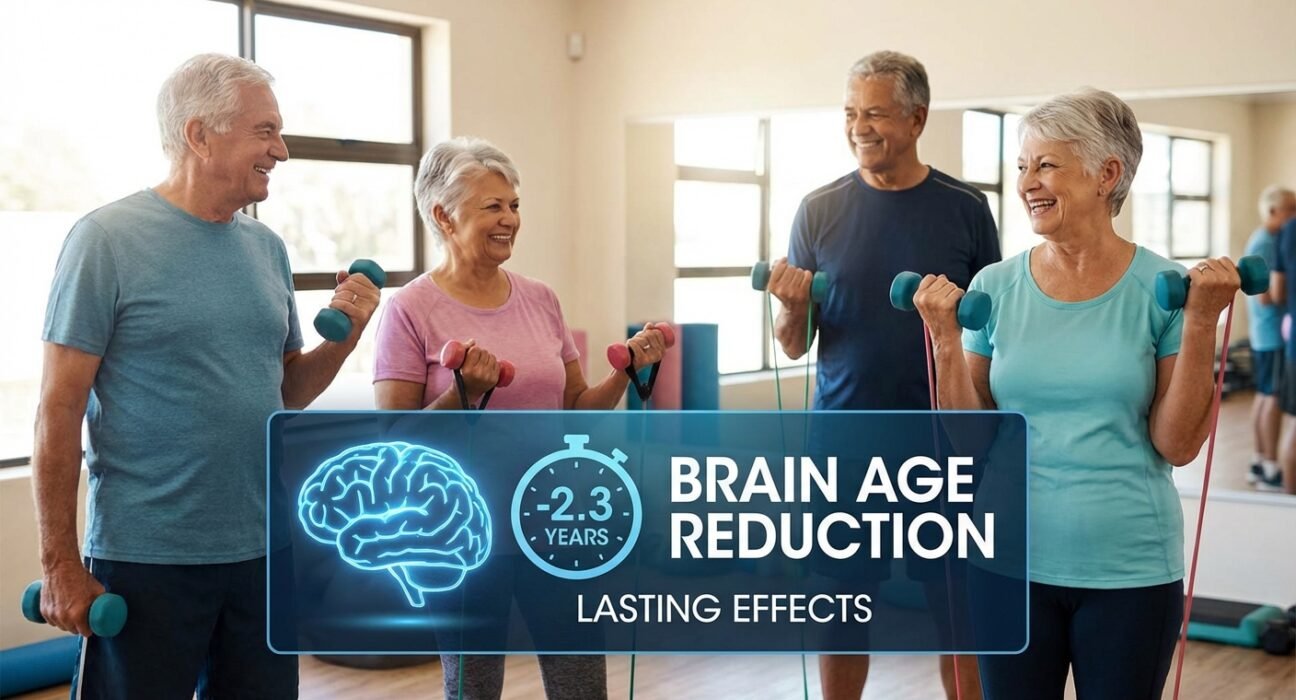
A new study published in the scientific journal GeroScience indicates that regular strength training may significantly slow down the aging process of the brain in older adults. The research, which analyzed data from the LISA (Live Active Successful Aging) randomized controlled trial, found that participants who engaged in resistance exercises showed a reduction in estimated brain age of up to 2.3 years compared to those who did not exercise.
The findings provide compelling evidence that physical interventions can have measurable, protective effects on neurological health. According to the study, the benefits were observed after a long-term intervention, suggesting that consistent resistance training can alter the trajectory of brain aging.
Study Methodology and Findings
The research team utilized advanced neuroimaging techniques, specifically resting-state functional MRI (rsfMRI), to assess brain health. They applied machine learning algorithms known as “brain clocks” to estimate the biological age of the participants’ brains based on connectivity patterns. These clocks are designed to predict a person’s age based on the functional architecture of their brain; a “younger” brain age relative to chronological age is considered a marker of better neural health.
The study followed 309 healthy older adults over a period of two years. Participants were randomly assigned to one of three groups: heavy resistance training, moderate-intensity resistance training, or a non-exercise control group.
The results showed that both resistance training groups experienced a deceleration in brain aging. Specifically, the analysis revealed that the brains of participants in the training groups appeared approximately 1.4 to 2.3 years younger than their actual chronological age by the end of the study. The group performing heavy resistance training demonstrated the most significant improvements, particularly in the connectivity of the prefrontal cortex, a region critical for executive functions such as planning, decision-making, and working memory.
Whole-Brain Network Effects
One of the key insights from this research is that the benefits of strength training were not limited to isolated areas of the brain. Instead, the improvements were observed at the whole-brain network level. The study authors noted that the positive changes reflected distributed shifts in neural connectivity rather than focal changes in a single system. This suggests that resistance training promotes a global reorganization of brain networks, potentially enhancing overall cognitive resilience.
The “brain clock” methodology allowed researchers to quantify these complex changes into a single, understandable metric—years of brain aging reversed. This approach highlights the potential of lifestyle interventions to structurally and functionally rejuvenate the brain.
Implications for Aging Populations
These findings add to a growing body of evidence supporting the role of physical activity in maintaining cognitive health. While aerobic exercise has long been praised for its cardiovascular and neurological benefits, this study underscores the specific value of resistance training.
For older adults, the preservation of brain network integrity is crucial for maintaining independence and quality of life. The study’s duration of two years is particularly significant, as it demonstrates that the neuroprotective effects of strength training are sustainable over time. Unlike short-term interventions that may offer fleeting benefits, the LISA trial data suggests that incorporating weight lifting or resistance exercises into a regular routine can yield lasting neurological dividends.
Experts suggest that these results advocate for a broader definition of “brain training.” Rather than relying solely on mental puzzles or cognitive games, older adults may benefit profoundly from physical challenges that require muscular effort and coordination. The engagement of motor pathways and the systemic physiological responses to lifting weights appear to drive neuroplasticity—the brain’s ability to adapt and reorganize itself—well into late adulthood.