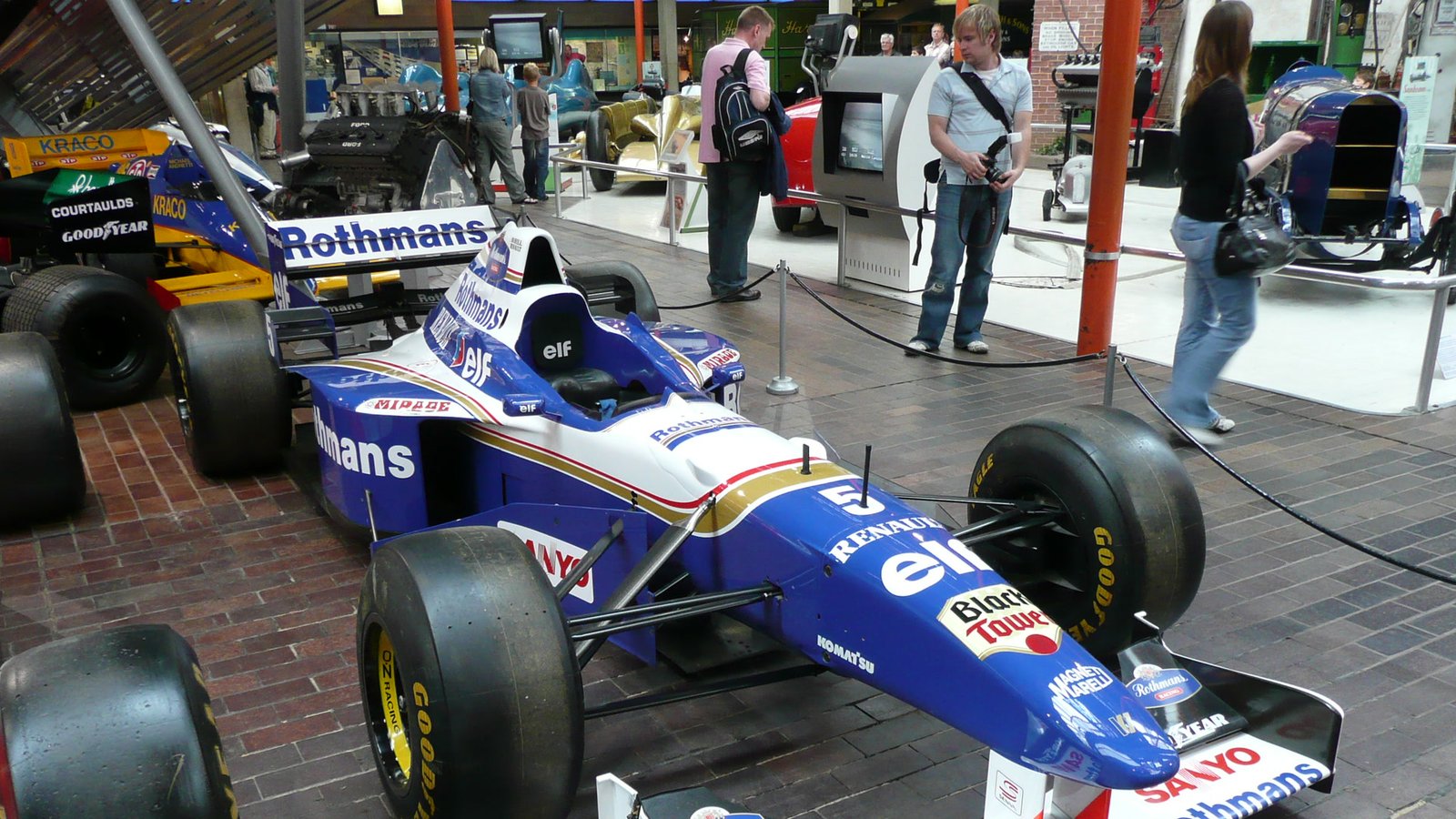
Williams has returned its 1996 FW18 to running order three decades after Damon Hill used the model to win the drivers’ championship. Formula 1’s account of the five-month rebuild, published August 13, describes a car stripped to its bare chassis, tested without damage, repainted and reconstructed with help from mechanics who worked on it in period. The obvious appeal is emotional: Hill back in his title-winning machine, a Renault V10 alive again and Williams preparing for its 50th anniversary in 2027. The more consequential story sits underneath the bodywork. This restoration shows that a Formula 1 archive can be an active engineering system, not merely a collection of trophies.
A rebuild that functions like an audit
The FW18 was Williams’ most successful car. In 1996 it delivered 12 victories from 16 Grands Prix, with Hill taking eight, and carried the team to both world championships. Chassis 4 had not run for several years before the Heritage department began work in February. Formula 1 reported that the chassis and suspension components underwent non-destructive testing, while brake lines were pressure checked, the gearbox was stripped and rebuilt, the fuel cell replaced, and pumps, radiators and hydraulics serviced before reassembly.
That checklist matters because it separates restoration from display preparation. Fresh paint can reproduce an appearance; it cannot establish whether an old structure, line or component remains fit for load. Williams’ process moved in the opposite direction, beginning with the integrity of the machine and only then returning it to the track. A running historic car makes the archive falsifiable: the drawings, setup sheets, remembered procedures and remanufactured parts must cooperate under vibration, temperature and driver input. If they do not, the defect becomes visible.
The rebuild is therefore best understood as a live audit of Williams’ institutional memory. The car was the object being tested, but the organization was being tested with it.
TENS analysis: knowledge that can still turn a wheel
Williams Heritage says it holds the team’s design drawings and race-day setup sheets, restores cars to period-correct specification and can draw on engineers and mechanics who built them originally. Those resources form three layers of knowledge. The archive records what the team intended. The surviving staff can explain why a choice was made and which practical compromises never reached a formal drawing. A younger mechanic then learns by converting both forms of evidence into a functioning car.
That sequence is more valuable than nostalgia because Formula 1 knowledge decays unevenly. A dimension can survive indefinitely on paper, while the technique for assembling, checking or diagnosing a component may disappear when the last experienced person leaves. The FW18 project joined written evidence to human memory while both were still available. It also required that knowledge to pass between generations rather than remain concentrated in a few veterans.
A heritage department cannot hand a current aerodynamic answer to the race team. The FW18 belongs to a different regulatory era, and its materials, electronics and operating assumptions do not map directly onto the 2026 car. The claim is narrower and more defensible: restoration rehearses the organizational behaviors that protect engineering continuity. It rewards clear records, careful inspection, disciplined sign-off and the ability to interrogate the people who know why the record looks the way it does.
Why running changes the value of history
A static collection preserves identity. A running collection adds verification. Williams’ official Heritage Engineering description promises track-ready cars, archive access, period-correct work and operational support including setup and data analysis. Earlier this season, the department also returned the 2003 FW25 to competition in BOSS GP. Read together, the projects show a program moving beyond occasional demonstrations toward repeatable operation.
That changes the economics and the engineering burden. A car prepared only for a museum can be conserved around appearance and provenance. A car prepared for speed requires consumables, replacement strategies, safety checks, technical documentation and people capable of supporting it away from the factory. Each successful outing tests whether Williams can reproduce that service for another chassis and another owner or event. Heritage becomes both stewardship and a specialist operating capability.
There is a reputational test as well. The FW18 carries the standards of Frank Williams, Patrick Head and the mechanics who produced a dominant season. Returning it carelessly would trade on that history; returning it properly demonstrates that the team can still maintain it. The distinction is visible to former drivers, veteran staff and collectors who understand how easily an immaculate racing car can conceal compromised mechanical work.
The 2027 measure
Williams plans to have as many cars running as possible for its 50th anniversary. That target should not be judged only by the number assembled for a celebration. The stronger measure is whether each car has a traceable technical record, a verified safety process and a team that can explain and repeat the work after today’s veterans step away.
The FW18 restoration matters because it turns memory into an operating procedure. Williams did not simply preserve the shape of its greatest car. It asked drawings, components and people from different generations to produce the same result together: a machine capable of leaving the garage under its own power. For a Formula 1 team approaching 50, that is a more durable anniversary project than any static display.