The San Francisco 49ers have begun the longest Week 1 handoff in the NFL. The team confirmed Friday that it was traveling to Melbourne for its September 10 opener against the Los Angeles Rams, turning a normal transition from roster construction to game preparation into a trans-Pacific sequencing exercise.
The destination matters. The league lists the game at the Melbourne Cricket Ground as its first regular-season contest in Australia and the opening event in a record nine-game international slate. Kickoff is scheduled for 8:35 p.m. Eastern on Thursday and 10:35 a.m. Friday in Melbourne. The same football game therefore sits on two calendar days, an immediate reminder that the competitive plan and the travel plan cannot be separated.
What San Francisco has confirmed
The 49ers said on September 4 that the club was traveling to Melbourne. The NFL’s official newsroom reported a day earlier that the charter had departed and identified the matchup as the league’s first game in Australia. Those updates make the journey, rather than a projected lineup or medical timetable, the confirmed development.
San Francisco had already described how it compressed work before departure. In the club’s account of John Lynch and Kyle Shanahan’s August 31 press conference, the team planned three practices before leaving Wednesday. Lynch said the unusual timetable affected roster and practice-squad decisions, down to whether candidates had passports ready. The club also identified visas, travel, nutrition, health and performance as parts of the preparation. Shanahan said Saturday in Australia would function like a customary game-week Monday.
The useful distinction is between moving the team and rebuilding the week. A charter delivers players and staff to Melbourne; it does not by itself reproduce meetings, recovery, installation and evaluation in the correct order. San Francisco’s disclosed plan divides that job into two phases: a compressed football block in California, followed by a locally reset game week in Australia. The trip’s success cannot be inferred from arrival alone.
A two-clock preparation problem
The schedule creates a two-clock problem. On the home clock, the 49ers accelerated three practices before a Wednesday departure. On the destination clock, they preserved a Saturday-to-Friday sequence that can resemble the familiar Monday-to-Sunday rhythm. That is not extra preparation time; it is a redistribution of the same preparation across travel, time-zone adjustment and a morning local kickoff.
This framework also clarifies what should and should not be treated as evidence. Practice participation before the flight can show that a player entered the work plan. Travel status can confirm who made the initial journey. Neither settles Week 1 availability or role. Those decisions remain subject to the team’s later practices and official game-status reporting, and TENS Magazine is not projecting them here.
The Rams face the same destination but a different administrative position. The league and both clubs identify Los Angeles as the designated home team, while San Francisco is the visitor. Both must cross the Pacific and prepare for the local start time. The labels determine the matchup’s home-road accounting; they do not erase the operational demands shared by two West Coast organizations.
The first test of a larger international slate
The league-level comparison matters because Melbourne is both an expansion milestone and an operational prototype. NFL Football Operations says the 2026 international schedule spans four continents, seven countries and eight stadiums. It also says 62 regular-season games had been played outside the United States before this season, but Melbourne, Rio de Janeiro and Paris are new host cities in 2026. Experience with international games is extensive; experience with this particular route and venue is not.
San Francisco will appear abroad again on November 22 against Minnesota in Mexico City, according to the league schedule. That creates a second international preparation cycle later in the season, but it should not be treated as identical. Melbourne opens the season after roster reduction and crosses the Pacific. Mexico City arrives in Week 11 after teams have established regular-season routines. The common label “international game” hides materially different sequencing problems.
Three observable checkpoints can evaluate the Melbourne plan without pretending to know the result. First is schedule continuity: whether the club completes its disclosed reset from California practices to a Saturday game-week start. Second is roster administration: whether late additions and practice-squad players are available for the work the team intends. Third is competitive execution after travel: procedural sharpness, substitution flow and assignment clarity once the game begins. These are evaluation points, not predictions of victory or explanations prepared in advance for defeat.
The 49ers’ early departure is therefore more than a travel note. It is the moment the NFL’s Australian expansion becomes a live football operation. The league has supplied the stage, date and global ambition. San Francisco now has to make an unfamiliar geography feel like an orderly Week 1.
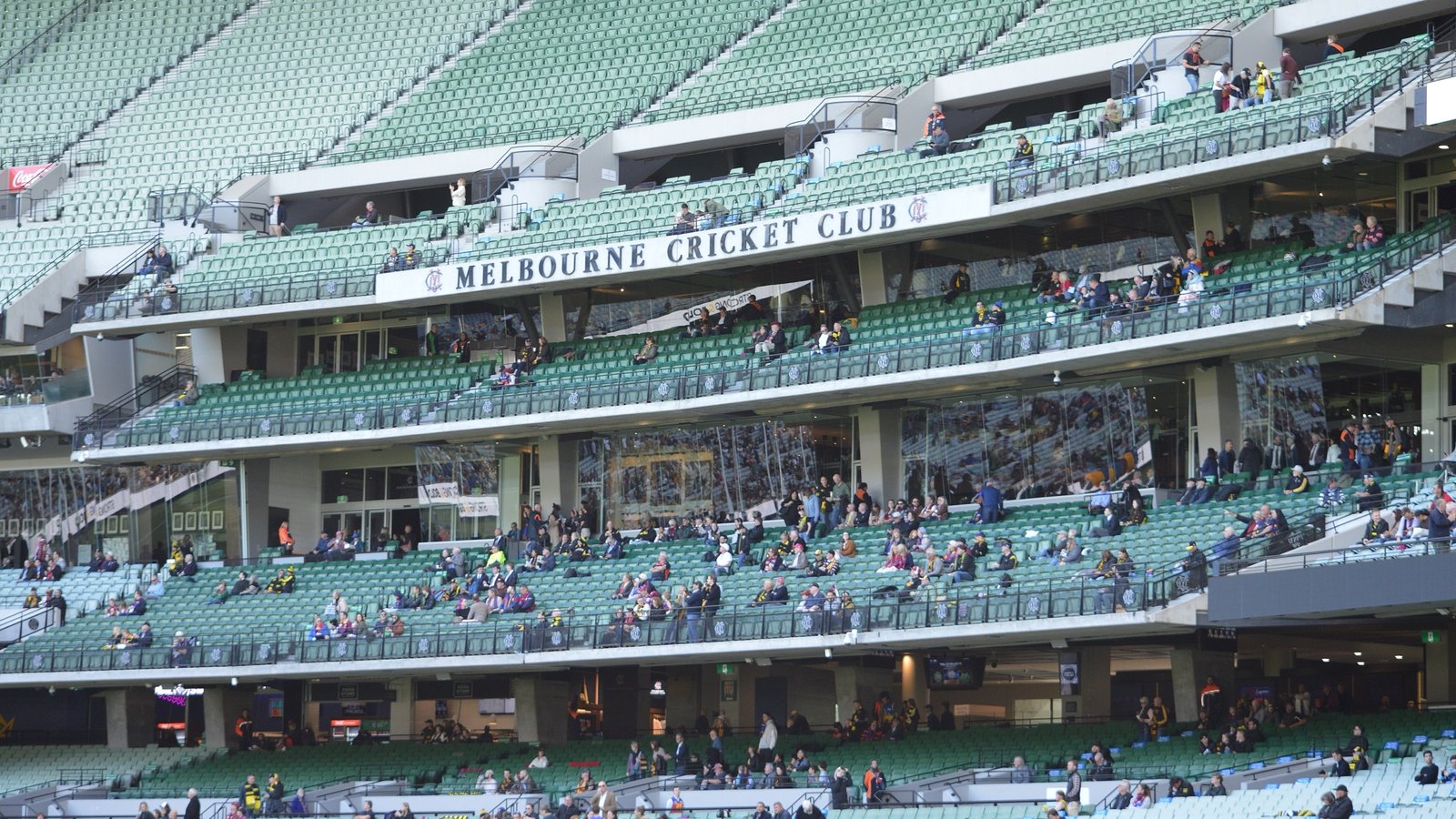
Image: The Melbourne Cricket Club stands at the Melbourne Cricket Ground. DustyNail via Wikimedia Commons. License: CC0, Creative Commons Zero public-domain dedication. Modifications: cropped from 6,016 × 4,000 pixels to a 6,016 × 3,384-pixel 16:9 frame, then resized to 2,400 × 1,350 pixels.