By The TENS Magazine Editorial Staff
1. Scheduled March Release The South Korean music group BTS is officially scheduled to release their newest studio album on March 20, aligning with the standard Friday global release schedule utilized by the international music industry. This specific timing allows the release to maximize its tracking period for major global music charts, including the Billboard charts in the United States, by capturing a full week of sales and streaming data from the moment the album becomes publicly available.
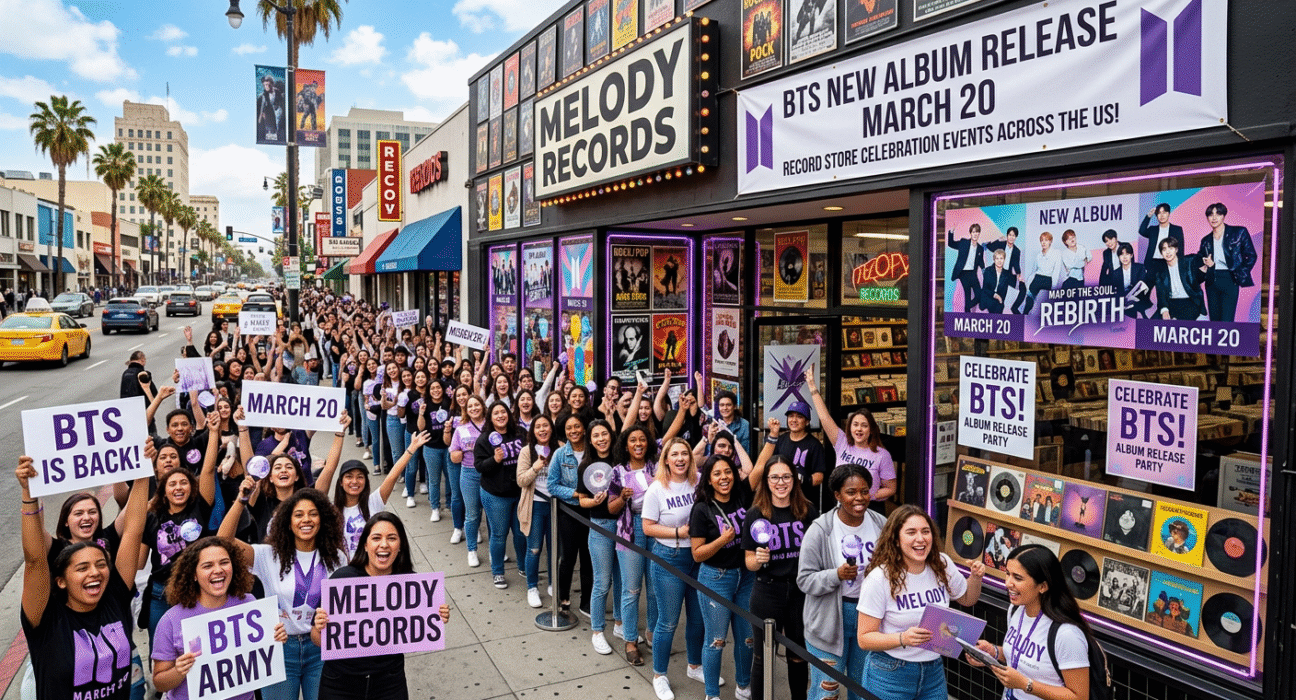
2. Nationwide Retail Celebrations In conjunction with the album launch, a series of dedicated record store celebration events will take place across the United States. These organized gatherings are designed to coincide directly with the March 20 release date, providing consumers with designated physical locations to purchase the new album while participating in coordinated retail activities. The events represent a targeted effort to bridge the gap between digital music consumption and traditional physical retail experiences.
3. Physical Sales Strategy The integration of nationwide record store events serves as a strategic mechanism to bolster physical album sales within the American market. Physical media remains a crucial component of the group’s overall commercial performance, often featuring elaborate packaging and collectible inclusions that incentivize direct purchases. By hosting events at physical retail locations, the distribution label encourages immediate, in-person transactions that contribute significantly to first-week sales figures and overall market share.
4. Support for Local Retailers Organizing release events at record stores across the country provides a substantial economic stimulus to brick-and-mortar music retailers. Independent and chain record stores frequently experience increased foot traffic and higher transaction volumes during major release events for high-profile artists. This strategy not only drives sales for the specific album but also increases the likelihood of secondary purchases, thereby supporting the broader physical music retail sector in the United States.
5. Crowd Management Logistics Hosting events for an artist with a massive global following requires comprehensive logistical planning and strict crowd management protocols at participating retail locations. Store managers and event organizers typically implement structured entry systems, such as pre-order wristbands, digital ticketing, or designated time slots, to maintain order and ensure compliance with local venue capacity regulations. These measures are necessary to facilitate a safe environment for both consumers and retail staff during the high-demand release period.
6. Supply Chain Coordination Ensuring that all participating record stores across the United States are fully stocked for the March 20 events demands extensive supply chain coordination. Distributors must manage the manufacturing, shipping, and secure storage of the physical albums well in advance of the street date. Strict embargoes are placed on the inventory to prevent premature leaks, requiring precise timing in the delivery network to guarantee that products are available exactly when the retail events commence.
7. Experiential Marketing Approach The planned record store celebrations reflect a broader industry shift toward experiential marketing, where the act of purchasing an album is transformed into a communal event. Rather than relying solely on digital downloads or direct-to-consumer online shipping, the label is utilizing physical spaces to create a tangible consumer experience. This approach leverages the social aspect of music consumption, encouraging buyers to gather, interact, and participate in a shared retail environment on release day.
8. Chart Performance Implications The combination of a Friday release date and coordinated physical retail events is directly correlated with optimizing performance on the Billboard 200 and other relevant industry charts. Billboard methodology heavily weights physical album sales, meaning that high-volume transactions at United States record stores during the opening week are critical for securing top chart positions. The nationwide events are systematically structured to consolidate these physical sales within the primary tracking window.
9. Integration with Digital Campaigns While the focus of these specific events is on physical retail, the March 20 record store celebrations are integrated into a comprehensive, multi-platform promotional campaign. The physical events operate in tandem with digital streaming initiatives, social media marketing, and potential broadcast appearances. This dual approach ensures that the release maintains high visibility across both traditional retail sectors and modern digital platforms, maximizing the overall reach of the new album.
10. Continuation of Industry Trends The strategy of pairing a major album release with nationwide retail events aligns with ongoing trends in the global music industry regarding the resurgence of physical media. As streaming continues to dominate overall consumption, physical albums have transitioned into premium merchandise items. By organizing dedicated events at record stores, the management and distribution teams are capitalizing on the sustained consumer demand for physical music products and the enduring viability of traditional music retail.