The Green Bay Packers have activated tight end Tucker Kraft from the physically unable to perform list, giving one of their most productive offensive players clearance to begin a limited return to training-camp work. Head coach Matt LaFleur confirmed the move before Friday’s practice, according to the team and the National Football League’s official news service.
The important word is begin. Green Bay said Kraft would take part in individual periods but not team drills on Friday. The club also plans to include him in evening walkthroughs, where he can hear calls, align within formations and rebuild the routine of operating inside the offense. Those are meaningful football steps, but they are not the same as a full practice workload or a declaration about regular-season availability.
A transaction with a deliberately narrow meaning
Kraft opened camp on the PUP list after a season-ending knee injury against Carolina last November. The Packers held their first training-camp practice Wednesday, worked again Thursday and changed his roster designation Friday. That short chronology matters because it shows the team did not leave him parked on PUP once it was ready to start a controlled on-field progression.
The transaction is best understood as permission to begin a football progression, not a declaration that the progression is complete. LaFleur’s plan separates movement and assignment work from competitive team periods. Green Bay can now restore the mental and technical details of Kraft’s position while continuing to limit the parts of practice that create the most unpredictable traffic.
That distinction also keeps the facts separate from the forecast. Kraft said in June that his goal was to open the season without a reduced workload, but a player’s target is not a club guarantee. The Packers have not announced that he will play in the Sept. 13 opener at Minnesota, nor have they set a public timetable for full team participation.
Why Kraft changes the shape of the offense
Kraft’s 2025 production explains why even limited progress is consequential. In eight games before the injury, he caught 32 passes for 489 yards and six touchdowns. His 15.3 yards per reception reflected more than underneath volume; he gave Green Bay a tight end who could turn an intermediate completion into a larger gain.
For the offense, the immediate value is instructional before it is statistical. Walkthrough access lets Kraft reconnect formation language with his own landmarks, motion timing and blocking responsibilities. Individual work lets coaches evaluate how efficiently he repeats position-specific movements. Neither setting recreates an NFL snap, but together they provide cleaner information than rehabilitation work conducted apart from the unit.
His return to practice also gives coaches more time to examine how the tight-end room fits the offense before the roster is reduced. That does not settle a depth chart or a snap distribution. It simply moves Kraft from a separate rehabilitation track into a shared football environment, where decisions can be based on observed practice work rather than assumptions.
Four checkpoints, only one confirmed
Green Bay now has four separate checkpoints to evaluate: individual drills, walkthrough installation, team-period participation and game readiness. Friday’s announcement confirms the first two. It does not confirm the third or fourth. Treating those stages as separate prevents a roster designation from being mistaken for a medical forecast.
The sequencing is useful for another reason. A tight end must coordinate with the quarterback, offensive line, receivers and backs on the same play. Hearing a call and reaching the correct alignment may look routine, yet it is the platform for every route adjustment and blocking combination that follows. Reintroducing that work before team periods allows Green Bay to test communication without pretending the competitive phase has already arrived.
Analysis should stop where the evidence stops. There is no basis to predict Kraft’s full-practice date, opening-day snap count or season production. There is also no need to minimize the move: leaving PUP allows him to participate in parts of camp that were unavailable earlier in the week, and it gives the Packers a longer runway to make later decisions.
A measured step with real football value
The Packers did not announce a completed comeback Friday. They announced a change in access. Kraft can work with his position group, take part in walkthroughs and start translating months of rehabilitation into football-specific repetition. That is a narrower development than a Week 1 clearance, but it is more substantial than a generic progress report.
For Green Bay, the value of the move is control. The club can add responsibilities one layer at a time and judge each stage on what Kraft actually does. For Kraft, it is the first confirmed route back into the operating rhythm of the offense. The next meaningful update will be another observable step, not an assumption attached to this one.
Sources: Green Bay Packers official reporting; National Football League official news reporting; on-record comments from Packers training camp and June team media availability.
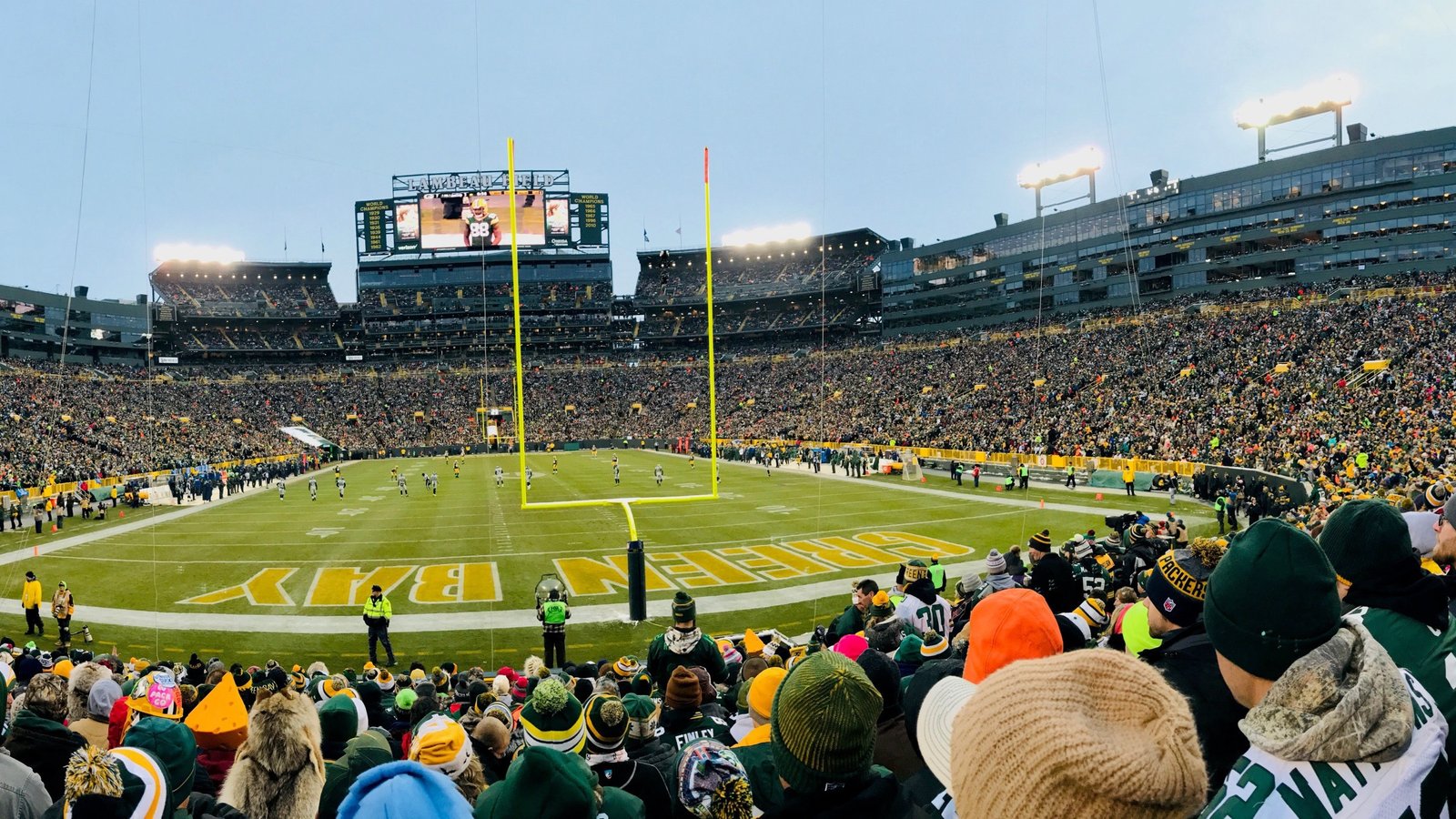
Featured image: A December 2016 game-day panorama of Lambeau Field in Green Bay, Wisconsin. Credit: Mtyson84 via Wikimedia Commons. License: CC0 1.0 Universal Public Domain Dedication. Modifications: Center-cropped from 5,257 × 1,830 to 16:9 and resized to 2,400 × 1,350; no other changes.