DeForest Buckner’s return gives San Francisco a new way to arrange its defensive front. The meaningful test will be how that front works across a series: who handles early downs, which combinations rush the passer and whether changing personnel preserves the defense’s assignments.
The 49ers announced Wednesday that they acquired Buckner from Indianapolis for their 2027 fourth-round draft choice. Their announcement also confirmed cornerback Jack Jones’ release to create roster space. Buckner returns to the franchise that drafted him in 2016, with four sacks and 31 tackles from seven starts for the Colts this season.
Those are confirmed additions to his record. They are not four sacks that can be credited to San Francisco’s defense in advance. TENS Magazine’s assessment is that the trade should be evaluated through the work it redistributes, rather than treating an incoming player’s production as an automatic increase in the receiving team’s totals.
A rotation has to fit together
San Francisco’s official transaction history puts the move in a broader context. The club acquired Osa Odighizuwa from Dallas in March. More recently, it has moved defensive linemen between its active roster and practice squad, including transactions involving Kevin Givens and Ogbo Okoronkwo. Buckner is entering a group whose available combinations have continued to change.
The analytical question is therefore more precise than whether the 49ers have added a good player. A defense must decide which responsibilities belong together on a given snap. An interior rusher can threaten the quarterback, but the players alongside him still have to account for running lanes and the possibility that the quarterback escapes outside.
Adding another option can make those choices more flexible. It does not remove the choices. If a new combination improves pressure but loses its spacing, the defensive result may differ from the individual result. Conversely, a disciplined rush that forces a hurried throw can help the defense even when no defender records a sack.
That is why a useful early review should examine the entire front on Buckner’s snaps. Which personnel groups use him? How are the other linemen deployed? Does the defense remain sound when it substitutes? These are questions for subsequent game evidence, not claims that the coaching staff has already settled its rotation.
Production needs its denominator
Buckner’s current-season totals establish that San Francisco is acquiring recent production as well as familiarity. His previous stint with the 49ers ran from 2016 through 2019, according to the club’s announcement. That history explains the reunion; it cannot establish how every present-day assignment will translate.
For TENS, the more useful comparison will be production relative to opportunity. A sack total without the number and type of pass-rush opportunities cannot show whether a player became more effective, played more often or encountered more favorable situations. A change of team also changes the teammates and circumstances around each rush.
This limits what can responsibly be inferred from the announcement. Four sacks in Indianapolis are evidence of completed plays. They do not supply a forecast for the remaining schedule. Nor would a quiet first appearance by itself establish that the trade failed. The relevant question is whether his deployment improves the defense’s repeatable work.
The same standard applies to the rest of the group. If another lineman’s workload changes, his raw totals may change with it. Evaluating the trade only through Buckner’s statistics would miss any benefit or cost created by the redistribution of snaps. The unit, rather than one name on the stat sheet, is the appropriate scope.
The work left behind in Indianapolis
The Colts’ Wednesday reporting supplies the other side of that comparison. Indianapolis was preparing for Jacksonville after trading both Buckner and guard Quenton Nelson. The team’s account described players continuing their preparation while acknowledging the departure of established leaders. It also noted that both had been elected captains in six consecutive seasons.
Those departures create different kinds of work. Defensive assignments can be redistributed on a depth chart. The daily example teammates associate with a veteran is harder to capture in a roster entry. The Colts’ reporting supports recognizing that distinction; it does not support assigning a numerical value to leadership or predicting how the locker room will respond.
San Francisco and Indianapolis therefore offer a useful paired test. One team must integrate a veteran into its existing combinations; the other must demonstrate how it covers the responsibilities he leaves. Both processes require coordinated play beyond the individual transaction. Neither can be judged conclusively from the draft compensation alone.
Buckner’s return is consequential because it changes the options available to San Francisco now. The next evidence should show how those options are used: the combinations, the assignments and the quality of the resulting possessions. A familiar jersey makes the return easy to recognize. Consistent work across the defensive front will determine what the reunion adds.
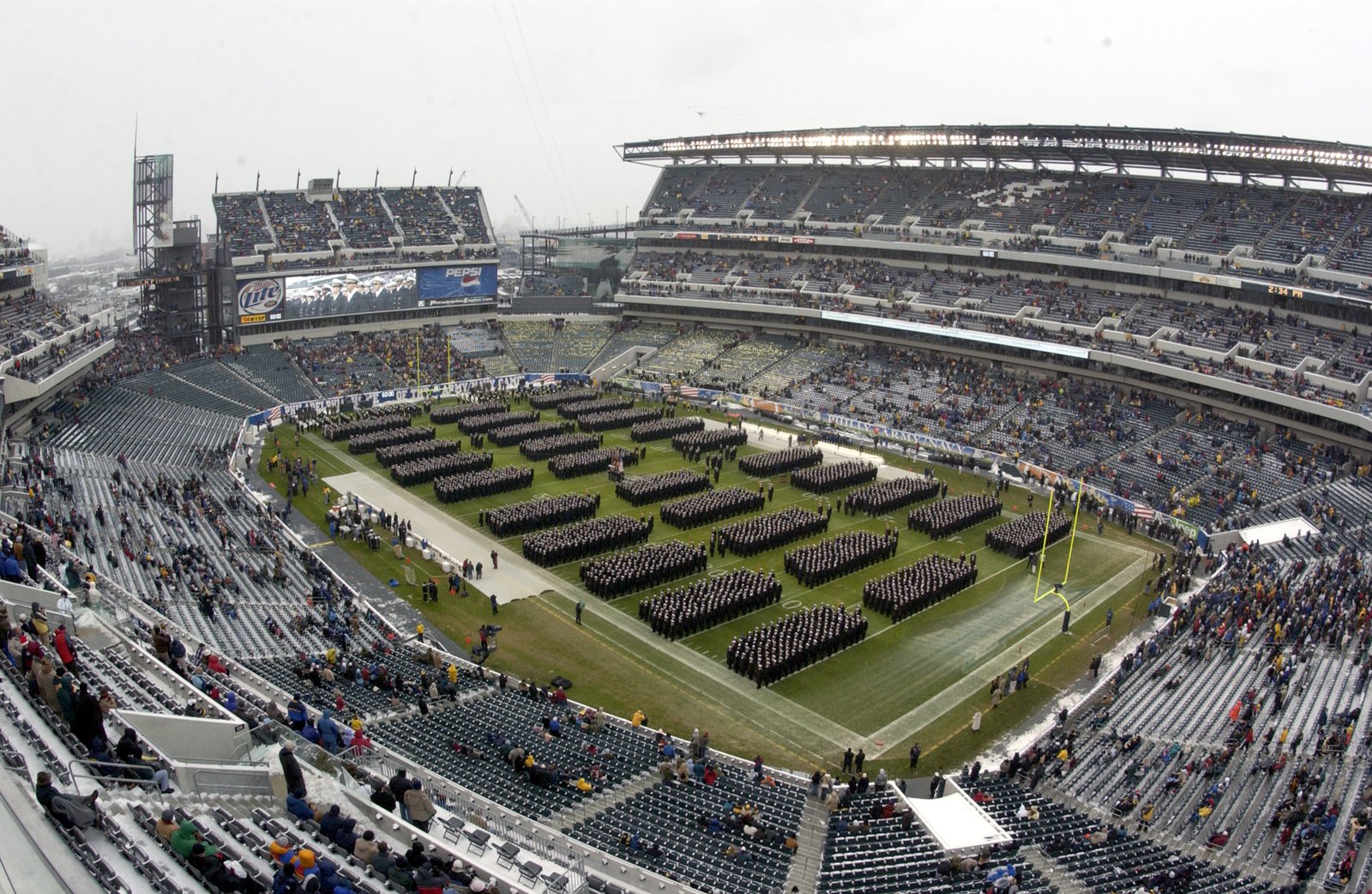
Image: Archival view of Levi’s Stadium during a 2015 49ers preseason game, not Buckner’s return. Photo by Robert Hernandez Villalta via Wikimedia Commons. License: CC0, public-domain dedication. Modifications: center-cropped to 16:9 and resized to 2,400 × 1,350 pixels.