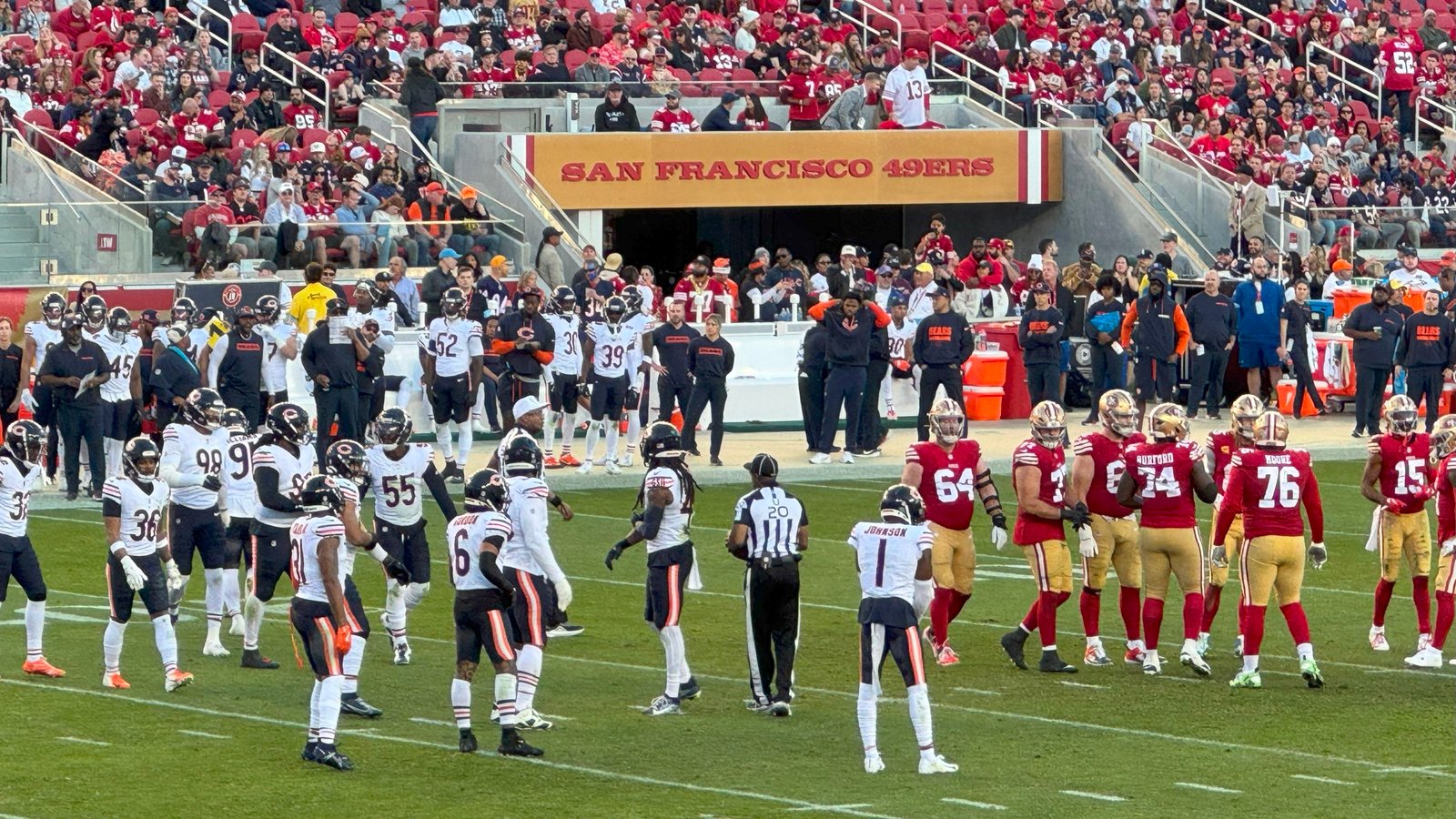
Deebo Samuel Sr. is a San Francisco 49er again, but the significance of his return is less about recreating an old offense than solving a current roster problem. San Francisco announced Saturday that it signed the veteran receiver to a one-year contract and placed Ricky Pearsall on injured reserve. The NFL transaction wire separately recorded Samuel’s signing on August 1. The paired moves matter because they change both the available personnel and the questions facing the offense in training camp. Samuel supplies experience, positional flexibility and immediate familiarity with the organization. Pearsall’s move to injured reserve removes a receiver who started nine games and caught 36 passes for 528 yards last season. The team has not established a public return timeline in the material reviewed for this story, so his availability should not be projected beyond the confirmed roster designation.
What San Francisco confirmed
Samuel, 30, returns after spending the 2025 season with Washington. The 49ers’ transaction announcement credits him with 72 receptions for 727 yards and five receiving touchdowns in 16 games last season, plus 17 carries for 75 yards and another score. Across seven NFL seasons, he has played 97 regular-season games and produced 5,519 receiving yards, 1,218 rushing yards and 48 combined offensive touchdowns. Those career totals explain why the move is more substantial than a typical August depth signing. Samuel has already handled several jobs within an NFL offense: conventional receiver snaps, manufactured touches and backfield work. He also knows the demands of San Francisco’s system and many of the people operating it. That familiarity can reduce the installation burden, even though it does not eliminate the physical and timing work required after changing teams twice in two years. The club’s Saturday practice report supplied the first evidence of how quickly the reunion moved from transaction to football. Samuel participated in 11-on-11 work, caught a pass from Mac Jones and continued taking practice repetitions. Defensive coordinator Raheem Morris described Samuel as a player who can be deployed in multiple locations. The same report noted that Samuel is entering a receiver group different from the one he left after the 2024 season, including veteran Mike Evans.
TENS analysis: a contingency plan with optionality
Samuel’s return is best understood as a contingency plan with optionality, not an attempt to rewind the roster to 2021. San Francisco gains a player who can cover several assignments while coaches determine how the receiver rotation functions without Pearsall. That is valuable in August because one signing can support multiple packages without forcing the staff to settle every role immediately. The transaction does not require Samuel to become the offense’s centerpiece in order to work. A narrower role could still help by giving the 49ers another experienced answer on motion, short-area targets, designed carries and situational downs. His versatility can also let the coaching staff vary personnel without announcing the play’s purpose through a substitution. Those are tactical possibilities, not guarantees about his usage or production. There is also a difference between system memory and current chemistry. Samuel’s history in San Francisco should help with terminology and expectations, but his last 49ers game came in the 2024 season. The quarterback room, receiving hierarchy and weekly plan have continued to evolve. Training-camp repetitions will show which responsibilities translate immediately and which need to be rebuilt. Placing Pearsall on injured reserve changes the receiver-room math before it changes the offense’s identity. The move creates a confirmed absence from the active mix; it does not by itself determine who will absorb every route, target or snap. Samuel gives San Francisco more ways to distribute that work, while Evans and the rest of the group still have distinct roles that cannot be reduced to a one-for-one replacement formula.
What the next practices can establish
The useful questions now are observable ones. Coaches can evaluate Samuel’s conditioning, timing and workload tolerance. They can test which formations benefit from his presence and how defenses react when he aligns in different spots. They can also decide whether his arrival allows younger receivers to stay in specialized roles rather than being pushed into broader assignments too quickly. None of those evaluations requires a prediction about Pearsall’s recovery or Samuel’s eventual statistics. The confirmed development is already meaningful: San Francisco responded to a receiver’s injured-reserve placement by adding a proven, familiar veteran on a one-year deal, then put him into team drills the same day. The analysis begins with what that flexibility offers, not with a promise that the past will repeat itself.