The Dallas Cowboys have turned part of their 2027 draft position into immediate offensive-line flexibility, acquiring tackle Broderick Jones from the Pittsburgh Steelers in a deal completed as both clubs set their initial 53-player rosters. The exchange is confirmed by both teams and the NFL transaction ledger: Dallas sent third- and sixth-round selections in 2027 to Pittsburgh for Jones and a 2027 fourth-round selection.
That description is precise, but it is not a complete valuation. The third- and fourth-round choices do not yet have fixed positions, and their eventual distance will depend on where Dallas and Pittsburgh finish. The trade is therefore best read as two linked decisions: Dallas is paying to widen its tackle options now, while Pittsburgh is accepting future draft uncertainty to move a former first-round pick who had opened camp behind another player.
Confirmed facts: what changed
Pittsburgh selected Jones 14th overall in 2023. The Steelers’ official transaction announcement says he started 38 of 45 regular-season games across three seasons and also made two postseason starts. His 2025 season ended after 11 starts when a neck injury placed him on reserve/injured. Those facts establish experience and recent availability history; they do not establish his role or performance level in Dallas.
The Cowboys’ initial roster lists Jones among nine offensive linemen. Dallas’s own trade report describes him as an option at swing tackle who could eventually compete for a starting job, not as an announced starter. That distinction matters. A transaction can create competition without settling it, and a player with snaps on both sides can add contingency value before the coaching staff assigns a permanent place.
The roster sequence sharpens the point. Dallas also traded tackle Nathan Thomas to Houston during the cutdown period, according to the Cowboys and the NFL ledger. Taken together, the two moves did more than add a recognizable name. They changed the tackle room’s mix of experience, developmental history and future draft cost while the club held its offensive-line headcount to nine on the initial roster.
Analysis: the price cannot be reduced to one pick
The cleanest way to evaluate the compensation is as a three-part ledger. Dallas gives up a third-rounder, receives a fourth-rounder and also gives up a sixth-rounder. The eventual cost is the distance between the third and fourth selections, plus the sixth. Because neither club’s 2026 finish is known, that distance cannot yet be stated as a fixed number of draft slots. Calling the deal simply “a third-round pick for Jones” overstates the price by erasing the fourth coming back; calling it merely a pick swap understates the additional sixth.
That uncertainty is part of the bargain, not a flaw in the record. Dallas receives a 25-year-old tackle with 38 starts before playing a regular-season game. Pittsburgh receives two future selections and returns one, converting a player listed behind Troy Fautanu on its early August depth chart into draft resources. The trade does not prove that either evaluation is correct. It shows that the clubs placed different values on present tackle optionality and future selection control.
For Dallas, the relevant test is broader than whether Jones starts in Week 1. A reserve tackle can matter when a starter is unavailable, when a young lineman needs more development time or when the staff wants credible competition on both edges. Jones’s prior work at left and right tackle makes that flexibility plausible. It does not guarantee clean adaptation to a new scheme, health across a season or a particular place in the lineup.
For Pittsburgh, the decision belongs in the context the club published before the trade. Its initial depth chart placed Fautanu first at left tackle, with Jones behind him, while rookie first-round selection Max Iheanachor appeared behind Dylan Cook at right tackle. Depth charts in August are provisional, but that official arrangement supplies useful evidence: Pittsburgh was dealing from a room in which Jones was not listed with the first unit.
What remains unresolved
Three questions now carry the football value of the transaction. Dallas must decide whether Jones is primarily a game-day swing tackle or a genuine challenger for a starting position. Pittsburgh must show that its remaining tackle group can absorb the lost experience. Both clubs must wait for the 2026 standings to establish the actual separation between the exchanged third- and fourth-round picks.
The trade is consequential because it moves a former first-round tackle before the season and attaches meaningful future capital to the decision. It is not a verdict on Jones, Dallas’s starters or Pittsburgh’s development plan. The responsible reading is narrower: Dallas purchased another experienced answer to an offensive-line question, and Pittsburgh chose future flexibility over retaining a reserve with a substantial starting résumé. The season will determine whether either form of flexibility becomes valuable.
Sources: Dallas Cowboys official trade report and initial 53-player roster; Pittsburgh Steelers official trade announcement, transaction record and initial depth chart; NFL official transaction ledger.
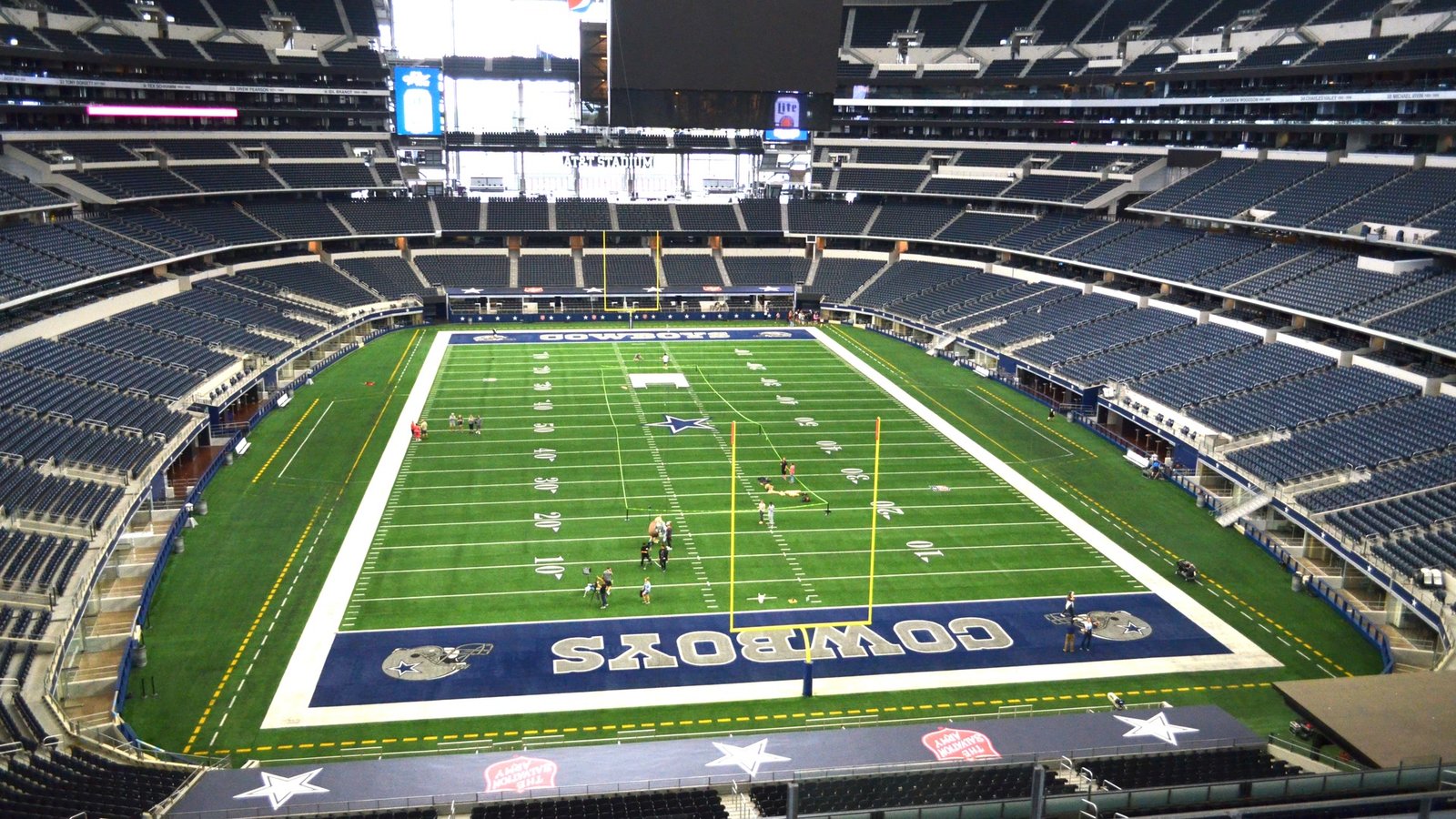
Featured image: Interior view of AT&T Stadium in 2022. Photo by edwarddallas via Wikimedia Commons. License: Public domain, Public Domain Mark. Modifications: center-cropped from 4,928 × 3,264 pixels to a 4,928 × 2,772-pixel 16:9 frame, then resized to 1,920 × 1,080 pixels.