The Indian Premier League’s next auction could return to India, but its location will tell us less about the player market than the number and type of jobs available. League chairman Arun Dhumal told Press Trust of India on September 16 that he wants the 2027 auction held in India, with a suitable venue still to be secured. His comments establish an intention, not a confirmed host city or date. For franchises and players, the more consequential distinction is between a smaller recruitment round and the broad rebuilding opportunity of a mega auction.
TENS analysis: Comparing the IPL’s own auction notices makes that distinction concrete. The official lists for the 2024 and 2026 seasons each advertised 77 available squad places. The 2025 mega-auction notice advertised 204. Those figures describe capacity before bidding, rather than eventual purchases. They show why moving the auction room and changing the scale of recruitment are separate developments, even when both appear in the same offseason conversation.
Three destinations, two very different markets
The IPL’s December 2023 notice placed the auction for the 2024 season in Dubai on December 19. Its November 2024 notice scheduled the 2025 mega auction in Jeddah over November 24–25. The December 2025 notice put the 2026 auction in Abu Dhabi on December 16. Keeping auction dates separate from season labels matters: the year printed on the competition is not necessarily the year in which its players were bought.
Dhumal’s latest remarks, reported by PTI and published by Telangana Today, identify venue availability during the wedding season as an obstacle to hosting in India. They do not establish a commercial retreat from overseas markets. Nor do they settle the arrangements for 2027. A domestic preference can be reported accurately while the booking remains unresolved; readers should not have to infer that distinction from a later correction.
The useful comparison is 77 against 204
TENS calculation: The 77 vacancies advertised for 2026 were 127 fewer than the 204 advertised for 2025, a reduction of approximately 62.3 percent. Conversely, the mega auction offered about 2.65 times as many places. This is a comparison of the published pre-auction opportunity, not a measure of player quality, spending or the final number of contracts. It also does not predict how many places will be available for 2027.
That gap changes the recruitment question. A team filling a small number of holes can prioritize a particular bowling phase, batting position or reserve role. A team rebuilding more extensively must decide how its combinations will work together. This is an analytical distinction, not a claim that every franchise follows the same strategy. Aggregate vacancies conceal substantial differences between clubs with a settled core and those choosing a larger turnover.
The earlier Dubai notice illustrates the variation. Kolkata Knight Riders had 12 available places while Chennai Super Kings, Lucknow Super Giants, Royal Challengers Bengaluru and Sunrisers Hyderabad each had six. The largest vacancy count was twice each of those smaller counts within the same auction. A league-wide label therefore cannot tell a player or supporter how much reconstruction one particular franchise faces.
Overseas places show another constraint
The published overseas vacancy totals were 30 for 2024, 70 for 2025 and 31 for 2026. TENS calculation: Dividing those figures by the respective overall vacancies produces shares of approximately 39.0 percent, 34.3 percent and 40.3 percent. The smaller rounds offered fewer overseas openings in absolute terms, even though those openings made up a larger share of the advertised capacity than in the mega auction.
For recruitment analysis, both measurements matter. A percentage can make a market look comparatively open while the number of jobs remains much smaller. Neither figure is a player’s probability of being selected. Franchises need different skills, bidders have different resources, and advertised capacity is not a promise that every place will be filled. Treating vacancies as interchangeable would erase precisely the role-specific competition that makes a smaller auction interesting.
What the next announcement needs to establish
TENS analysis: The next useful update should connect event logistics with the actual recruitment inventory: confirmed location and timing, followed by the official franchise vacancy and budget information as it becomes available. Those details answer different questions. Venue confirmation makes the event operationally concrete. Team-level openings reveal where meaningful player movement is possible. Neither can substitute for the other.
An Indian auction would be a visible change after the three overseas editions documented in the league’s notices. Its cricketing importance will depend on what teams can buy and what they need. Until the 2027 particulars are published, the strongest conclusion is narrower: the chairman prefers a domestic venue, while recent auction history shows that the size and distribution of vacancies deserve at least as much attention as the city on the invitation.
Sources: Press Trust of India reporting published by Telangana Today; Indian Premier League official player-auction notices for the 2024, 2025 and 2026 seasons.
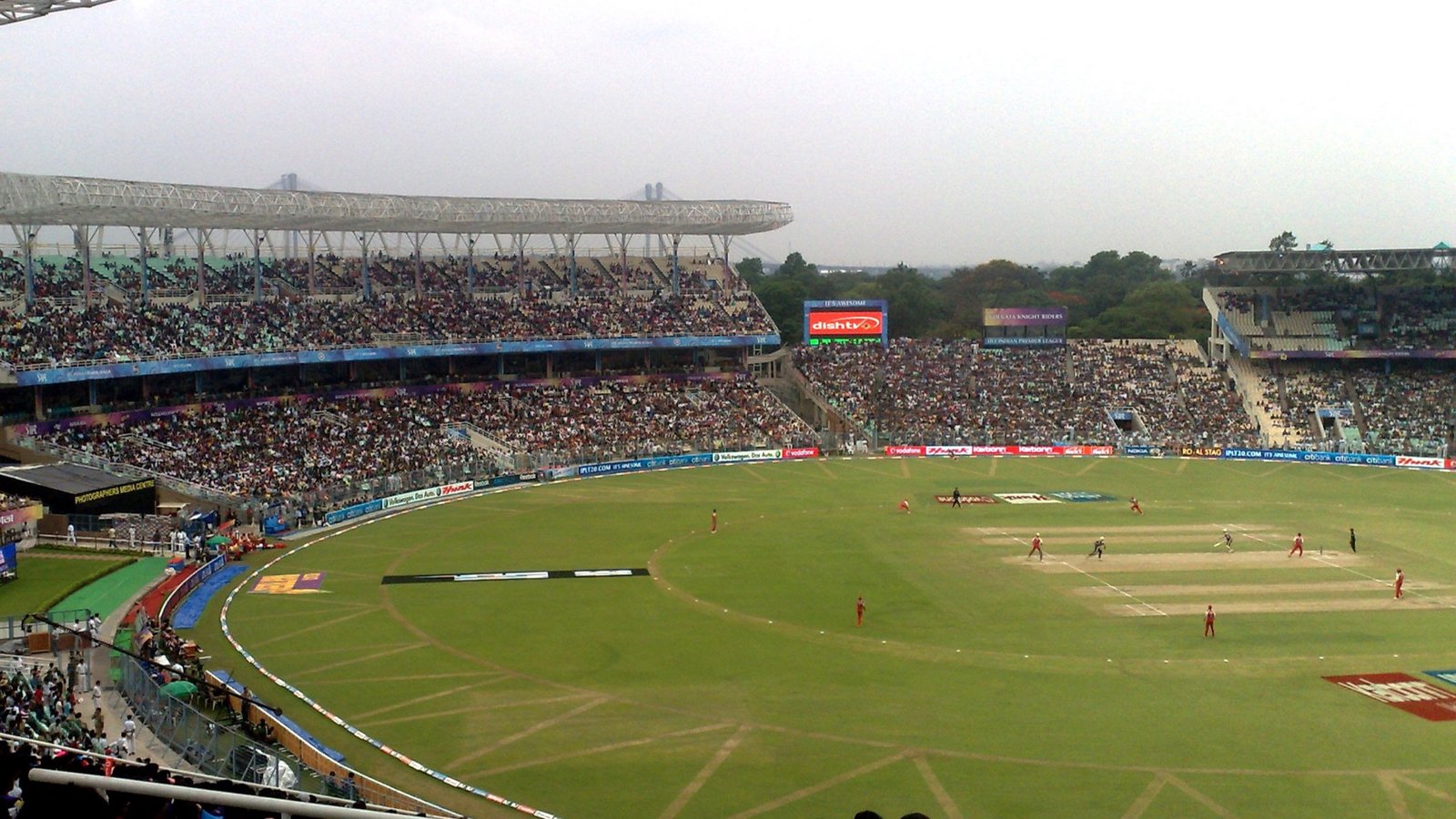
Featured image: Eden Gardens during the 2011 IPL, shown as historical league context. This is not an auction venue announcement or a photograph of the 2027 auction. Credit: Suraj100 via Wikimedia Commons. License: Public domain (PD-user). Modifications: center-cropped from 2,299 × 1,840 pixels to 16:9 and resized to 1,920 × 1,080 pixels; no generative or substantive edits.