
Google and Synaptics have moved their Coral edge-AI collaboration into a new phase: developers now have more open design material to inspect and more hardware on which to test it. The October 20 releases connect a completed 32-bit accelerator architecture, a compiler release and an expanded development-board family. Their practical significance depends on how faithfully a working application can travel between those layers.
TENS Magazine’s analysis is that this launch should be judged through a chain of evidence: which hardware implements which design features, what happens to a model during compilation, and how the complete device behaves over time. Treating those questions separately makes the announcement more useful to engineers and less likely to become an unsupported promise about battery life.
The design and the product have different boundaries
Google’s developer announcement describes the completed Coral NPU 32-bit architecture and its Matrix Execution Unit, alongside version 1.0 of an IREE/MLIR-based compiler. It also identifies the Synaptics SR200 family as using second-generation Coral technology, including the earlier vector-core milestone. That distinction matters: a newly completed open architecture is not evidence that every associated commercial chip contains every newly released feature.
Our proposed first check is a feature map linking the model’s requirements to the compiler release and then to the specific chip. A team should be able to identify the operations it needs, where those operations execute and which implementation supports them. Otherwise, a demonstration on one platform can easily be mistaken for proof about another product carrying the same architectural name.
The release also contains different availability claims. Synaptics says the Coralboard SL is generally available through DigiKey following a limited initial release, while announcing the Coralboard SR as an addition to the family. Purchase availability for one board should not be silently transferred to the other. For a project manager, access to a design, access to a development kit and access to production quantities are separate planning facts.
Open tools make the compromises inspectable
Google describes a compiler that divides work between a host processor and the neural accelerator. An application can therefore compile successfully while distributing its work in ways that affect the experience delivered by the finished device. An open toolchain provides a way to examine those decisions; openness alone does not establish their cost.
TENS proposes comparing three records for the same model: the intended computation, the compiler’s placement of that computation and the measured execution on hardware. If an operation moves to the host processor, record the time and energy it adds. If developers alter the model to keep more work on the accelerator, test whether the output quality changes. This would distinguish portability achieved through shared tooling from portability achieved by quietly changing the task.
That comparison should preserve the workload’s identity. Different input sizes, precision settings or acceptance thresholds can make two demonstrations look similar while asking different things of the hardware. A useful result would document those choices alongside performance, allowing another team to understand what must stay fixed and what can be adapted.
A quiet device and a busy device tell different stories
Synaptics’ architecture explanation emphasizes a mixture of processing cores, memory resources and four power domains. The system can keep some resources active for monitoring and bring others into use when needed. Its discussion also makes memory capacity and bandwidth part of the design problem. These are reasons to examine a complete operating pattern rather than infer device endurance from an accelerator specification.
Consider a hypothetical sensor that spends most of its time waiting, then processes a burst of events. Its energy use depends on both periods and the transitions between them. A low monitoring draw could be valuable even when individual inference events are expensive; frequent triggers could change that balance. Neither observation is a measured finding about the new Synaptics products.
Our suggested test would replay the same sequence of quiet intervals and events on each candidate device, measuring energy at the system boundary while recording successful detections, missed events and response delays. Repeating it with a busier sequence would show whether the claimed benefit survives a change in operating conditions. The sensor, memory and communications costs belong in that accounting when they are part of the intended product.
What would establish the next step
The two companies’ accounts support a substantive development: a broader route from inspectable AI designs and software to hardware intended for local inference. They are also partner descriptions of their own technology, not an independent comparison of finished consumer devices.
The strongest follow-up evidence would connect a named model and compiler version to a named board, disclose adaptations and report measured system behavior under a reproducible workload. That would let readers assess where shared infrastructure reduces development work and where hardware-specific engineering remains. Coral’s new releases create more opportunities to produce that evidence. The value for future devices will become clearer as those opportunities turn into documented results.
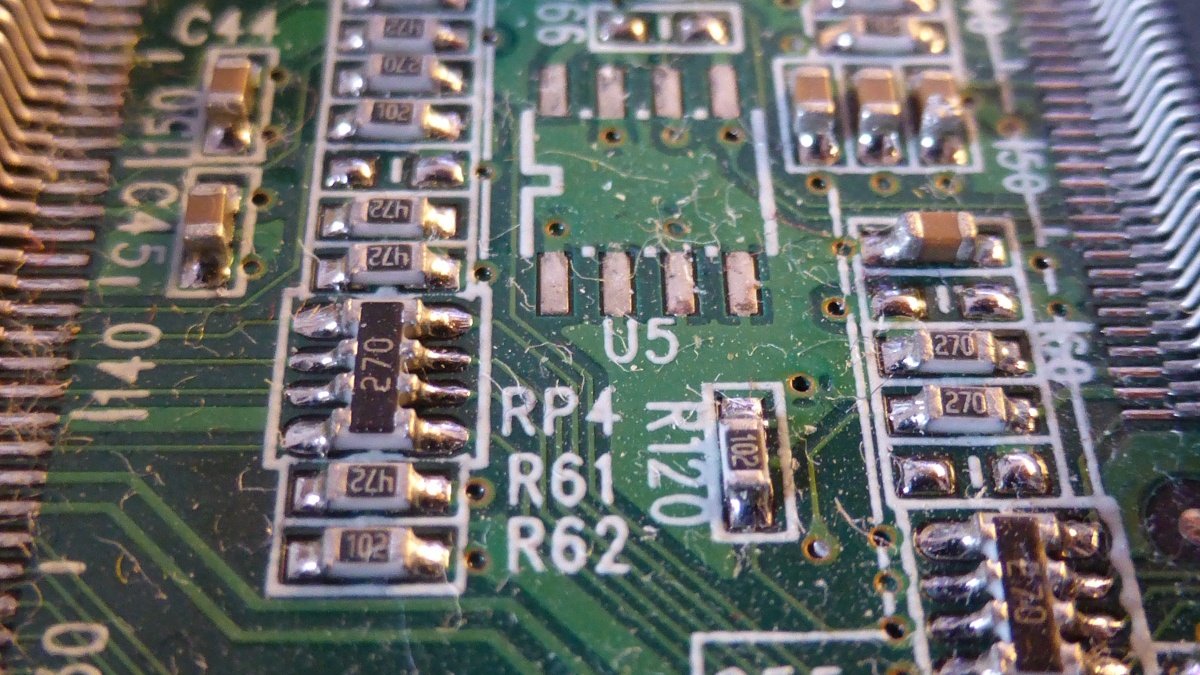
Image: Illustrative circuit board from a D-Link 604 router, not Coral or Synaptics hardware. Photograph by MartinThoma via Wikimedia Commons. CC0 1.0 Universal Public Domain Dedication. Cropped from 1,200 × 1,600 to 1,200 × 675 pixels; no generative edits.
