The Eagles added two familiar NFL names this week, but the useful football question is what each addition can change inside the current team. Philadelphia announced Zach Ertz’s return on September 22, then signed defensive back Kenny Moore to its practice squad on September 23. Those moves bring experience to different parts of the organization at different stages of roster involvement.
The distinction matters before Monday’s visit to Chicago. Ertz’s return invites memories of an earlier Eagles offense. Moore’s arrival invites attention to a long record of defensive production. Neither history, by itself, establishes a role in the next game. TENS Magazine’s analysis is that these additions should be evaluated against specific assignments and team needs, rather than treated as interchangeable evidence that Philadelphia has improved.
Separate the transaction from the assignment
The Eagles’ Ertz announcement confirms a signing and a reunion. He previously played for Philadelphia before moving to Arizona during the 2021 season. The team also reports that he subsequently caught 246 passes for 2,325 yards and 19 touchdowns across 58 games with Arizona and Washington. That supplies evidence of production after his first Eagles stint, without answering how Philadelphia intends to use him now.
Moore’s announcement is more specific about roster placement: he joins the practice squad. The Eagles list 132 regular-season appearances and 111 starts across his career, following nine seasons with Indianapolis. Those totals establish substantial experience. They do not establish a starting assignment, an elevation for Chicago or a promised share of defensive snaps.
For readers assessing the two moves, there are three separate questions: Has the player joined the organization? What is his current roster status? What work has the coaching staff actually assigned him? A signing answers the first question. Moore’s announcement also explicitly answers the second. Neither announcement alone settles the third. Collapsing those questions would turn verified transactions into unsupported lineup predictions.
Ertz returns to a different offensive task
Philadelphia’s own account of its offense provides a better frame for Ertz than nostalgia. In his September 23 report, team writer Dave Spadaro described the installation under offensive coordinator Sean Mannion, including changed terminology and concepts. The report also described Hurts operating under center more frequently and emphasized the work shared among receivers, backs, tight ends and the offensive line.
That context changes the meaning of familiarity. Ertz knows the franchise, but returning to Philadelphia is not the same as returning to an unchanged set of assignments. His earlier achievements can explain why the reunion attracts attention; they cannot demonstrate command of Mannion’s current offense. The relevant evidence will be how the staff incorporates him into what this group is doing now.
A tight end’s contribution also cannot be measured only by catches. In evaluating any eventual role, it will be useful to distinguish receiving opportunities from the work that helps a play function: alignment, blocking responsibilities and coordination with nearby teammates. This is an analytical framework, not a report that the Eagles have assigned Ertz any particular package. It prevents a modest reception total from automatically being read as a failed signing, or one productive game from proving a permanent role.
Moore’s arrival and the defensive priority are different questions
On defense, the immediate opponent supplies another check against overreading a personnel move. In a September 23 team report carrying Vic Fangio’s comments, the coordinator emphasized preparing for Chicago’s offense despite uncertainty at quarterback. He highlighted its under-center running game and blocking. The report recalled that Chicago gained 281 rushing yards against Philadelphia in their previous meeting.
Adding an experienced defensive back and preparing to defend that running game are related only if the coaching staff connects them through actual assignments. It would be premature to describe Moore as the answer to Chicago, or to imply that his arrival changes Fangio’s stated priority. The announcement establishes another experienced player in the building; the coordinator’s comments identify a collective execution problem to address.
This is where the two acquisitions should be judged differently. With Ertz, the central question is how a returning player’s skills fit a changed offensive operation. With Moore, the first question is whether a practice-squad addition progresses into a game role at all. Only then can his work be assessed against the defense’s needs. The same label, veteran addition, hides those different evidentiary steps.
What would demonstrate an impact?
The next useful information will be concrete: official roster decisions, attributable descriptions of responsibilities and observable participation. Those can establish whether either signing changes the team’s available answers. Career totals remain context, while current assignments supply the test. Philadelphia has added experience on both sides of the ball; the football value will emerge from what that experience is asked to do.
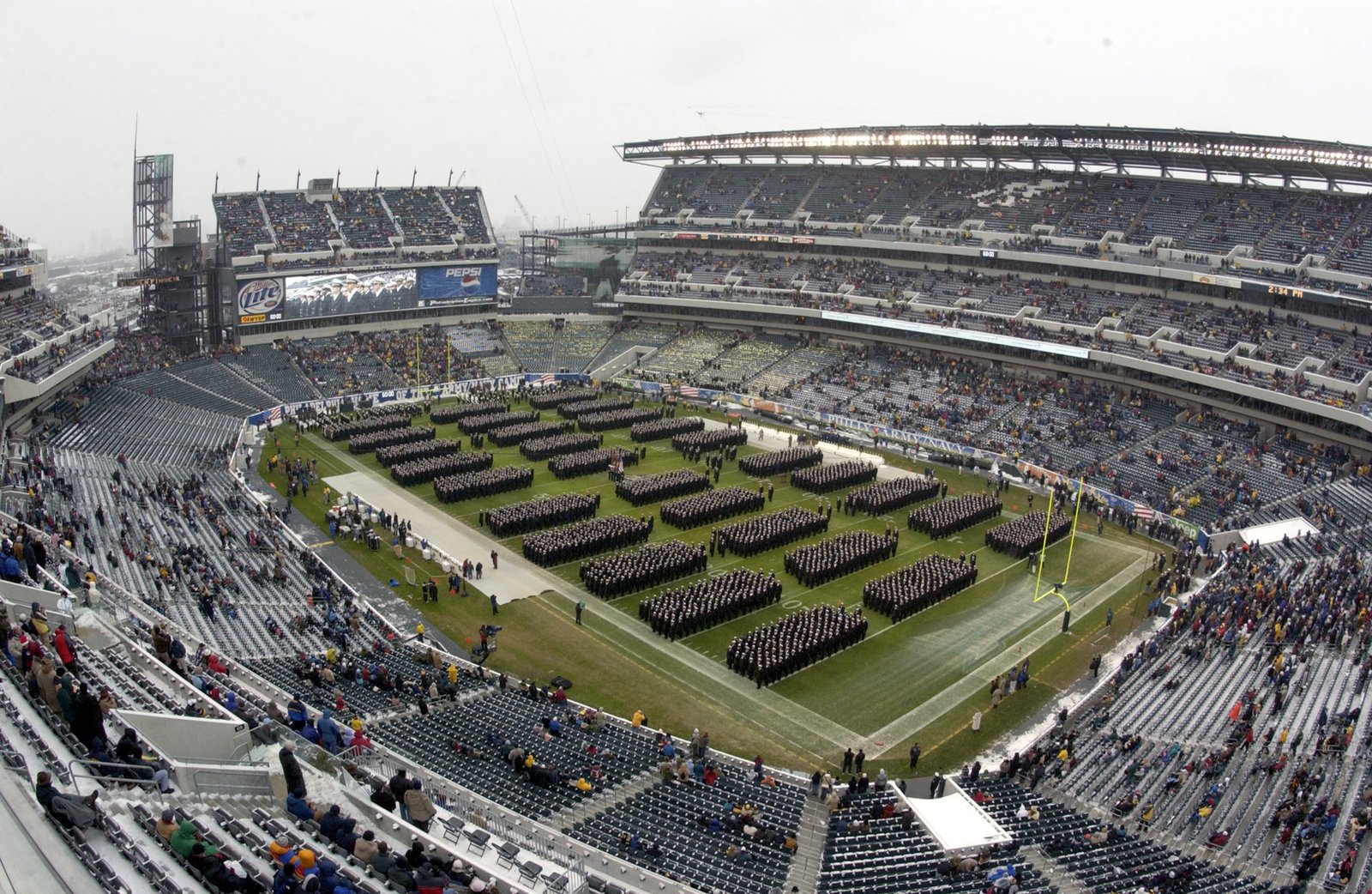
Image credit: Damon J. Moritz, U.S. Navy, via Wikimedia Commons. Public domain. Archival photograph of Lincoln Financial Field before the 2003 Army-Navy game; it does not depict the 2026 Eagles. No editorial alterations; the site serves a resized rendition.