
Google’s latest quarterly update offers a snapshot of how quickly artificial intelligence is moving from a software feature into a large-scale infrastructure business. Alphabet CEO Sundar Pichai said the company’s second-quarter revenue grew 24% year over year, while Google Cloud revenue increased 82% as demand rose for AI infrastructure and AI-powered services.
The figures come from Pichai’s July 22 remarks on Alphabet’s Q2 2026 results. They are company-reported numbers, but they reveal the scale at which Google is now deploying AI across Search, Cloud, developer tools, and consumer products.
AI demand is becoming infrastructure demand
Google Cloud’s backlog reached $514 billion during the quarter, according to Pichai. The company says nearly 90% of the Fortune 100 now use Gemini Enterprise, and its first-party model APIs process approximately 22 billion tokens per minute—up from 16 billion one quarter earlier.
Those numbers describe more than growing interest in chatbots. Enterprises are buying access to computing capacity, models, cybersecurity tools, data services, and agent platforms. Google’s strategy is to provide the entire stack, from purpose-built chips and data centers to Gemini models and business applications.
The company also says more than nine million developers build with its models each month. Its Gemma family of open models has been downloaded more than 900 million times, while the Gemini app has reached 950 million monthly active users.
Search is changing alongside the cloud business
Alphabet reported 17% year-over-year growth in Search and Other revenue. Google says AI Mode has surpassed one billion monthly active users after a global expansion, while AI features are sending billions of clicks to websites each week.
That claim is significant for publishers and businesses watching how AI-generated answers affect referral traffic. Google’s position is that AI Mode and AI Overviews are increasing the number and complexity of searches. The long-term distribution of those clicks, however, will remain an important measure for the broader web.
AI is also becoming less expensive for Google to serve. Pichai said engineering and hardware improvements pushed the cost of AI Mode responses to its lowest level since launch, even as the company added more advanced capabilities. Lower inference costs can make it practical to place AI inside more searches, workplace tools, and consumer services.
The investment behind the growth
A June 2026 Alphabet investor presentation provides additional context. Alphabet expected full-year capital expenditures of $180 billion to $190 billion, with the overwhelming majority directed toward technical infrastructure. The company also said AI solutions had become the largest contributor to Google Cloud growth.
Data centers, servers, networking equipment, and energy supply are now central to the AI race. Unlike a conventional software expansion, this buildout requires years of planning and substantial physical resources. Alphabet’s spending outlook illustrates why AI competition increasingly depends on access to power, chips, construction capacity, and global networks.
The scale also creates risk. Large capital programs must produce durable customer demand to justify their cost. Data-center development can face power constraints, permitting delays, supply-chain pressure, and scrutiny over environmental impact. Strong quarterly growth does not remove those challenges.
What to watch next
The next test is whether today’s AI usage converts into sustained revenue without forcing infrastructure costs to rise at the same pace. Investors and customers should watch Cloud backlog, operating margins, capacity constraints, and the cost of serving increasingly capable models.
For the technology industry, Alphabet’s results point toward a future in which AI is not a single product category. It is becoming a layer across search, advertising, cloud computing, security, workplace software, and consumer applications. The opportunity is enormous, but so is the physical system required to support it.
Sources: Google and Alphabet Q2 2026 CEO remarks; Alphabet June 2026 investor presentation; Alphabet Investor Relations.
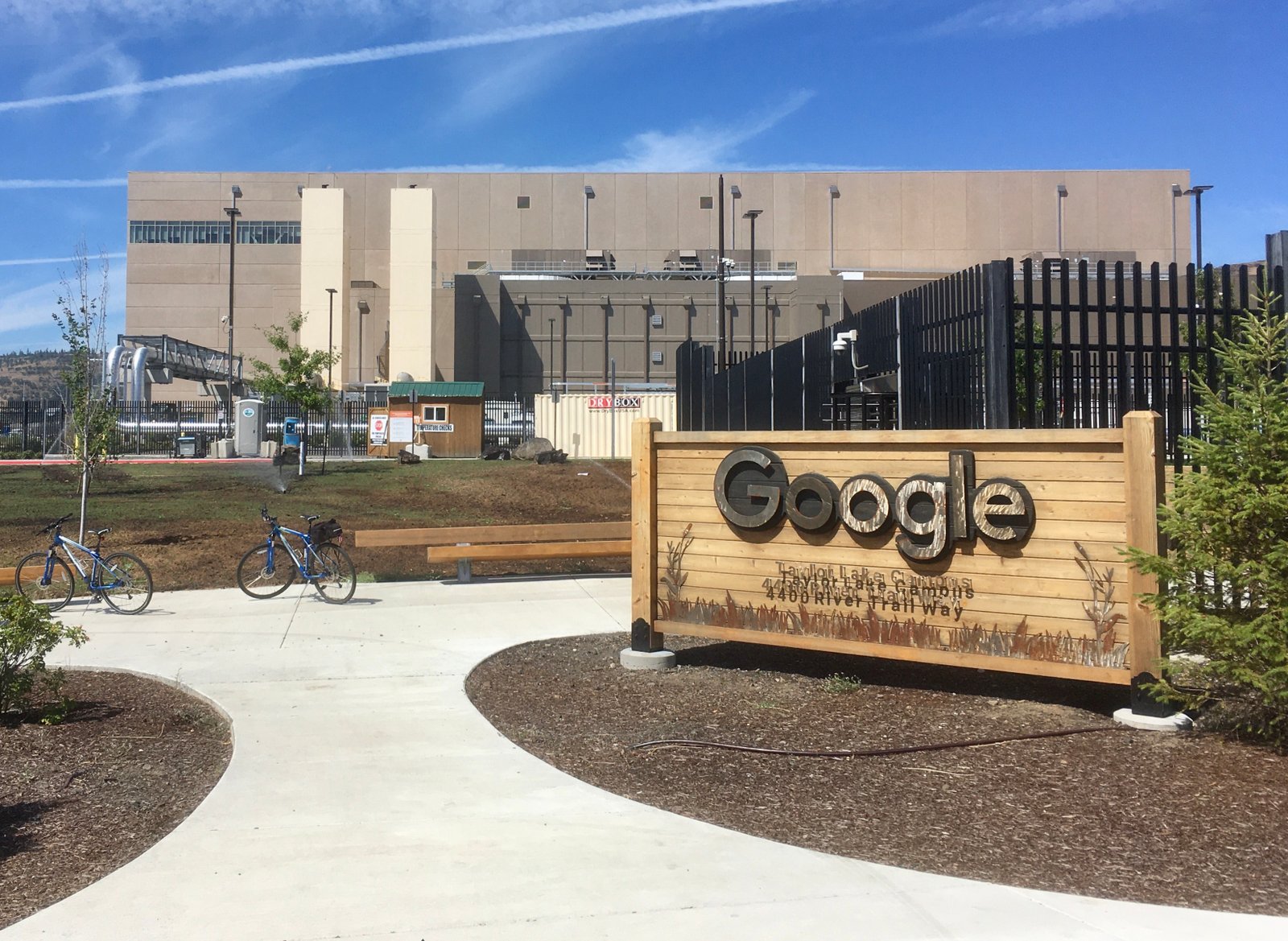
Featured image: A Google data center in The Dalles, Oregon. Photograph by Lambtron via Wikimedia Commons, licensed under CC BY-SA 4.0. No changes were made.

