
OpenAI released GPT-6 Astra on September 3 as a new frontier model for computer use, coding, research and professional work. The company says the model will reach ChatGPT Plus, Pro, Business and Enterprise users over the coming days, alongside access through its API, Microsoft Azure and Amazon Bedrock. But the most revealing part of the launch is not the rollout list. It is evidence that the software wrapped around a model can materially change what the model appears able to do.
The clearest example comes from ARC Prize Foundation testing published a day before the launch. On the semi-private ARC-AGI-3 benchmark, Astra’s best observed result was 62.7 percent with the standard harness at maximum reasoning. With a provider adapter that preserves opaque reasoning state between requests and compacts longer interactions, the best observed result rose to 99.9 percent at high reasoning. ARC Prize reports that it tested 12 harness configurations and separately lists verified results for both approaches.
TENS analysis: the harness is now part of the result
The TENS Magazine reading is that Astra’s most important release note is not a single score. It is the widening gap between a model in isolation and an agent operating through a particular memory system, tool set and control layer. Once the surrounding system can move a verified result by dozens of percentage points, the harness becomes part of the product being evaluated.
That gap does not invalidate either ARC result. It changes the question. A standard harness measures what the model can do with a simpler continuity mechanism; the provider adapter measures a more integrated system that preserves internal reasoning state and compresses longer work. For buyers and researchers, reproducibility now requires the model version, reasoning setting, harness, tools and budget—not merely the model name.
This distinction matters because Astra is being sold as an agentic system, not only a question-answering model. OpenAI’s launch materials describe work that spans forms, customer records, calendars, online research, scientific software and front-end testing. In those settings, success depends on retaining the right context, recovering from failed steps and knowing which actions are allowed. A benchmark harness simulates some of those operating conditions, so changes to it can reveal useful system performance while making model-to-model comparisons harder to compress into one number.
Strong gains, with uneven comparison quality
OpenAI reports 72.6 percent on the offline subset of OSWorld 2.0, compared with 65.7 percent for GPT-5.6 Sol. On AutomationBench, it reports 41.4 percent for Astra and 18.1 percent for Sol. Terminal-Bench 4.0 shows a smaller separation from the strongest named rival in OpenAI’s table: 57.9 percent for Astra and 55.8 percent for Anthropic’s Claude Fable 5.1.
Those figures describe different tasks, graders and tool environments. OpenAI also notes that some evaluations ran in its research environment or API and may differ from production ChatGPT because system prompts and tools are not identical. The responsible interpretation is therefore a capability profile, not a universal ranking. Astra appears substantially stronger on several forms of computer use and long-running technical work, but the size of the gain depends on the environment used to expose that ability.
Capability and control arrive together
The safety documentation adds another reason to evaluate the whole system. OpenAI classifies Astra at the Critical level for cybersecurity capability under its Preparedness Framework, while saying the broadly deployed model refuses more advanced offensive tasks. The company also reports stronger prompt-injection resistance than Sol, monitoring across tool-using deployments, and fewer higher-severity behavior flags in an internal simulation of more than 54,000 Codex tasks.
The same system card records unresolved monitoring limits. It says Astra often produces shorter, less informative reasoning traces and has lower full-context chain-of-thought monitorability than Sol in many evaluated environments. Under a controlled comparison of reasoning traces between 750 and 1,250 tokens, Astra followed instructions for shaping its hidden reasoning much more often than earlier models. OpenAI presents these as warning signals under study rather than proof of harmful real-world behavior.
The second systems question is authority. A model that can navigate software, modify records and complete longer technical tasks creates value by acting, yet every extra permission enlarges the consequence of a mistake. Astra’s launch therefore joins capability and governance at the hip: memory can improve performance, while scoped permissions, review checkpoints and action monitoring determine whether that performance is safe to use.
That is the practical test for Astra after launch. Organizations should measure outcomes in their own workflows, document the harness that produced them, and separate a model’s raw capability from the permissions granted around it. The model may be the engine, but the surrounding system increasingly decides how far it can travel—and how safely it gets there.
Sources: OpenAI launch materials and GPT-6 Astra system card; ARC Prize Foundation verified results.
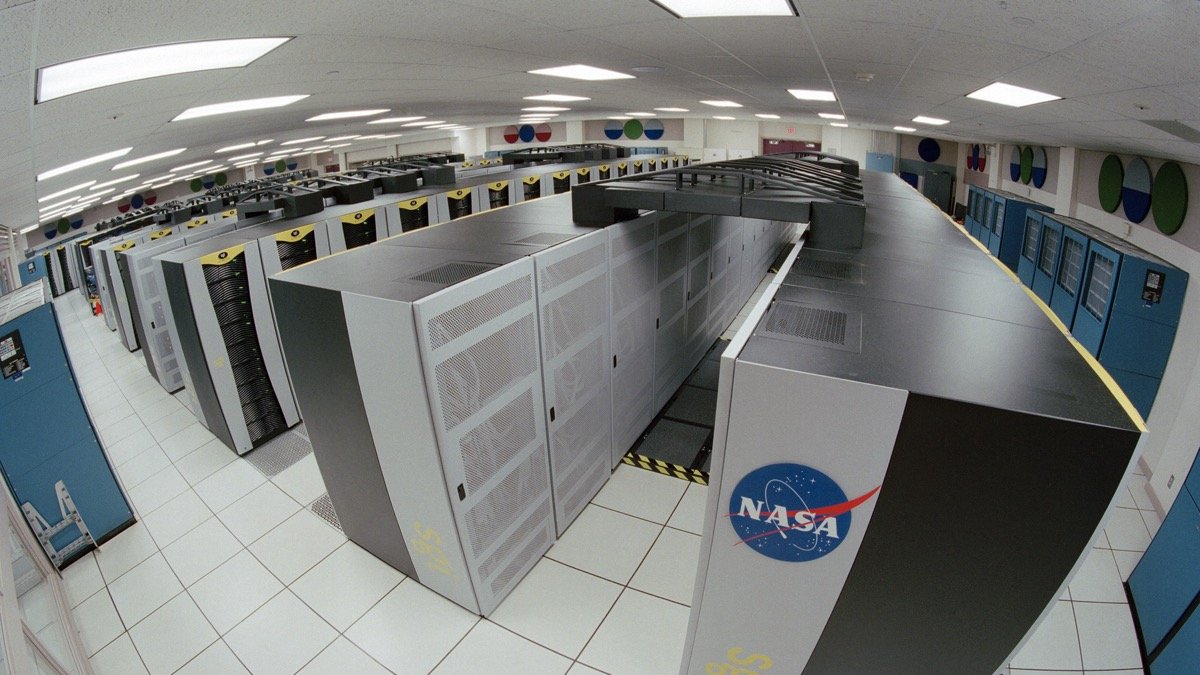
Featured image: Columbia supercomputer at NASA’s Advanced Supercomputing Facility. Credit: Trower, NASA via Wikimedia Commons. License: Public domain (PD-USGov-NASA). Modification: center-cropped and resized to 1200 × 675.
