Tucker Kraft’s contract extension gives Green Bay continuity at tight end. The more immediate question is what the Packers can build around that continuity. Fresh team reporting Friday documented Kraft’s first regular-season performance since last year’s knee injury: three receptions for 65 yards across 45 snaps. That is a useful starting point for football analysis, without treating one appearance as a forecast for the season.
The Packers announced the extension September 12; Friday’s account adds the player’s perspective and a fuller view of his return. Read alongside Green Bay’s earlier explanation of its reshaped tight-end room, the development points to a specific roster idea: retain a productive centerpiece while giving the position more than one way to contribute. Whether that becomes a more dependable offense remains unsettled.
Analysis: separate the investment from the assignment
Green Bay’s official transaction announcement provides a substantial record behind the commitment. Kraft finished his first three regular seasons with 113 catches, 1,551 receiving yards and 15 touchdowns. The club did not disclose financial terms in that announcement. Those totals establish production; they do not establish the price of the extension or allow a judgment about its salary-cap value.
The distinction matters when evaluating a retained starter. A contract answers whether the club wants the player in its future. It does not dictate the personnel grouping for the next third down, the number of routes he will run or which teammate will handle a particular block. Treating those as separate decisions makes it possible to assess the roster without inventing a promise of greater usage.
Kraft’s first three years also supply a baseline that should survive a quiet Sunday. A player’s established record and his weekly box score answer different questions. The former helps explain organizational confidence; the latter records opportunities and execution against a particular opponent. Neither should erase the other, and neither alone measures everything a tight end contributes.
A broader room changes the questions
In its September 2 reporting, the Packers described Jonnu Smith as an experienced addition with familiarity in Matt LaFleur’s offensive system. General manager Brian Gutekunst identified versatility across alignments as part of Smith’s appeal. The same account described Mark Redman as an addition intended to supply in-line blocking. These were different jobs within the same position group, rather than interchangeable names on a depth chart.
TENS Magazine’s reading is that this combination creates options around Kraft, not evidence that one particular combination will dominate. An additional receiving option can give a play-caller another formation to consider; a blocking specialist can serve a different situational need. Those possibilities become useful only when the assignments fit the call and the players execute them together.
That suggests a better evaluation than simply counting tight ends on the field. Watch what the grouping asks each player to do. Does it support the intended protection, create a useful route distribution or help sustain the running play? A formation can contain more talent and still fail if its responsibilities do not hold together. Personnel flexibility is a tool available to the coaches, not a result already achieved.
Measure contributions before projecting volume
Friday’s account identified Kraft receptions of 30 and 23 yards against Minnesota. Together, those two catches produced 53 of his 65 receiving yards, approximately 82 percent. That calculation describes a concentrated contribution in one game. It does not imply that the same share, average or number of opportunities will recur.
It also shows why a three-catch line needs context. A small reception total can include meaningful field-position changes. Conversely, those gains cannot tell us how often Kraft was open, whether another option was preferable or how well every blocking assignment was handled. Those judgments require play-level evidence beyond the receiving totals available here.
The team’s September 16 offensive review offers a second perspective: Kraft and Smith combined for three of Green Bay’s 10 explosive plays, using the Packers’ thresholds of a 12-yard run or a 16-yard reception. Three divided by 10 is 30 percent. That is a share of explosive-play events, not a share of targets, snaps, yards or responsibility for the offense.
Keeping those denominators separate prevents a promising position-group contribution from becoming a claim about an entire attack. The review also described Smith’s long reception setting up first-and-goal on a possession that ended with a field goal. Advancing the ball and finishing the possession are connected tasks, but success at the first does not certify the second.
Green Bay therefore has two distinct things to evaluate after securing Kraft: whether its tight ends keep creating useful opportunities, and whether the offense converts those opportunities into sustained, completed drives. The extension supports continuity. The expanded room offers choices. The next evidence must come from how those choices function on the field, without assuming a contract or an encouraging opener has already supplied the answer.
Sources: Green Bay Packers official transaction announcement and team reporting published September 2, 12, 16 and 18.
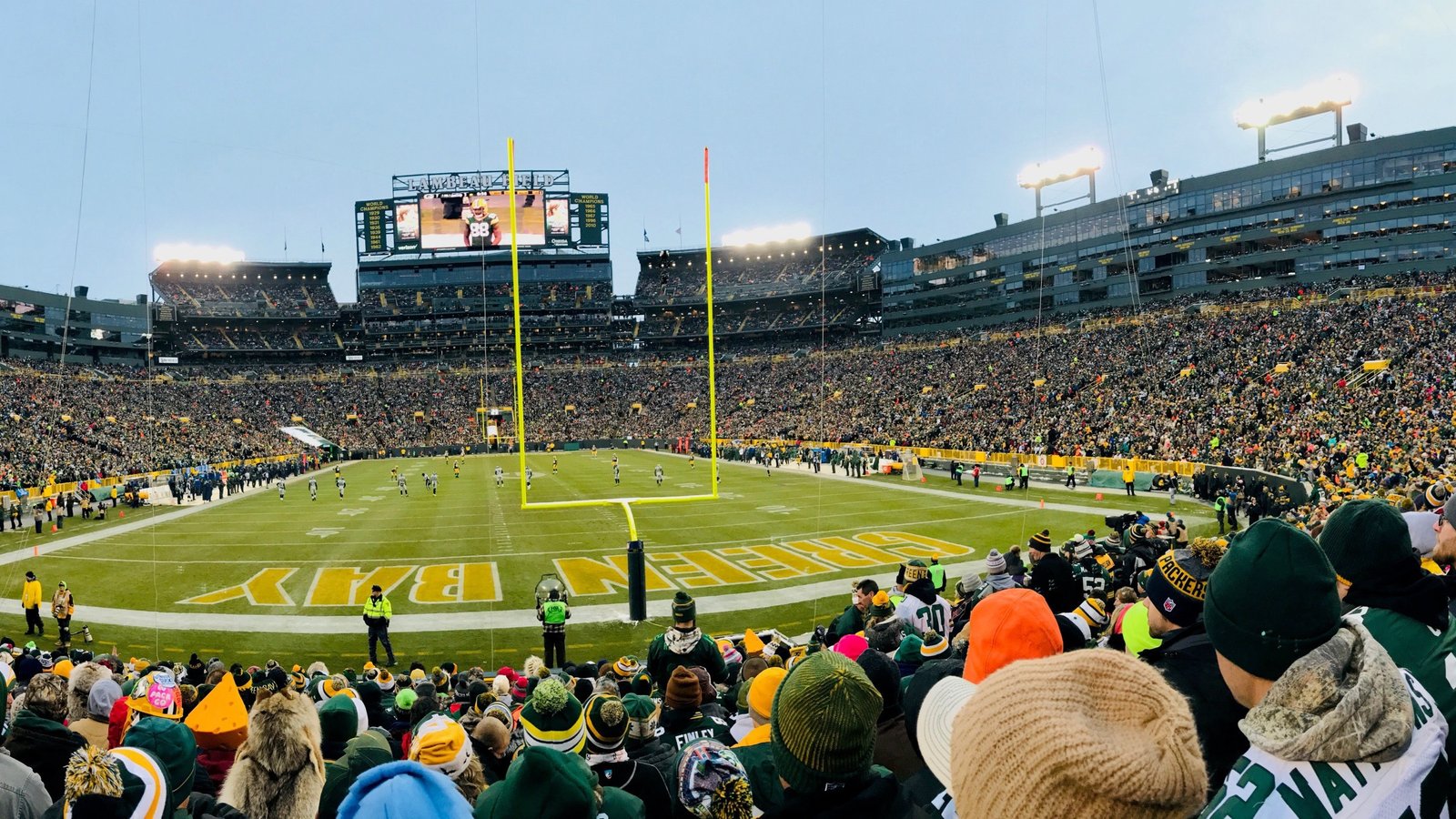
Featured image: A December 2016 game-day panorama of Lambeau Field in Green Bay, Wisconsin. Credit: Mtyson84 via Wikimedia Commons. License: CC0 1.0 Universal Public Domain Dedication. Modifications: Center-cropped from 5,257 × 1,830 to 16:9 and resized to 2,400 × 1,350; no other changes. Archival stadium photograph.