New England’s trip to Chicago on Thursday presents a deceptively simple problem: getting Drake Maye enough useful opportunities to influence the game. The Bears’ current advantage is not merely that Caleb Williams is completing passes. It is that their offense has been keeping possessions alive, leaving opponents less time and fewer snaps to construct a response.
The Bears’ official October 22 preview places them atop the NFL in average possession time at 36:01 and offensive plays per game at 73.2. Those figures frame the challenge at Soldier Field. They describe what Chicago has achieved so far; they do not establish what the Patriots will allow tonight.
TENS analysis: The most revealing contest is between the mechanisms behind those totals. Chicago needs completions that preserve options on the next down. New England needs defensive stops that its offense can convert into sustained work. A quarterback comparison alone misses that exchange.
A completion has a job to do
Chicago’s October 21 report on Williams records a rise from 58.1 percent completions last season to 72.5 percent through three starts this year. Against Atlanta, he completed 30 of 36 attempts for 305 yards. The team also cited Next Gen Stats showing 24 completions on 24 attempts from a clean pocket, producing 248 yards.
That last number deserves careful handling. It identifies a highly productive set of passing situations, not proof that protection alone caused the result. Williams still had to deliver the ball, and receivers still had to finish their work. Nor does it tell us that those conditions will be available against a different defense.
For Thursday, the useful question is what each completion leaves behind. A catch that creates a manageable next down can preserve the choice between running and passing. A catch that ends well short of the required yardage may improve the completion percentage while leaving the offense exposed to an obvious passing situation. Accuracy matters, but its value becomes clearer alongside down, distance and the next decision.
Williams described accurate placement, footwork and releasing the ball as important parts of his Atlanta performance in the Bears’ account. Our reading is that the follow-through matters as much as the completed-pass tally: can the receiver keep moving, and can the offense avoid having to rescue the possession immediately afterward?
Stops need an offensive partner
Mike Vrabel’s October 21 press conference provides the other side of the comparison. The Patriots coach emphasized the need to run the ball and remain balanced against Chicago. He also connected fourth-down stops, takeaways, kickoff coverage and punt returns to the field position available to his offense.
Those are related tasks, but they are not interchangeable. A defense can end a possession without giving its offense a short field. A return can improve the starting point without delivering a first down. The offense must then preserve the advantage. Treating all of that as simply winning possession time conceals where an opportunity was created or lost.
Consider two possible sequences, offered as illustrations rather than forecasts. A quick defensive stop followed by an offensive three-and-out sends the defense straight back to work. The same stop followed by several first downs changes the next defensive assignment’s timing and potentially its starting field position. The initial defensive success is identical; its practical benefit is not.
That is why New England’s ability to answer Chicago belongs in the same analysis as its ability to stop Chicago. Asking only how long Williams holds the ball leaves Maye’s offense out of a problem it can help solve.
The short week makes the details visible
Availability adds another constraint. Vrabel ruled out guards Ben Brown and Alijah Vera-Tucker in his Wednesday remarks. The Patriots’ October 21 matchup report identified Walter Rouse and Matt Pryor as the likely replacements and described their relief work against the Jets. That report also noted New England’s 13 giveaways against seven takeaways through six games.
The combination makes a clean possession more valuable than an attractive individual play. A long gain followed by a giveaway never reaches the scoreboard. A conservative call that repeatedly leaves an offense behind the chains may reduce one kind of risk while creating another. The answer cannot be reduced to playing safely or throwing aggressively; it depends on which assignments the available group can execute together.
For readers assessing tonight’s game, three observations can keep the judgment grounded: the distance left after Chicago’s completions, New England’s response after a defensive stop, and the outcome of possessions after either offense crosses midfield. These distinguish gaining access to an opportunity from using it. They also prevent a few spectacular throws from standing in for a full account of either quarterback’s evening.
Chicago’s early possession numbers and Williams’ accuracy make that examination worthwhile. New England’s preparation explains where resistance may come from. Neither settles the result. Thursday’s evidence will be whether each team can connect its successful plays into possessions that finish with points.
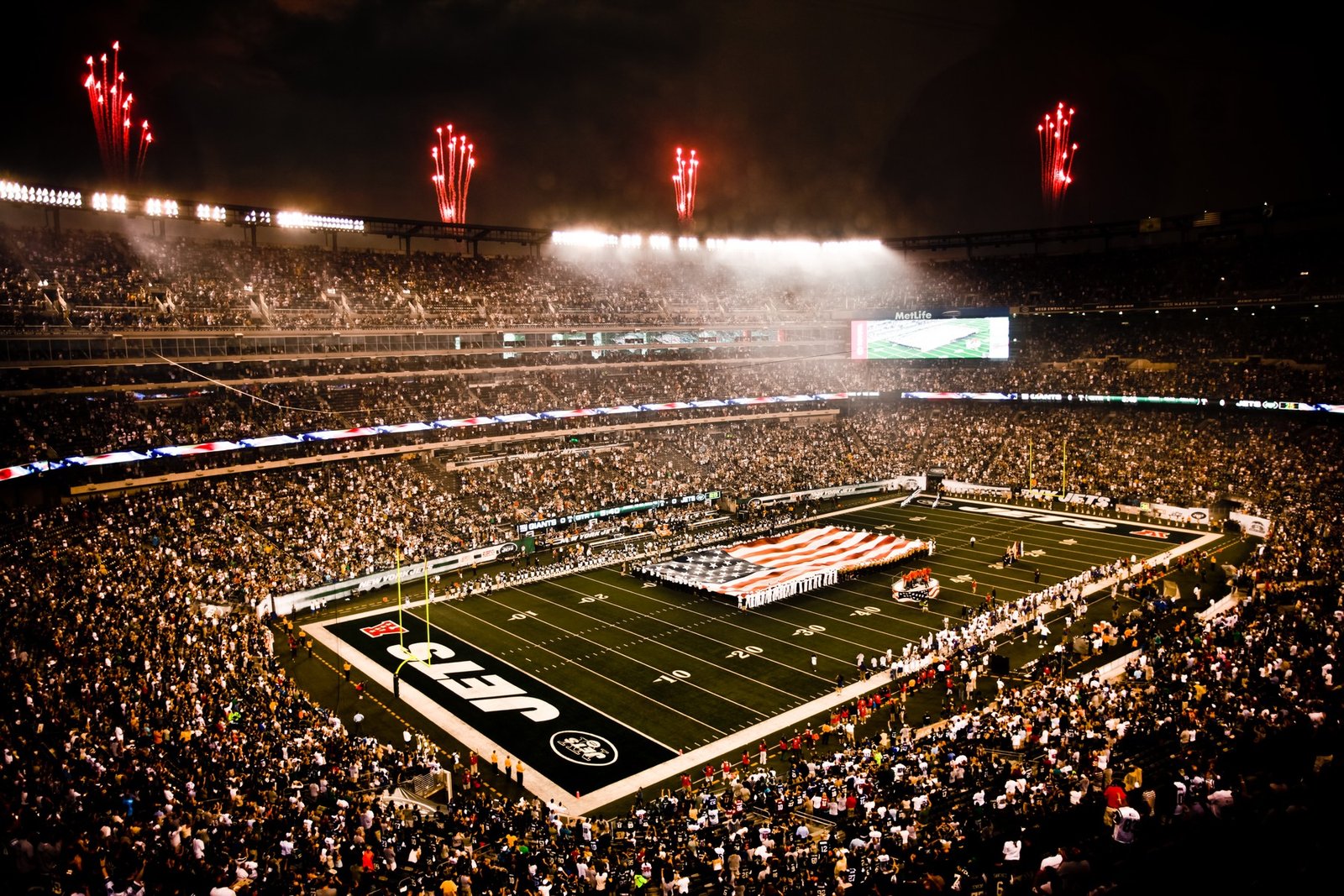
Archive image: Gillette Stadium, New England’s home, photographed in 2009; Thursday’s game is at Soldier Field in Chicago. Photo by Yunner via Wikimedia Commons. License: Public domain, released worldwide by the copyright holder. Modifications: center-cropped from 3,072 × 2,304 to 3,072 × 1,728 pixels and resized to 2,400 × 1,350 pixels.