An AI system can be available to download while remaining impractical for a small laboratory to train, change or evaluate. The opening of the UCL-led Science of Fundamental AI Research Lab puts those different forms of access at the center of a new research programme. Its significance will depend on which barriers its experiments actually lower.
UCL reported the lab’s opening on September 11, following a launch event on Wednesday. SOFAIR brings together UCL, Cambridge, Oxford and Edinburgh. The current announcement describes work on new model architectures and systems that can operate on widely available hardware. Those are research objectives, not evidence that a new model already delivers the promised gains.
TENS Magazine’s analysis separates three tests: who can use a finished system, who can participate in making it, and who can independently establish what improved. Reading the participating universities’ accounts together shows why these questions need different answers.
Running a model is one kind of access
UCL’s lab description connects its architectural research with the ambition to make advanced AI available beyond institutions with extensive computing infrastructure. That makes the eventual hardware requirements part of the scientific result. A model’s availability alone cannot establish whether another institution can use it within its own resources.
For an outside research group, a useful evaluation would pair a capability result with the equipment and workload needed to obtain it. The relevant question is whether the system can perform that group’s task on hardware it can actually access. A demonstration on modest equipment would need to identify what was run, at what quality and under what constraints.
This distinction also makes modest advances worth examining. A method could broaden practical access for a particular workload without matching every capability of a larger system. Conversely, an impressive result on one task would not establish that the same hardware can handle all the uses suggested by a general description of the model.
Training opens a different door
Cambridge’s June account describes a more specific contribution: training across geographically dispersed networks of different computing resources. Nicholas Lane’s group aims to connect existing capacity, support shared GPU infrastructure and manage computing loads. The university says the work will use open-source tools from Flower Labs.
This is a different route to participation from making a finished model smaller. Distributed training asks whether institutions can contribute resources to a collective effort. Efficient deployment asks what an institution needs after training has finished. Success on either question would be useful, but it would not automatically resolve the other.
A convincing account of distributed training would therefore report the complete arrangement: the participating hardware, the network conditions and the time needed to reach a stated result. A headline about pooled capacity would leave a practical gap if a prospective participant could not tell what it must supply or what happens when its resources differ from the demonstration.
A shared model can become a research instrument
Oxford’s July description adds another piece. It says SOFAIR is developing an open-source multimodal foundation model as an internal experimental platform, alongside research into architectures, training and distributed systems. It identifies reasoning, uncertainty and explainability as areas motivating the work.
TENS Magazine reads the experimental platform as an opportunity to make comparisons more informative. If researchers change the architecture, the training method and the computing arrangement at once, a better final score alone cannot reveal which change produced the benefit. A shared baseline could help distinguish those contributions, provided the comparisons document what was held constant.
That is why independent testing belongs alongside access to software and hardware. Researchers outside the consortium need enough information to reproduce a comparison, examine its limitations and determine whether its benefits survive a different task. These are proposed tests for future results, not claims that TENS Magazine has evaluated SOFAIR’s systems.
Keep the opening separate from the outcome
The chronology matters. UCL announced the initiative in June and reported its opening in September. The new event does not turn the earlier research ambitions into completed findings. Likewise, UCL’s September description of a £30 million lab also states that each of the two labs in the wider programme initially receives £8 million, with further funding following an autumn assessment.
The original funding announcement describes up to £60 million across the two labs over six years. These figures describe different scopes and stages; they should not be collapsed into a claim that SOFAIR has already received or spent its full prospective allocation.
The opening creates a timely opportunity to ask for a clear account of progress. Which workload became easier to run? Which institutions could join training? Which result could an outside team reproduce? Answering those questions would make accessible AI a measurable research achievement, with benefits that readers can distinguish from the ambition that launched it.
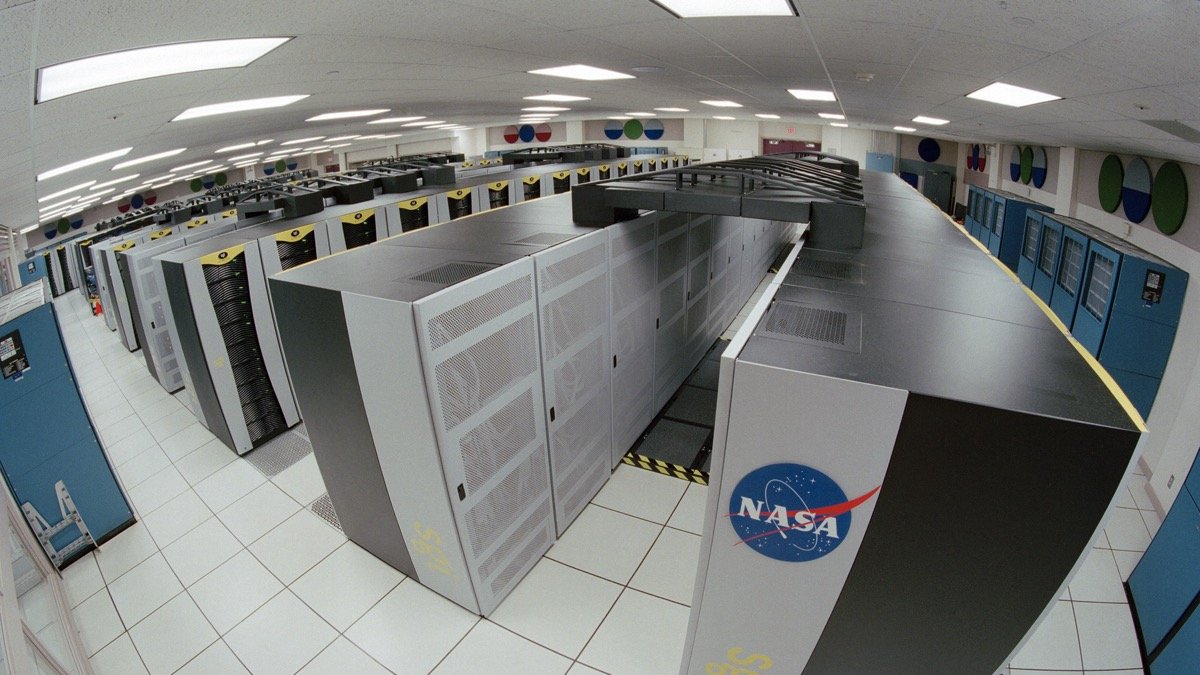
Image: Columbia supercomputer at NASA’s Advanced Supercomputing Facility, photographed in 2006; illustrative computing infrastructure, not the SOFAIR lab. Credit: Trower, NASA via Wikimedia Commons. License: Public domain (PD-USGov-NASA). Modifications: center-cropped and resized to 1200 × 675 pixels; no generative edits.