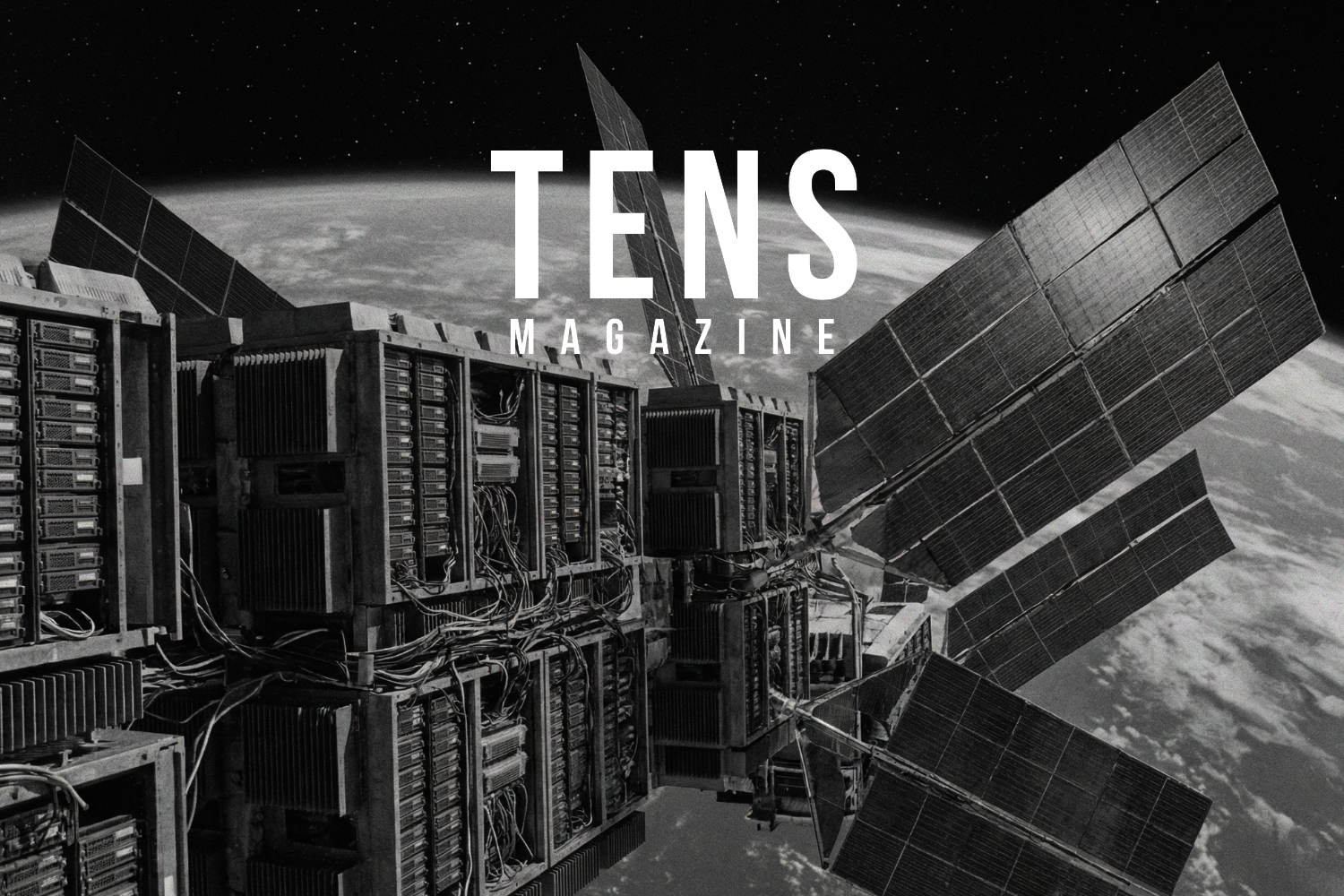
MIAMI – As the artificial intelligence revolution accelerates, a provocative vision from tech titan Elon Musk suggests that Earth’s terrestrial power infrastructure may soon prove insufficient, necessitating the migration of advanced AI servers to space. Musk, known for his ambitious ventures into space exploration and sustainable energy, has posited a future where orbital data centers, powered by abundant solar energy, become essential for the continued expansion of AI capabilities.
The escalating demand for computational power is not merely a theoretical concern; it’s a rapidly approaching reality. Industry experts and energy analysts are increasingly vocal about the colossal energy footprint of generative AI and large language models. Training and running these sophisticated algorithms require immense electricity, consuming megawatts of power for days, weeks, or even months at a time. Data centers globally already account for a significant and growing portion of electrical consumption, a trend set to intensify exponentially with AI’s widespread adoption. Projections indicate that within a few short years, the aggregate power requirements of AI could challenge the limits of existing grid capacities in major technological hubs.
Musk’s proposition addresses this looming energy crisis with a characteristic blend of audacity and engineering pragmatism. His concept involves deploying vast arrays of AI servers into Earth’s orbit, potentially leveraging the persistent, unobstructed solar radiation available in space. In this scenario, gigawatts of clean, renewable energy could be continuously harnessed, circumventing the diurnal cycles and atmospheric interference that limit terrestrial solar farms. Beyond power generation, space offers inherent advantages for cooling – a critical factor in managing the intense heat generated by high-performance computing. The vacuum of space, combined with radiative cooling techniques, could provide a far more efficient thermal management solution than any Earth-bound counterpart.
The technical and logistical hurdles, however, are monumental. The cost of launching such massive infrastructure, the challenges of maintenance and upgrades in a hostile environment, and the engineering feats required to construct resilient, self-sustaining orbital data centers are staggering. Questions also arise regarding data latency, security, and the potential for creating new forms of orbital debris. Regulatory frameworks for extraterrestrial data governance are nascent at best, presenting complex legal and ethical considerations.
Despite these challenges, the conversation underscores a pivotal moment for both the AI and space industries. If Musk’s vision gains traction, it could accelerate innovation in orbital manufacturing, advanced robotics for in-space assembly, and novel energy transmission methods. It also re-contextualizes the role of space in humanity’s technological advancement, moving beyond exploration and communication to becoming a foundational platform for our most demanding computational needs.
While the prospect of AI servers orbiting Earth might seem like science fiction, it forces a critical examination of our current trajectory. The relentless pursuit of ever-more powerful AI necessitates a parallel revolution in energy provision. Whether through terrestrial grid enhancements, fusion power, or audacious orbital solutions, the energy question remains paramount. Musk’s bold idea serves as a stark reminder: to unlock AI’s full potential, humanity must first secure its power future, even if that means reaching for the stars.