The Carolina Panthers have published their first depth chart of 2026, but the more revealing document may be the Hall of Fame Game plan that sits beside it. Carolina opens the NFL preseason against the Arizona Cardinals in Canton on Thursday night, and head coach Dave Canales has said the players expected to start the regular season generally will not play.
That decision changes how the depth chart should be read. The first column establishes an organizational order at this point in camp. The game will test the players behind it, including a group whose preseason responsibilities may be larger than their placement on the sheet suggests.
The depth chart supplies order; the game supplies evidence.
What Carolina has confirmed
The Panthers’ official depth chart, released Monday, puts most presumed starters in familiar positions. It lists Cam Jackson with Derrick Brown and Bobby Brown III on the defensive line. Rasheed Walker and Monroe Freeling appear at left and right tackle. Trevor Etienne is listed first at both kick and punt returner.
The more important information for Thursday is Carolina’s playing-time plan. The Panthers’ official training-camp reporting says Canales does not intend to use the established starters, while leaving room for players in active competitions to receive work. Kenny Pickett is scheduled to start at quarterback, with rookie Haynes King expected to handle most of the remaining snaps.
The NFL’s official training-camp schedule identifies Carolina and Arizona as the first two full squads to report because of the extra preseason game. Their meeting is set for 8 p.m. Eastern on Thursday at Tom Benson Hall of Fame Stadium. For both clubs, the additional game expands the evaluation calendar without changing the regular-season stakes.
TENS analysis: read roles before rankings
A preseason depth chart is useful, but it is not a final roster declaration. It compresses a fluid camp into a clean list and cannot show how coaches plan to divide snaps, pair personnel groups or test a player outside his listed slot. Thursday’s plan makes that limitation unusually clear because the top of the chart will largely remain on the sideline.
That makes Thursday less a referendum on the first team than a controlled stress test of the roster’s lower half.
For quarterbacks, the distinction is straightforward. Pickett’s start identifies who will open the offense, but King’s expected workload may provide the larger sample. The useful questions are operational: Can each quarterback get the group aligned, work through progressions, protect the football and keep the offense on schedule while personnel changes around him? One explosive play or one mistake will not answer those questions by itself.
The same principle applies across the roster. A second-team player who appears with several different units may be demonstrating useful flexibility. A reserve who receives specialized return, coverage or pass-rush work may be getting an evaluation that the base depth chart cannot display. Coaches can also change the difficulty of an assignment by matching a player against a stronger opponent or asking him to handle a less familiar responsibility.
The most useful evaluation will come from role and response, not the order of names on Monday’s sheet.
Where the first chart still matters
None of that makes the chart meaningless. It establishes a baseline for comparison. Carolina’s tackle listing, defensive-line order and return assignments show how the staff is organizing work before the first outside test. If Thursday’s deployment differs, the gap between the chart and the game plan becomes information of its own.
That is especially relevant at returner, where a listing can be tested through actual decisions under pressure. Fielding the ball cleanly, choosing when to advance it and executing within the coverage design are more informative than a name appearing first on a preseason document. The same is true for reserve linemen and defensive backs, whose communication is easier to judge when the opponent is unfamiliar.
There is also a limit to what one exhibition can establish. Personnel packages, opponent quality and snap totals will vary. A player may receive only a narrow assignment, and the coaches will have practice evidence that is not visible on the broadcast. Thursday can move an evaluation forward without settling it.
What the Hall of Fame Game can clarify
The first useful result will be a map of opportunity. Snap distribution should indicate which competitions Carolina wants to examine immediately and which players the staff wants to see in multiple contexts. Special-teams usage will matter because roster value often extends beyond offense or defense, even when a depth chart separates those jobs into different sections.
The second result will be procedural. Carolina has spent camp practicing against itself. A new opponent introduces different looks, timing and communication problems. How the reserve groups adjust between series may be more meaningful than the score.
Carolina’s first depth chart offers a starting point, not a conclusion. By holding out most established starters, the Panthers are turning the league’s opening preseason game into an extended evaluation of the players who have the most to prove. The responsible reading comes after comparing the list with the work.
Sources: Carolina Panthers official depth-chart report; Carolina Panthers official training-camp observations; National Football League official 2026 training-camp schedule.
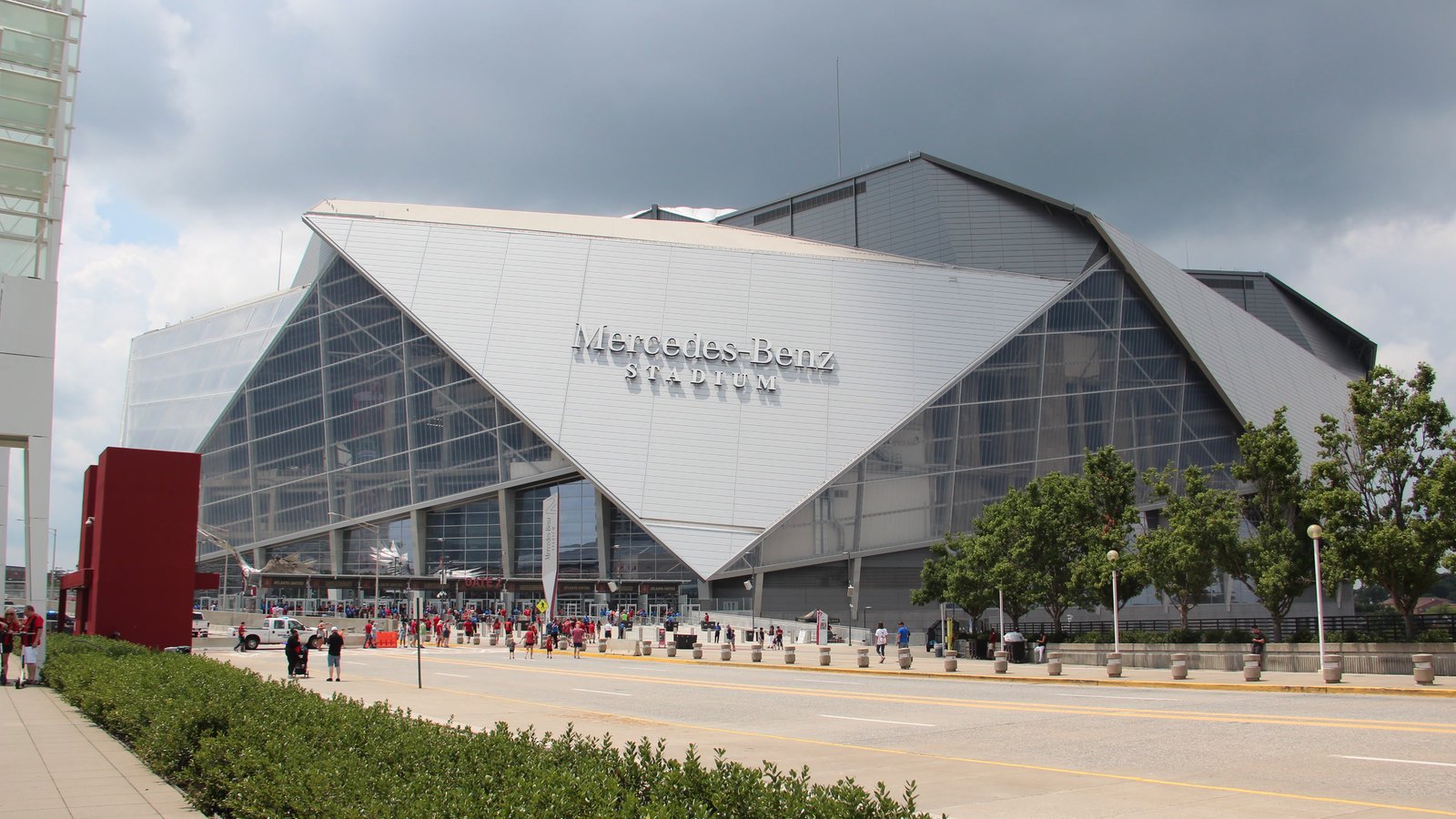
Featured image: Bank of America Stadium in Charlotte, home of the Carolina Panthers. Photo by Carlos.dkfi via Wikimedia Commons. License: CC0. Modifications: none; the original 2,048 × 1,152 landscape photograph was uploaded without alteration.