The Detroit Lions entered training camp with an established starter, an experienced backup and an undrafted rookie. One transaction has changed that structure. Detroit placed Teddy Bridgewater on the Reserve/Retired list Sunday, ending his latest stint with the club and turning a planned backup competition into an immediate roster-management test.
The move is confirmed by both the NFL transaction wire and the Lions. Head coach Dan Campbell said Bridgewater was stepping away and praised the quarterback’s preparation, intelligence and influence as a teammate. Detroit’s official roster now lists Jared Goff and rookie Luke Altmyer as its active quarterbacks.
That is the confirmed personnel picture. What follows is the football question created by it: how should the Lions divide valuable preseason work between developing Altmyer and integrating the veteran Campbell has said the team intends to add?
Detroit loses a specific kind of insurance
Bridgewater, 33, leaves after an 11-year career that included 83 games and 65 starts. He completed 66.3 percent of his career attempts and threw 75 touchdown passes against 47 interceptions. His three Detroit stints began in 2023, and his value to the Lions was never limited to a stat line. He knew the organization, had worked behind Goff and offered a veteran reference point in a quarterback room adjusting to offensive coordinator Drew Petzing.
Detroit’s own training-camp preview had framed the position as a competition between Bridgewater and Altmyer for the backup job. That competition no longer exists in its original form. Campbell said the club plans to add a veteran, while also noting that Altmyer has improved with the reps he has received.
The distinction matters. Removing a veteran competitor does not automatically award the rookie a settled regular-season role. It changes the evaluation environment around him.
Analysis: two timelines now share one quarterback room
Bridgewater’s departure compresses two different objectives into the same August calendar. Detroit must prepare credible short-term coverage behind Goff, but it also needs enough evidence to judge whether Altmyer can become a longer-term option. A veteran signing would address experience; it would not erase the developmental value of the rookie’s current opportunity.
That makes practice and preseason snap allocation more consequential. A newly signed quarterback needs installation work, terminology and timing. Altmyer needs live repetitions that cannot be recreated on a clipboard. Every series assigned to one player carries an opportunity cost for the other, even though both tracks can serve the roster.
Bridgewater’s retirement changes Detroit’s backup question from a head-to-head competition into a sequencing problem. The Lions first have to identify how much of the offense a new veteran can absorb, then decide how to preserve meaningful developmental work for Altmyer without treating August improvement as proof that he is ready for every regular-season demand.
Altmyer has an opportunity, not a verdict
Altmyer started for three seasons at Illinois. The Lions report that he completed better than 60 percent of his passes in each of those seasons and totaled 57 touchdown passes against 21 interceptions. Campbell has emphasized his information retention and processing progress, while also stressing how many repetitions a young quarterback still needs.
Detroit’s first preseason game is Thursday at Cincinnati. The Lions have said Goff and most starters are not expected to play, which places Altmyer in line for extensive work. That workload can reveal whether he manages the operation cleanly: getting the call, organizing the formation, handling the clock, identifying pressure and reaching the correct answer on schedule.
Those are more useful measures than turning one preseason box score into a depth-chart declaration. A sharp outing would be evidence of progress. A difficult one would identify the next teaching points. Neither result alone should settle a role the club is already planning to reinforce with another veteran.
Analysis: the replacement should clarify roles
The most useful veteran addition would do more than occupy a roster spot. He would give Detroit a clear emergency option while allowing the staff to define an intentional development plan for Altmyer. If the roles remain vague, the club risks using preseason snaps reactively and learning less about both quarterbacks.
The practical scorecard is therefore broader than who takes the first backup rep. Detroit should be able to leave the preseason knowing which concepts its veteran addition can execute immediately, which situations Altmyer can handle reliably and where either player would need the game plan narrowed behind Goff.
Bridgewater’s exit does not alter Goff’s status or determine the rookie’s future. It removes a trusted layer of preparation and forces Detroit to rebuild that layer quickly. The Lions’ response will be judged less by the name they sign than by whether the resulting division of work produces both dependable insurance and a more informed evaluation.
Sources: NFL official August 2026 transaction wire; Detroit Lions official roster; Detroit Lions training-camp reporting and quarterback preview.
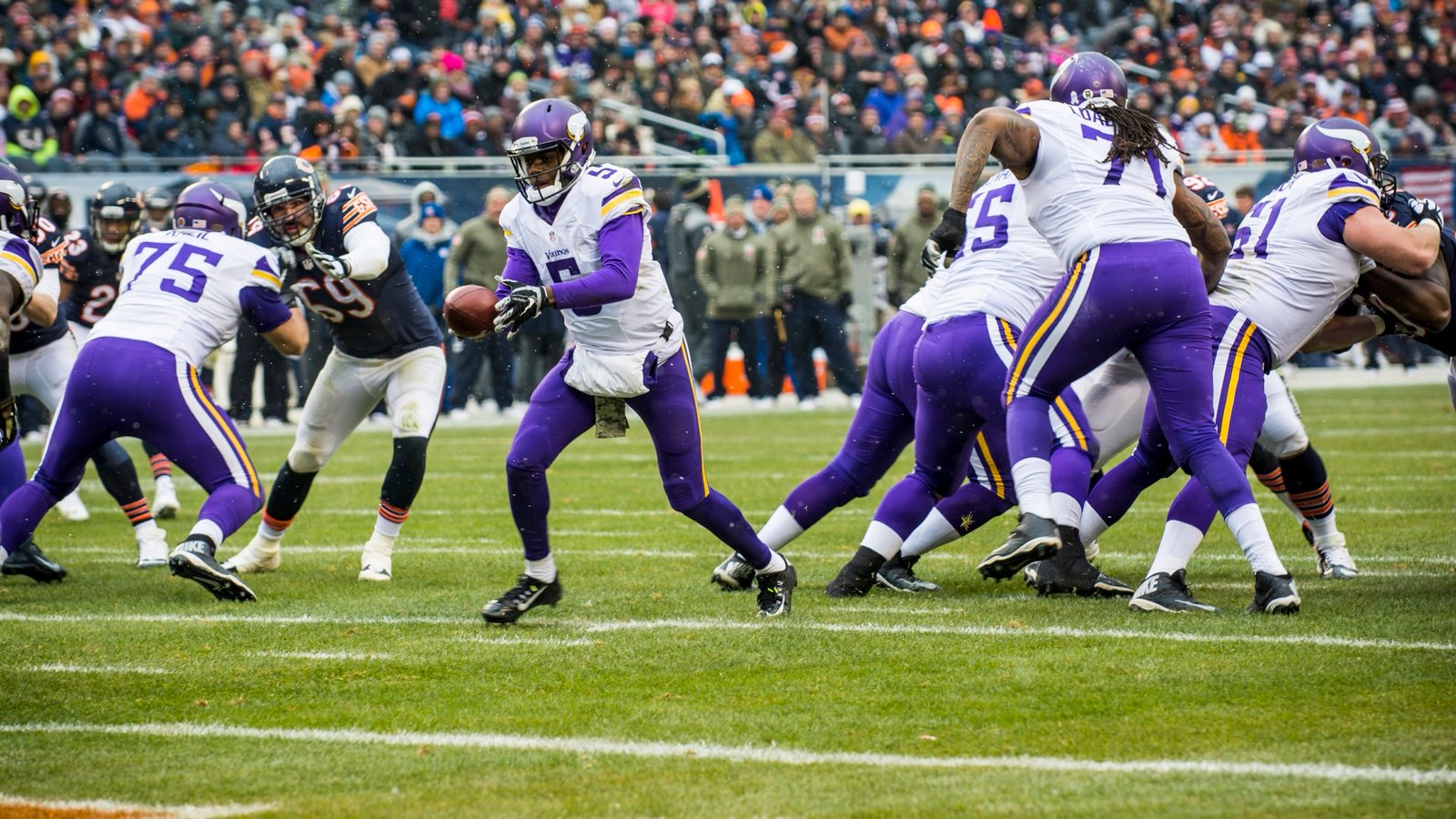
Featured image: Teddy Bridgewater hands the ball to Jerick McKinnon during a Minnesota Vikings game at Soldier Field in 2014. Photo by U.S. Army Sgt. 1st Class Michel Sauret via Wikimedia Commons. License: Public domain, U.S. federal government work. Modifications: center-cropped from 6,000 × 4,000 pixels to a 16:9 frame and resized to 2,400 × 1,350 pixels.