Houston’s decision to activate Tank Dell on October 24 changes more than the names available at receiver. Paired with the Giants’ defensive moves that same afternoon, it creates a useful test of how offensive options and defensive responsibilities interact. The Texans added a receiving option; New York restored one cornerback while losing availability elsewhere in its coverage structure.
The consequential question is how those changes fit together. Dell’s activation is a confirmed roster development, not a forecast of his targets, playing time or effectiveness. Likewise, a returning cornerback does not automatically replace the work of an absent safety or linebacker. Reading the two teams’ announcements together gives a more precise account of the matchup than treating either return as a standalone upgrade.
What the October 24 records establish
Houston Texans Public Relations announced Dell’s activation to the active roster on Saturday. The club also elevated cornerback Bryce Hall and linebacker Kenneth Murray through standard practice-squad elevations. Its Friday injury report had listed Dell as a full participant in all three practices and questionable for the Giants game.
Those documents describe different stages of availability. Practice participation records what happened during preparation; a roster transaction changes a player’s formal status. Neither document supplies a snap allocation. This analysis concerns the personnel decisions entering the October 25 matchup, rather than a live account of the game or an assessment of Dell’s medical condition.
The Giants’ official Week 7 tracker records Paulson Adebo’s activation from reserve and Tremaine Edmunds’ placement on injured reserve on October 24. New York also elevated safety Raheem Layne. Earlier that day, the team ruled safety Jevón Holland out; cornerback Greg Newsome II had already been ruled out Friday.
TENS analysis: follow the coverage responsibilities
The defensive changes should be assessed by assignment, not by adding and subtracting names. A cornerback’s availability can help the defense handle receivers outside. Safety work can involve support over the top, communication and reacting to routes crossing between zones. A linebacker has another set of responsibilities underneath. The precise duties depend on the call, but the positions are not interchangeable replacements.
That is why Adebo’s activation and the absences elsewhere need to remain in the same frame. The Giants could gain an option for one matchup while still needing to redistribute help around it. No transaction establishes who will handle every call, and it would be premature to declare a particular replacement the weak point. The football issue is whether the combined unit can preserve the intended spacing and handoffs.
For Houston, adding a receiver can matter even on a play when he is not targeted. In a hypothetical route combination, one receiver can carry coverage away from another route, or force a defender to choose between protecting depth and closing a shorter throwing window. Those are general offensive mechanisms, not claims about plays Houston has called for Dell.
The corresponding limit matters just as much: being on the field does not prove a player caused space to open. Coverage may already favor a particular throw because of the formation, down and distance or defensive call. Crediting Dell for every completion by a teammate would be as unsupported as judging his contribution solely by his own catch total.
Three observations that would make the analysis useful
First, separate participation from opportunity. Snap totals show presence, while routes and intended targets describe different kinds of involvement. A receiver can be present for a running play, run a route without drawing the throw, or receive a target that the defense contests well. Collapsing those situations into one number obscures what the offense asked him to do.
Second, examine how the defense exchanges responsibility when receivers move across the formation or run through different coverage areas. A completion against an altered secondary is not automatically evidence of a communication failure. The useful distinction is between a receiver winning against the intended coverage and a defender being left with an assignment the unit failed to coordinate.
Third, compare similar situations before drawing a conclusion about an individual. An open short route against defenders protecting a longer gain says something different from separation on a tightly contested third down. Game circumstances can change both the available throw and the defense’s priorities. Any later evaluation should preserve that context rather than convert one productive sequence into a verdict on the roster moves.
What the transactions leave unresolved
The announcements make the personnel changes clear without resolving deployment or performance. Houston has restored Dell to its active roster. New York’s defensive availability changed across multiple positions. The original football question created by those developments is how the units coordinate their work: whether Houston turns an added option into useful choices, and whether the Giants connect their coverage assignments despite the changes. Those outcomes require game evidence, not confidence borrowed from the transaction list.
Sources: Houston Texans Public Relations, October 24 roster announcement and October 23 injury report; New York Giants official Week 7 tracker, updated October 24.
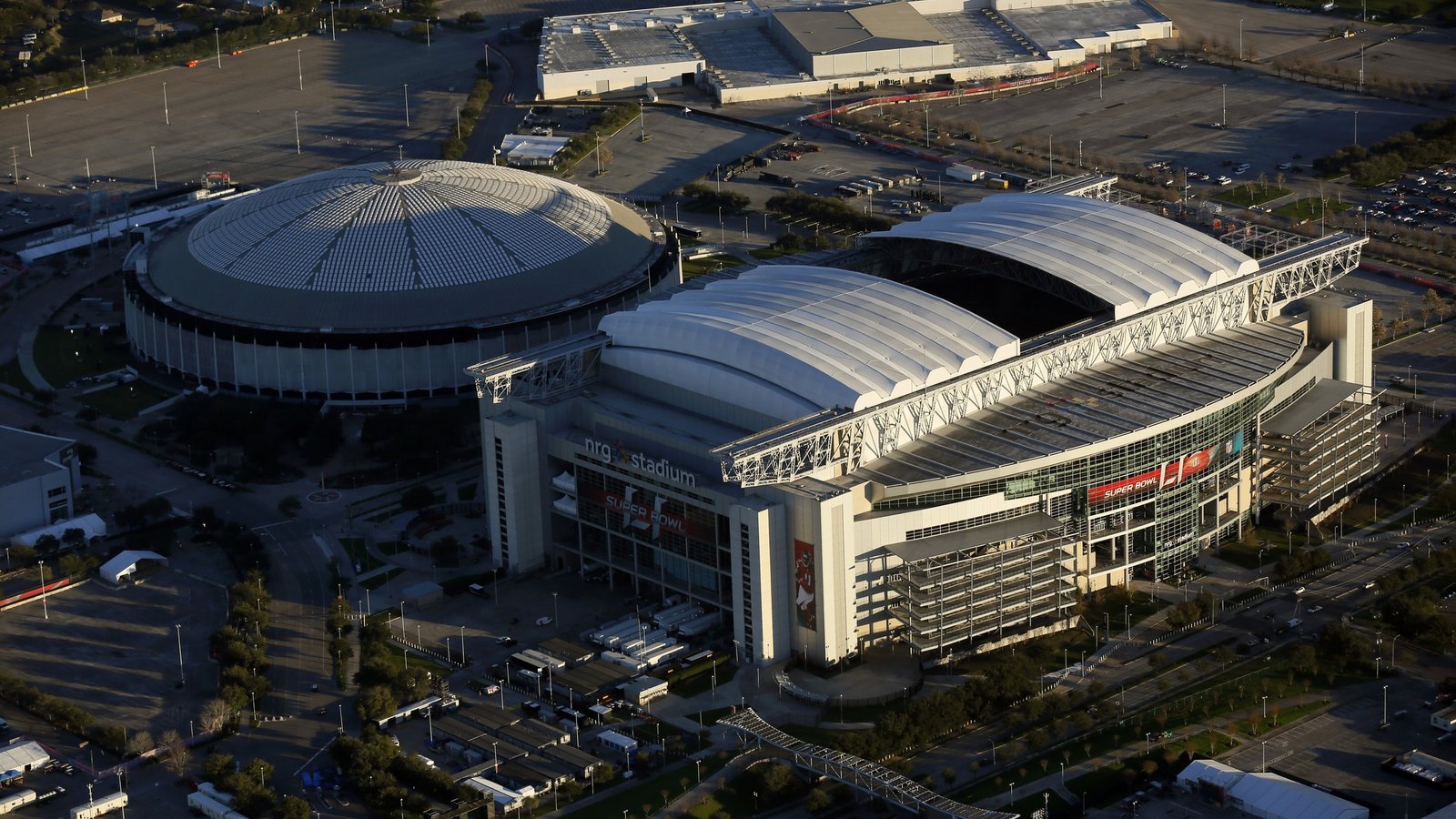
Featured image: Archive aerial photograph of NRG Stadium in Houston, January 2017. Photo by Glenn Fawcett, U.S. Customs and Border Protection, via Wikimedia Commons. License: Public Domain (U.S. federal government work). Modifications: center-cropped from 3:2 to 16:9 and resized to 2,400 × 1,350 pixels.