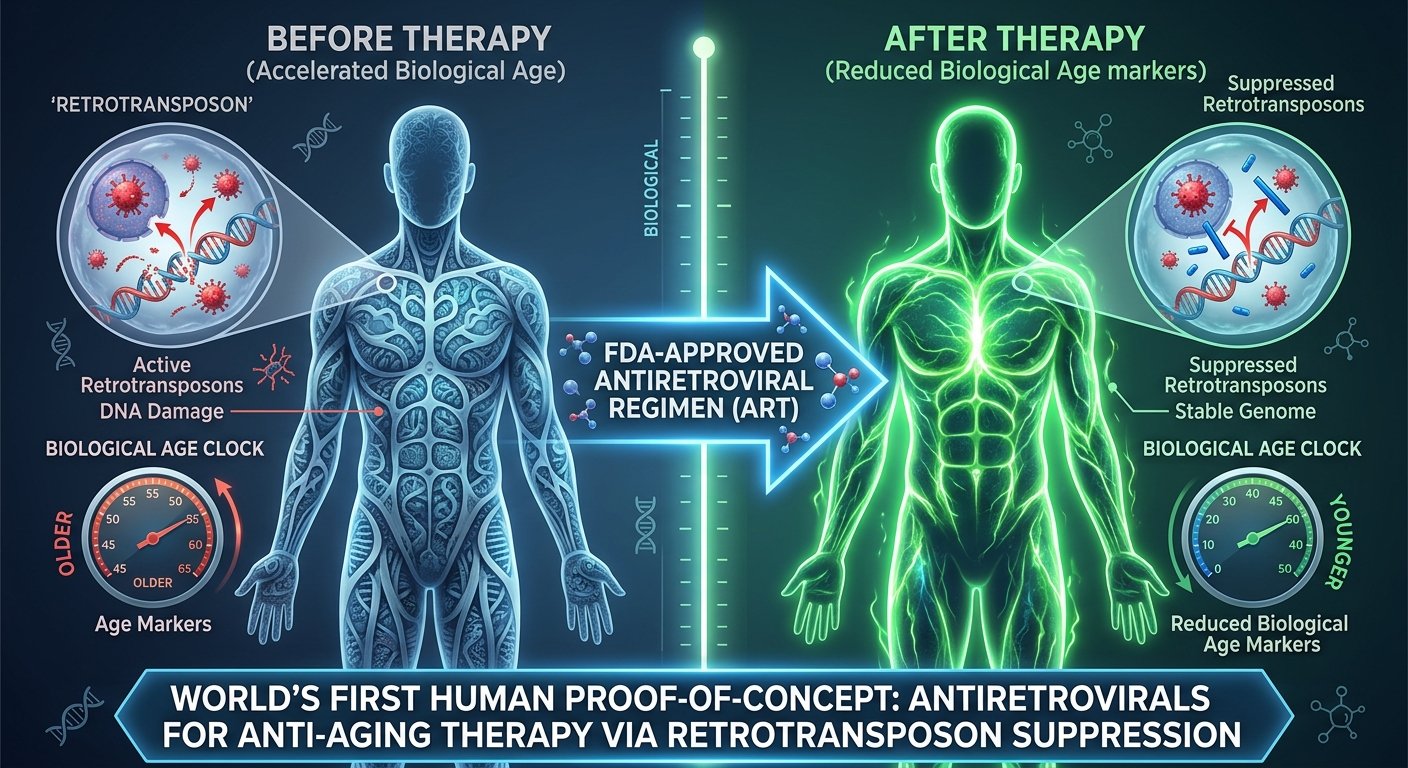
1. Human proof of concept Recent clinical observations have demonstrated the first human proof-of-concept that an FDA-approved antiretroviral regimen can successfully reduce markers of biological aging in healthy adults. This development marks a significant milestone in longevity research, shifting the scientific focus from preliminary animal models to tangible human applications in the ongoing study of cellular aging and retrotransposon activity. The findings provide a foundational framework for future medical interventions targeting the fundamental mechanisms of human aging.
2. Retrotransposon mechanics Retrotransposons are sequences of DNA that possess the unique ability to copy and paste themselves into different locations within the human genome. As individuals age, the cellular mechanisms that typically suppress these genetic elements weaken, leading to increased cellular inflammation and severe genomic instability. These factors are widely recognized by researchers as primary drivers of the biological aging process and age-related tissue degradation. Understanding this mechanism is central to developing targeted therapies.
3. Antiretroviral intervention Antiretroviral drugs, traditionally utilized by medical professionals to manage viral infections such as HIV by preventing the virus from replicating, are now being actively repurposed in advanced aging research. Scientists have discovered that these same medications can inhibit the reverse transcriptase enzymes utilized by retrotransposons. This inhibition effectively halts their replication cycle and mitigates the associated cellular damage that accelerates physiological aging. This cross-disciplinary application highlights the versatility of existing pharmaceutical compounds.
4. Measuring biological age Biological age differs significantly from chronological age by measuring the actual physiological condition and functional capacity of cells and tissues. Researchers assess biological age using sophisticated epigenetic clocks, which meticulously track DNA methylation patterns. These measurements are analyzed alongside markers of cellular senescence and systemic inflammation to determine exactly how effectively a specific pharmacological intervention slows or reverses the cellular aging process. Accurate measurement tools are essential for validating the efficacy of any proposed anti-aging treatment.
5. Regulatory framework The specific antiretroviral regimens utilized in these recent proof-of-concept studies are already approved by the United States Food and Drug Administration for the treatment of specific viral infections. This existing regulatory approval provides a well-documented and extensive safety profile. Having established safety parameters potentially accelerates the timeline for off-label clinical trials focused specifically on longevity, cellular health, and the prevention of age-related diseases. Researchers can bypass early-phase safety testing, expediting the transition to efficacy evaluations.
6. Target demographic The recent proof-of-concept study specifically focused on analyzing healthy adult participants rather than individuals suffering from severe age-related pathologies or active viral infections. Observing a measurable reduction in biological age markers within a strictly healthy population suggests that retrotransposon suppression could eventually serve as a preventative therapeutic approach. This strategy aims to maintain cellular health long before any significant age-related physical decline occurs. Preventative applications represent a major shift in how the medical community approaches the aging process.
7. Inflammation mitigation The unchecked activation of retrotransposons triggers an innate immune response within human cells, leading to a state of chronic sterile inflammation, commonly referred to in gerontology as inflammaging. By suppressing these rogue genetic elements with targeted antiretroviral therapy, researchers observed a corresponding and significant decrease in systemic inflammatory markers. Reducing this baseline inflammation is crucial for preserving long-term tissue function and preventing chronic conditions. Controlling inflammaging is a primary objective in modern longevity science.
8. DNA integrity maintenance Genomic instability is universally recognized as a fundamental hallmark of biological aging, often exacerbated by the erratic movement of retrotransposons that can disrupt essential regulatory genes. The strategic application of reverse transcriptase inhibitors helps maintain the structural integrity of the human genome. This pharmacological intervention prevents the steady accumulation of genetic mutations and cellular errors that typically accompany advanced chronological age in adults. Preserving DNA stability is vital for ensuring that cells continue to function correctly over a lifespan.
9. Research expansion Following this highly successful initial proof-of-concept, the global scientific community is currently preparing for larger, randomized, double-blind clinical trials to further evaluate the efficacy and long-term safety of antiretroviral therapy for anti-aging purposes. These upcoming comprehensive studies will aim to establish optimal dosing protocols, identify potential side effects, and determine which specific biological markers respond most favorably to the sustained treatment. Rigorous clinical testing is required before these therapies can be recommended for general public use.
10. Therapeutic potential The successful suppression of retrotransposons opens entirely new avenues for treating a wide variety of age-associated neurodegenerative and metabolic disorders. If antiretroviral regimens can reliably and safely reduce biological age markers across diverse populations, this pharmacological approach may eventually be integrated into broader preventative healthcare strategies. Such strategies are explicitly designed to extend human healthspan and significantly delay the onset of age-related diseases. This breakthrough represents a critical step toward transforming aging from an inevitable decline into a medically manageable condition.