Carson Beck’s first NFL game produced the kind of stat line that demands attention and restraint in equal measure. The Arizona Cardinals’ third-round rookie completed 15 of 19 passes for 188 yards, one touchdown and no interceptions in Thursday night’s 33–30 Hall of Fame Game loss to the Carolina Panthers.
The numbers were efficient: a 78.9 percent completion rate, 9.9 yards per attempt and a 125.4 passer rating. They were also drawn from 19 throws in the opening preseason game, against changing personnel and a limited defensive plan. The useful question is not whether Beck proved he should hold a particular regular-season role. He did not. It is whether the performance supplied evidence on the specific transition Arizona began evaluating when it drafted him.
On that narrower test, the debut mattered. Beck gave the Cardinals an orderly, turnover-free sample that connected his extensive college experience to an NFL operation. The next stage should be designed to make that operation harder.
The Cardinals drafted experience that still needed translation
Arizona selected Beck with the first pick of the third round, No. 65 overall. The Cardinals’ official draft account noted that he arrived with 43 college starts and joined a quarterback room that included veterans Jacoby Brissett and Gardner Minshew II.
That history distinguished Beck from a prospect who needed his first exposure to high-level game management. It did not eliminate the mechanical differences between college and NFL football. During organized team activities, Cardinals coach Mike LaFleur publicly emphasized the snap count as a weapon. The team’s official account described how Beck had used a verbal cadence earlier in college before moving to a clap-based system.
That detail offers a better frame for the debut than a generic quarterback ranking. Arizona was not only evaluating where the ball went. It was evaluating whether a rookie could organize the play before the ball moved, then preserve timing after the snap.
What the first sample established
Beck completed 15 passes and produced 188 yards, including a five-yard touchdown to Simi Fehoko. He was not intercepted and was sacked once for two yards. Arizona’s offense finished with 425 total yards and averaged 6.5 yards per play; the running game added 143 yards on 34 attempts.
That run-pass balance matters to the evaluation. Beck was not asked to rescue a stalled offense with every dropback. He operated inside an attack that could keep the defense accounting for the backfield, and he turned his 19 attempts into an average of nearly ten yards each.
Beck’s debut answered an operational question, not a depth-chart question: for one limited game plan, the Cardinals could move from huddle to snap to productive pass without the rookie giving away possessions.
The distinction is important because turnover avoidance, completion rate and yards per attempt test different parts of the job. No interceptions show that Arizona preserved the ball during Beck’s assignment. His completion rate shows that the called passing game stayed connected. The yards-per-attempt figure shows that the completions were not limited to empty short gains. Together, those are useful signals. None independently measures how he handled every protection check, coverage disguise or missed opportunity.
What 19 attempts cannot resolve
A preseason opener reduces complexity by design. Teams protect much of their regular-season inventory, substitute heavily and prioritize evaluation over opponent-specific strategy. Beck’s clean line therefore cannot establish how the operation will respond when a defense disguises pressure, forces longer third downs or changes its answers after halftime.
It also cannot determine his position relative to Brissett or Minshew. Practice performance, the coaches’ full play-by-play grades and future preseason assignments will carry information that a public box score does not. Treating 19 throws as a settled competition would convert a useful first data point into a claim the evidence cannot support.
The strongest part of the line may be the combination of efficiency and ball security, but even that needs repetition. A turnover-free debut is evidence that Beck avoided a damaging result in this sample. It is not a forecast that he will maintain the same rate when the pass rush, coverage and decision clock become less forgiving.
The next test should change the conditions
Arizona can now move beyond the basic question of whether Beck can produce an orderly first appearance. The next evaluation should vary the assignment: more third-and-medium work, additional protection responsibility, red-zone snaps and series in which the defense has already seen the Cardinals’ early concepts.
The Cardinals also need to separate production created by the structure from production created by the quarterback. That requires film review. Did Beck move defenders with his eyes? Did he reach the correct answer when the first read disappeared? Did the cadence reveal pressure or merely start the play? Those are coaching questions, not conclusions available from the final line.
The most useful reading of Beck’s debut is deliberately narrow: Arizona received evidence that its experienced rookie could translate a limited first assignment into efficient, turnover-free offense, while the harder parts of the professional transition remain untested in public.
That is enough for one night. Beck did not win a regular-season role in Canton, and the Cardinals do not need to pretend he did. They now have a clean baseline. The value of the remaining preseason will be measured by how well he holds it when the operation becomes more demanding.
Sources: Arizona Cardinals official draft and offseason quarterback coverage; ESPN game summary and box score; Pro Football Hall of Fame official game information.
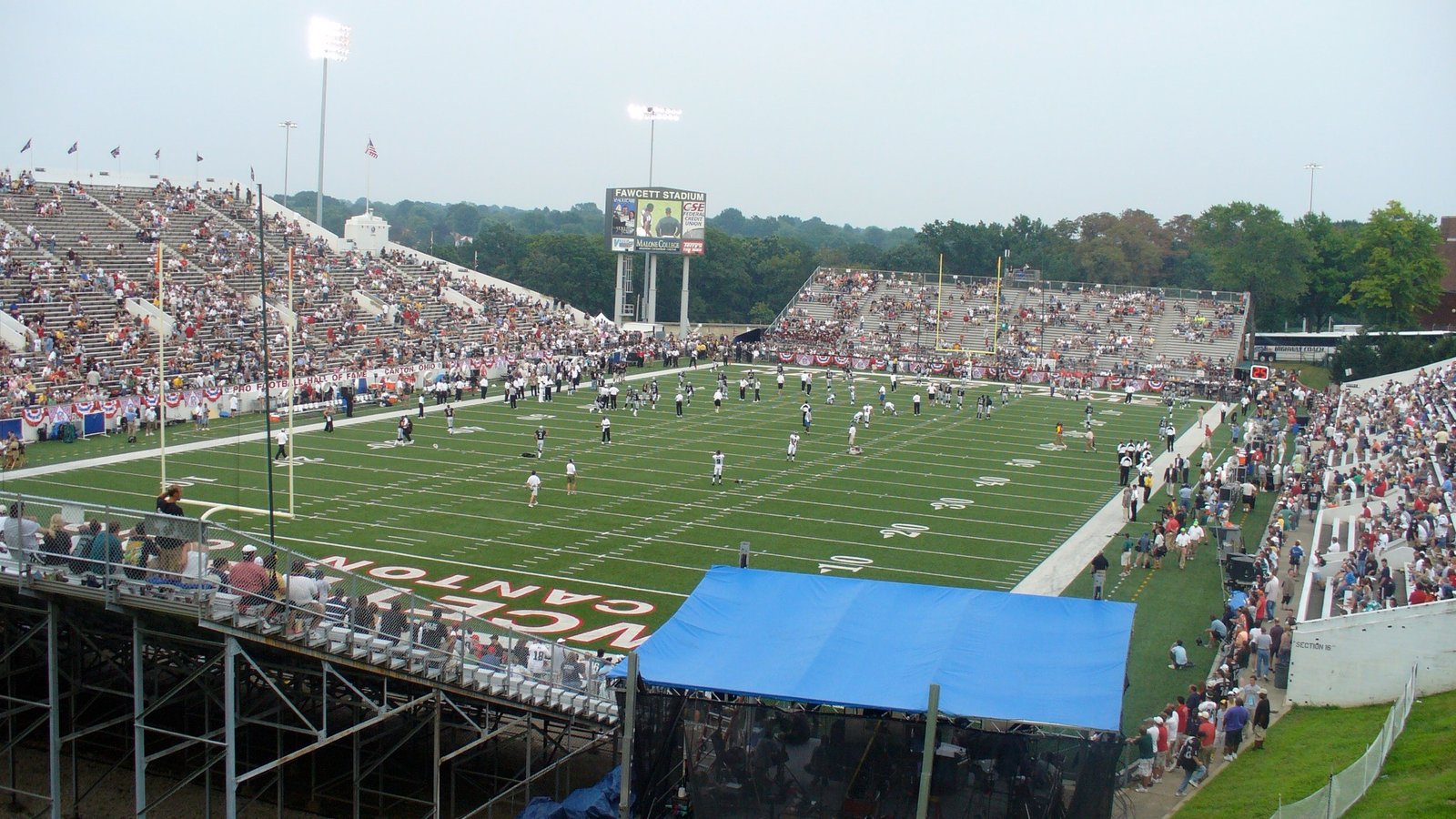
Featured image: The Canton football stadium that hosted the Hall of Fame Game, photographed before the 2006 game. Photo by Harrier233 via Wikimedia Commons. License: Public domain. Modifications: center-cropped from 4:3 to 16:9 and resized to 2,400 × 1,350 pixels.