
Google’s newest fast AI model arrived with an unusual second message: the model before it is still useful. Gemini 3.8 Flash became generally available on September 2 for coding, autonomous agents and complex enterprise workflows, while Google also told efficiency-focused developers they could keep using Gemini 3.7 Flash. That is more than a product distinction. It signals that model choice is becoming a recurring operations decision rather than a one-time upgrade.
The release is current and substantial, but the larger change appears in its chronology. Google introduced Gemini 3.6 Flash on July 21, followed with 3.7 Flash on August 13 and released 3.8 Flash on September 2. Three production-oriented generations therefore arrived across 43 calendar days. For teams building software around these systems, the pace makes controlled evaluation, version tracking and rollback capacity part of the product.
Three releases, two different directions
The sequence is not a simple march toward one universally superior model. Google described 3.6 Flash as a more token-efficient successor to 3.5 Flash. It priced 3.6 at $1.50 per million input tokens and $7.50 per million output tokens when it launched. Three weeks later, 3.7 arrived at an introductory rate of $0.75 and $3.75 for the same quantities while emphasizing higher performance in coding and agentic workflows.
Gemini 3.8 retains those introductory per-token rates through December 31. Google’s developer documentation says the rates will double on January 1, 2027. The model supports a one-million-token context window, a maximum output of 64,000 tokens and low, medium or high thinking levels. Medium is the default. Unlike some earlier configurations, a minimal thinking level is not supported.
Google says 3.8 can deliberately consume more tokens on difficult work because it takes additional reasoning steps, calls tools repeatedly and verifies its progress. That creates a split inside the same product family: 3.8 is positioned for harder tasks where a stronger first attempt may justify more computation, while 3.7 remains available when efficiency matters more. A shared sticker price does not make the two operating profiles identical.
TENS analysis: the release interval becomes a production risk
The 43-day chain from 3.6 to 3.8 compresses the useful life of a model-selection study. An evaluation completed at the July launch could be two generations behind by early September, even if its prompts, test set and application had not changed. The practical unit of comparison is therefore not a model name alone. It is a dated combination of model version, thinking level, prompt, tools, retrieval system and acceptance test.
A model identifier should now be treated like a software dependency with an evidence record. Every change needs a matrix that holds the application constant while comparing quality, total tokens, latency, tool failures, retries and human corrections. If only benchmark accuracy is recorded, a team cannot tell whether a gain came from better reasoning, a larger compute budget or a workflow that simply ran longer.
The safest deployment pattern is a four-stage ladder: challenger testing on historical tasks, shadow runs beside the current model, a limited canary on real traffic and a documented rollback path. Each stage answers a different question. Historical tests reveal known regressions; shadowing shows how the candidate behaves on current inputs; a canary exposes operational effects at small scale; rollback limits the cost of surprises.
This approach is consistent with guidance from the National Institute of Standards and Technology. NIST’s AI Risk Management Framework calls for systems to be tested before deployment and regularly while operating, with methods, metrics and tools documented. Its 2026 report on deployed AI monitoring adds that controlled pre-release tests cannot reveal every consequence that appears under real-world, changing inputs.
Benchmarks begin the decision; local evidence finishes it
Google reports gains for 3.8 Flash on long-horizon software engineering, professional reasoning and difficult multi-step work. It reports a 54.9 percent result on HLE-Verified and says the model approaches larger frontier systems on some tests. Those numbers are useful for screening, but they do not establish how the model will perform inside another company’s permissions, data, tools or review process.
The release itself explains why. A higher thinking level can increase capability and token use, while a lower level can reduce latency. Tool orchestration adds more moving parts than a single response. A model can improve a public benchmark yet regress on a narrow production requirement such as a schema constraint, a refusal boundary, a legacy codebase or an unusual document format.
That means an upgrade policy needs explicit thresholds before a test starts. A candidate might require no decline on safety and formatting checks, a measurable improvement on the hardest tasks, and total cost and latency within an agreed range. Teams should preserve failed examples as regression cases for the next release rather than rebuilding the evaluation from memory.
Gemini 3.8 Flash may prove to be a better model for many agentic workloads. The more durable lesson is that “latest” and “default” are not evaluation results. With releases arriving roughly three weeks apart, production readiness increasingly depends on whether an organization can measure change quickly without letting release speed dictate deployment speed.
Sources: Google’s Gemini 3.8 Flash launch announcement and developer guide dated September 2, 2026; Google’s Gemini 3.7 Flash announcement dated August 13, 2026; Google’s Gemini 3.6 Flash announcement dated July 21, 2026; National Institute of Standards and Technology AI Risk Management Framework and 2026 deployed-system monitoring report.
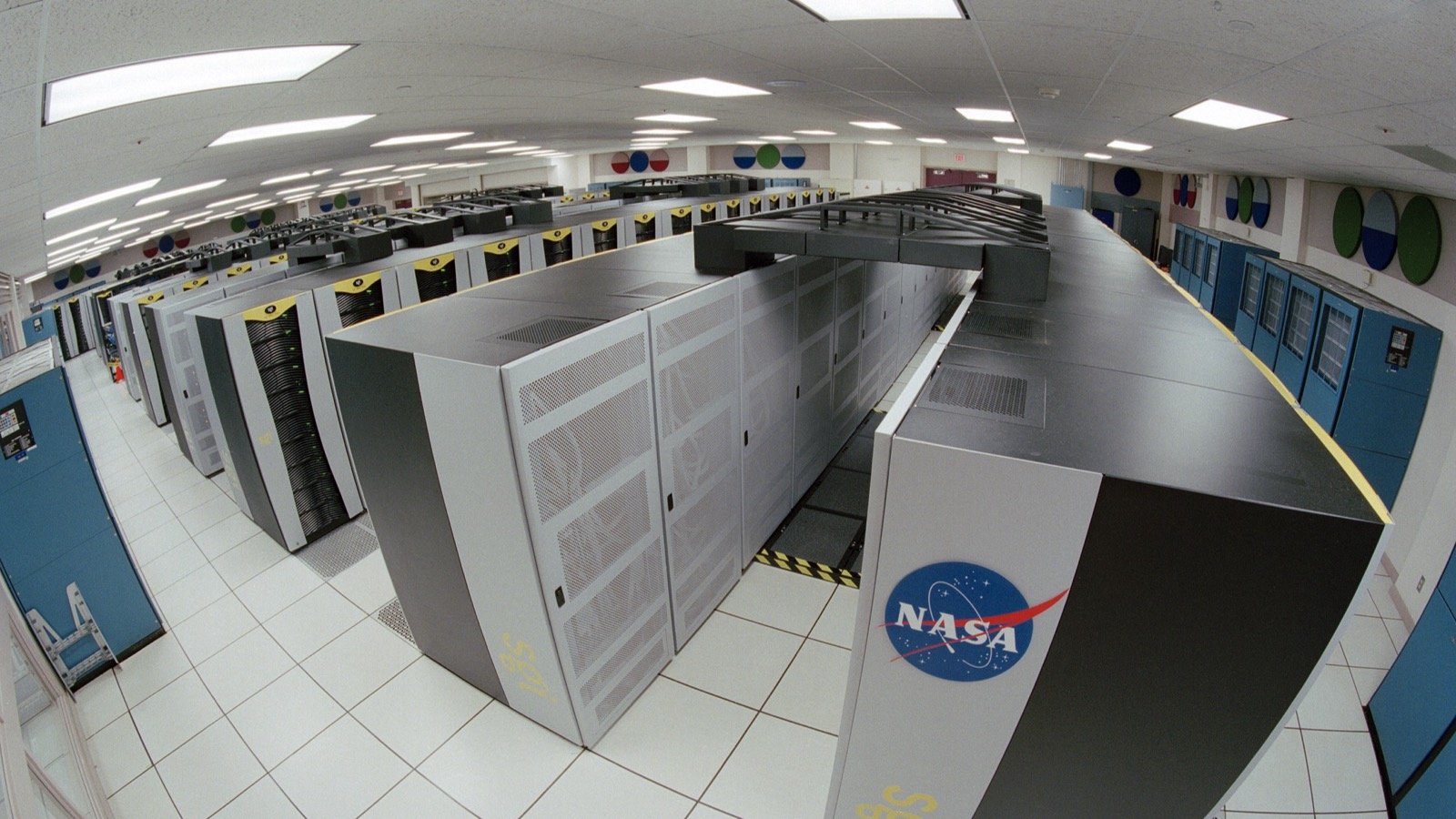
Featured image: The Columbia supercomputer at NASA’s Advanced Supercomputing Facility at Ames Research Center. Photo: Trower, NASA, via Wikimedia Commons. Public domain, United States government work. Center-cropped from 2,100 × 1,524 pixels to 16:9 and resized to 1,600 × 900 pixels; no generative or substantive alteration. The photograph is illustrative of computing infrastructure and does not depict Google hardware.
